

Back to articles
Feline Nutrition: Can Probiotics Help Obese Cats Lose Weight?
V
Vetitude
04/21/2017
3 min read
0 comments
Share:
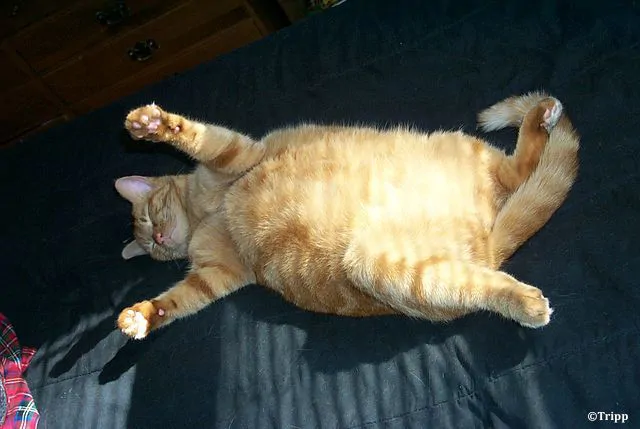
Obesity in cats is a major health problem facing veterinarians in the United States as well as in Europe. Across the Atlantic, veterinary nutritionists at the University of California (UC Davis School of Veterinary Medicine) have attempted to address this issue with an innovative approach. They explored a new option based on the use of probiotics to evaluate the potentially beneficial effects of these microorganisms on food intake, body composition (fat mass and lean mass), and metabolic parameters in healthy, overweight, and obese cats.
 As in human health, the goal of the method explored by the veterinary nutritionists was to use probiotics—which are believed to have a beneficial effect on the host’s health—to improve quality of life and promote longevity in pets, particularly cats. The benefits of probiotics—live bacteria or yeasts—are primarily observed in the gut flora and the digestive system. They are used for various conditions, such as treating diarrhea or chronic gastrointestinal disease. However, there is a lack of research on their use as potential tools for weight loss in pets.
A recent research project conducted at UC Davis studied the use of the SF68 strain of Enterococcus faecium in twenty cats—eight of whom were in the control group—over an eight-week period. Studies in mice and humans have shown that this probiotic helps reduce food intake, promotes weight loss, and improves metabolic profiles. Veterinarians sought to replicate these effects in cats. Unfortunately, they were unable to achieve significant results due to the study’s limited scope. However, some trends were observed that suggest an increase in lean body mass in cats receiving a probiotic-enriched diet, even before the trial ended. According to the researchers, the conclusions would likely have been different if a larger number of cats had been included in the study or if it had lasted longer.
As in human health, the goal of the method explored by the veterinary nutritionists was to use probiotics—which are believed to have a beneficial effect on the host’s health—to improve quality of life and promote longevity in pets, particularly cats. The benefits of probiotics—live bacteria or yeasts—are primarily observed in the gut flora and the digestive system. They are used for various conditions, such as treating diarrhea or chronic gastrointestinal disease. However, there is a lack of research on their use as potential tools for weight loss in pets.
A recent research project conducted at UC Davis studied the use of the SF68 strain of Enterococcus faecium in twenty cats—eight of whom were in the control group—over an eight-week period. Studies in mice and humans have shown that this probiotic helps reduce food intake, promotes weight loss, and improves metabolic profiles. Veterinarians sought to replicate these effects in cats. Unfortunately, they were unable to achieve significant results due to the study’s limited scope. However, some trends were observed that suggest an increase in lean body mass in cats receiving a probiotic-enriched diet, even before the trial ended. According to the researchers, the conclusions would likely have been different if a larger number of cats had been included in the study or if it had lasted longer.
 The researchers therefore plan to conduct a follow-up study—either longer or larger in scope—to confirm the trends observed in cats and demonstrate a positive impact on weight management and the animal’s global health. A potential clinical trial focused on probiotic supplementation could help determine whether probiotics are a promising tool for combating obesity in pets, particularly in cats.
The results of this research project, funded in part by the Center for Companion Animal Health, were presented as a poster at the most recent annual meeting of the American Academy of Veterinary Nutrition.
As in humans, obesity in pets is becoming increasingly common and is one of the most prevalent health problems in dogs and cats. In these animals, being overweight can contribute to the development or worsening of diabetes, heart and lung diseases, and intolerance to exercise or heat; it can also increase surgical and anaesthetic risk and cause or exacerbate bone and joint disease.
The researchers therefore plan to conduct a follow-up study—either longer or larger in scope—to confirm the trends observed in cats and demonstrate a positive impact on weight management and the animal’s global health. A potential clinical trial focused on probiotic supplementation could help determine whether probiotics are a promising tool for combating obesity in pets, particularly in cats.
The results of this research project, funded in part by the Center for Companion Animal Health, were presented as a poster at the most recent annual meeting of the American Academy of Veterinary Nutrition.
As in humans, obesity in pets is becoming increasingly common and is one of the most prevalent health problems in dogs and cats. In these animals, being overweight can contribute to the development or worsening of diabetes, heart and lung diseases, and intolerance to exercise or heat; it can also increase surgical and anaesthetic risk and cause or exacerbate bone and joint disease.
Read next
Research & Diagnostics
10/09/2026
WHO sets new diagnostic targets for Echinococcus granulosus in humans, dogs and sheep
Research & Diagnostics
10/09/2026
Nipah virus in wastewater: promising for early warning?
Research & Diagnostics
10/01/2026
Commentaires
No comments yet.
Sign in to comment