Humans weren't the only ones affected by the heat. Beekeepers in the Okanagan Valley reported unusual deaths among queen bees, drones, and small bee colonies.
Extreme heat waves threaten bee fertility and cause sudden bee deaths
VVetitude05/20/20226 min read0 comments
Share:
Alison McAfee, University of British Columbia
In June 2021, temperatures exceeded 42 °C for several days in Western Canada. The town of Lytton, British Columbia, even reached 49.6 °C, the highest temperature ever recorded in Canada. Wildfires ravaged the province, leading to a state of emergency that lasted 56 days and nearly 600 more sudden deaths than during the same period in 2020.
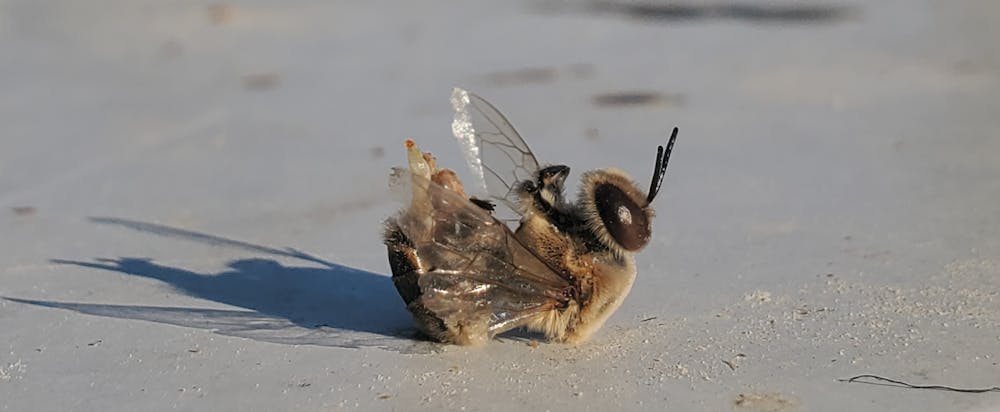
Humans weren’t the only ones affected by the heat. Beekeepers in the Okanagan Valley reported abnormal deaths among queen bees, drones, and small bee colonies. Drones, which are the male reproductive bees, ejaculate spontaneously when they die from stress. Emily Huxter, a beekeeper in Armstrong, found dozens of dead droneson the lids of her hives, their reproductive organs protruding.
A dead drone from the June 2021 heat wave in British Columbia.(Emily Huxter)
I study how heat stress affects honeybees, and Ms. Huxter’s observations mirror what I’ve seen in the lab. Our experiments show that after six hours at 42 °C, 50% of male bees die. These results are alarming, but less so than those from previous studies. Other researchers have found that up to 77% of males died after just four hours of exposure to 42 °C.
This means that after a heat wave, new queens—the reproductive females—will have fewer opportunities to mate. Colonies led by unmated queens are at greater risk of collapse, which could pose problems for farmers who rely on honeybees to pollinate their crops. It also highlights the risk that heat waves pose to wild insect populations.
Not Just a Matter of Death
Worryingly, male fertility likely begins to decline long before the drones die. For example, after just two hours at 42 °C, about one-third of the sperm in the males’ ejaculates had died. This means that if a male bee survives a heat wave, he is likely less fertile than before. The death of Ms. Huxter’s drones indicates that last summer’s temperatures well exceeded the fertility threshold, even for those who survived.
Queens mate and store sperm in a storage organ for their entire lives, typically one to three years. However, the stored sperm is not immune to extreme heat. Queens exposed to temperatures above 38 °C for two hours or more usually survive, but the viability of the stored sperm deteriorates and reaches what beekeepers consider “poor quality.”
Large, established colonies appear to have fared well during the 2021 heatwave in terms of survival. However, even though most bees survived, the loss of fertility—in both drones and queens—means they may still have been affected.
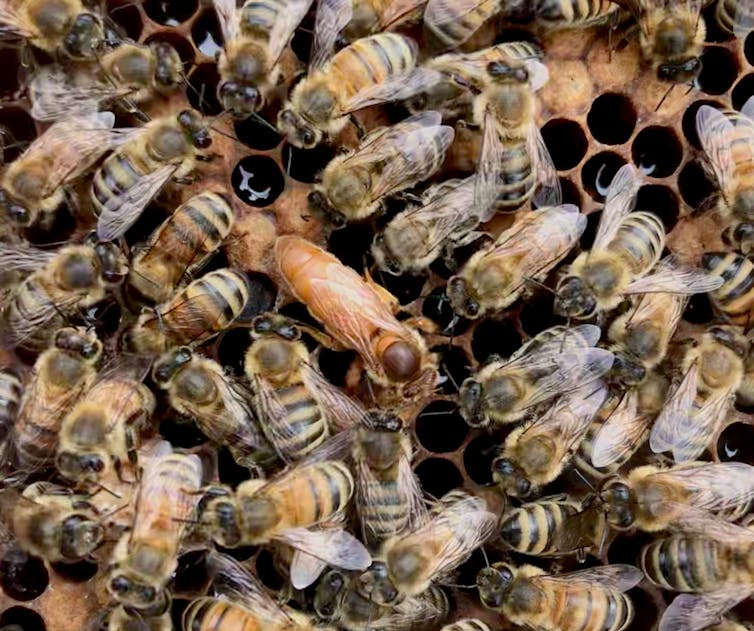
Canada imports approximately 250,000 queen bees each year.(Alison McAfee)
What about wild insects?
Honeybees aren’t the only insects whose fertility is reduced by extreme heat. Researchers predict that more severe heat waves could impair the fertility of beetles, bumblebees, flies, moths, and wasps—and these are just a few of the insects in which this has been observed.
When entire populations are studied, the trends are even more concerning. In the red flour beetle, *Tribolium castaneum*, the sons of heat-stressed fathers may have reduced fertility, even if they have never experienced extreme heat themselves. Scientists expect a widespread decline in wild bumblebees as the frequency of heat waves reaches “unsustainable” extremes. And the temperatures at which male fruit flies lose their fertility better explain their geographic distribution than the highest temperatures at which they can survive.
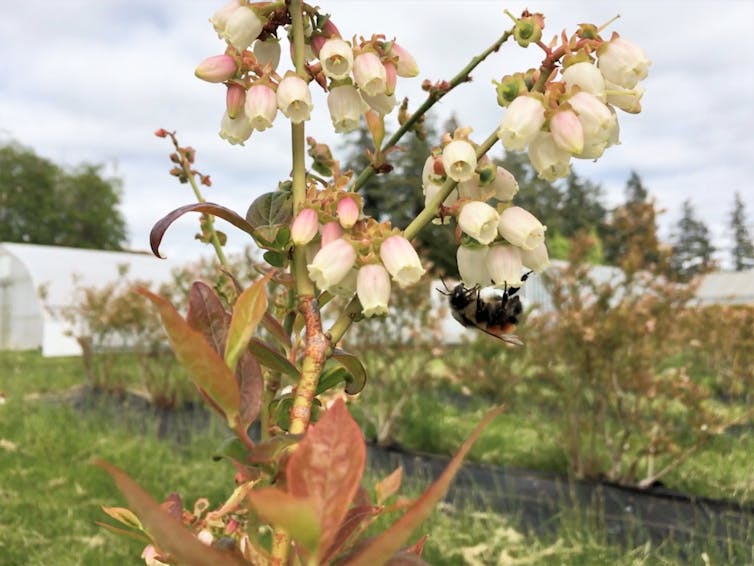
Honeybees are often used to pollinate blueberries, but wild bumblebees are also excellent pollinators.(Alison McAfee)
Honeybees, however, can adapt to their environment, and, thanks to beekeepers, they will likely adapt to higher temperatures as well. Subspecies from the Middle East, for example, have a higher tolerance for hot, arid weather than those native to Europe, while colonies spread in Canada show signs of selection for cold tolerance.
However, bee colonies produce new queens only about once a year, when they prepare to swarm—that is, to form a new colony. This means that, compared to insects that reproduce frequently—such as mosquitoes—they are at a disadvantage when it comes to adapting to rapidly changing conditions.
Fortunately, queens can overcome this disadvantage by mating with multiple drones, provided the drones have not been killed during a heat wave. This increases the genetic diversity of their colonies, which is the basis of natural selection.
Canadian beekeepers import about 250,000 queens each year, providing a steady influx of new genetic material. Currently, queens come mainly from California and Hawaii, but also from Chile, Australia, Ukraine, New Zealand, and other countries. This can be an advantage or a disadvantage, depending on the balance between genetic diversity and local adaptation, but it promotes new combinations of genes that could prove beneficial.
Bees as Barometers
Despite the losses reported by beekeepers, honeybees, as a species, will most likely survive climate change. But not all insects will be so fortunate. The queens of bumblebees, wasps, and many ants—which are also produced annually during the summer—typically mate with one or a few males, resulting in limited genetic input, and may be less able to adapt.
In addition to heat waves, insects face other challenges, such as habitat loss, pesticides, and pathogens. For example, two months after the state of emergency was lifted in British Columbia, a devastating flood once again displaced families, as well as countless native bees that were hibernating in the ground.
Insects are essential components of ecosystems around the world, and since many terrestrial species are already in decline, it is vital to study the impact of climate change on their fertility. We care about honeybees because we rely on them to pollinate crops, but they aren’t the only ones we depend on. We know that the conditions that prevailed during the 2021 heat dome can reduce the fertility of honeybees, which should serve as a wake-up call for wild insects that have no one to look out for them.
Alison McAfee, Postdoctoral Fellow at UBC and North Carolina State University, University of British Columbia
This article is republished from The Conversation under a Creative Commons license. Read the original article.


Commentaires
No comments yet.
Sign in to comment