

Back to articles
Research & Diagnostics
Domestication
Donkey
Equine
Equus
Horse
Horse breed
Horse genomics
Inbreeding
Przewalski's Horse
Quagga
Taimyr Horse
Evolution and Domestication: A Study of the Horse’s Genomics Sheds Light on Its History
V
Vetitude
08/04/2016
4 min read
0 comments
Share:
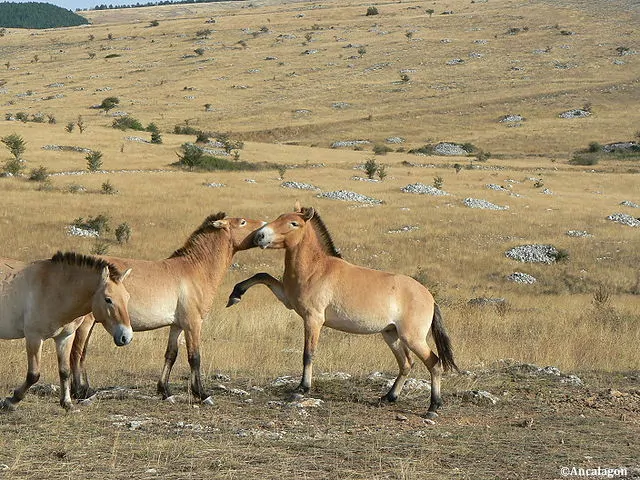
The analysis of pan-genomic data from ancient and modern equines has provided a better understanding of the domestication process of equines. During this evolutionary process, several species and breeds emerged. This research, funded by the European Union, has revealed changes in the equine genome over the course of humanity’s long domestication of horses. The goal was to uncover the origin of the genus Equus four million years ago, but above all to understand how the equine species transformed from the horse depicted in cave art into an agricultural, military, and ultimately athletic companion.
 The Horsedomestication
project (Understanding Horse Speciation and Domestication Through Comparative Paleogenomics
) relied on techniques for characterizing long sequences of ancient genomes derived from fossilized bones. The discovery of new biochemical characteristics in ancient DNA has improved sequencing. Scientists also used bioinformatics tools to better validate the collected data.
The comparative study began with a horse dating back approximately 700,000 years, which lived during the early Middle Pleistocene. The team added to its sample the genomes of a Taimyr horse dating back approximately 43,000 years (Late Pleistocene) discovered in Siberian permafrost, a Przewalski’s horse, five breeds of domesticated horses, and a domestic donkey. This work traced the origins of the genus Equus
back four million years. Populations underwent significant demographic fluctuations, often linked to major climate changes.
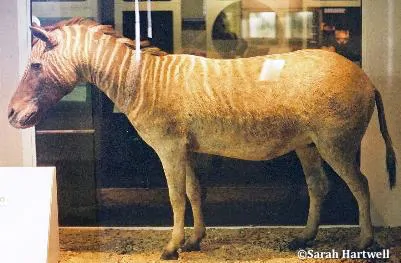
In a second phase, the project focused on sequencing the entire genomes of each member of the equine family. DNA from museum specimens was used to sequence the quagga—a species extinct since the 19th
century—as well as that of two undomesticated horses from the Upper Paleolithic era. Thanks to all this genomics data, which was collected and then compared, it was possible to trace the evolutionary history of the horse and its domestication. Furthermore, the data on Przewalski’s horse will be used to better tailor conservation programs for the world’s last remaining wild horse breed.
The Horsedomestication
project (Understanding Horse Speciation and Domestication Through Comparative Paleogenomics
) relied on techniques for characterizing long sequences of ancient genomes derived from fossilized bones. The discovery of new biochemical characteristics in ancient DNA has improved sequencing. Scientists also used bioinformatics tools to better validate the collected data.
The comparative study began with a horse dating back approximately 700,000 years, which lived during the early Middle Pleistocene. The team added to its sample the genomes of a Taimyr horse dating back approximately 43,000 years (Late Pleistocene) discovered in Siberian permafrost, a Przewalski’s horse, five breeds of domesticated horses, and a domestic donkey. This work traced the origins of the genus Equus
back four million years. Populations underwent significant demographic fluctuations, often linked to major climate changes.
In a second phase, the project focused on sequencing the entire genomes of each member of the equine family. DNA from museum specimens was used to sequence the quagga—a species extinct since the 19th
century—as well as that of two undomesticated horses from the Upper Paleolithic era. Thanks to all this genomics data, which was collected and then compared, it was possible to trace the evolutionary history of the horse and its domestication. Furthermore, the data on Przewalski’s horse will be used to better tailor conservation programs for the world’s last remaining wild horse breed.
 A large portion of the genome comes from a group of horses previously unknown to science. In particular, the sequencing has provided a better understanding of the genetic basis on which the equine species adapted to its new domestic environment. The research team was thus able to identify some 125 genes involved in this domestication process through positive selection, primarily related to movement, physiology, development, behavior, and cognitive abilities.
The variations were considerable over a relatively short period of time on a historical scale: initially, robust, hardy horses were selected to pull chariots and plows (specific muscular, skeletal, and physiological characteristics). A group of genes is thus involved in the development of muscles, limbs, joint connections, and the cardiovascular system, and may represent physiological adaptations to human use. The same is true for genes active in the brain: the social behavior, learning, fear response, trainability, and sociability of modern horses are the result of genetic selection. Geneticists have also revealed the absence of genes linked to speed in the ancestors of the modern horse.
A large portion of the genome comes from a group of horses previously unknown to science. In particular, the sequencing has provided a better understanding of the genetic basis on which the equine species adapted to its new domestic environment. The research team was thus able to identify some 125 genes involved in this domestication process through positive selection, primarily related to movement, physiology, development, behavior, and cognitive abilities.
The variations were considerable over a relatively short period of time on a historical scale: initially, robust, hardy horses were selected to pull chariots and plows (specific muscular, skeletal, and physiological characteristics). A group of genes is thus involved in the development of muscles, limbs, joint connections, and the cardiovascular system, and may represent physiological adaptations to human use. The same is true for genes active in the brain: the social behavior, learning, fear response, trainability, and sociability of modern horses are the result of genetic selection. Geneticists have also revealed the absence of genes linked to speed in the ancestors of the modern horse.
125 Genes That Made the Difference
Inbreeding: The “Cost” of Domestication
The domestication of the horse is clearly associated with inbreeding and an excess of deleterious mutations. This genetic burden is consistent with the “cost of domestication,” a well-established consensus observed in other species—both animal (such as the dog) and plant (such as in the breeding of rice or tomatoes). Similarly, it is generally agreed that the selection pressure accompanying domestication involves demographic bottlenecks and a process of genetic weeding. However, this study is not intended to be exhaustive and focuses on specific geographic regions, primarily Western Eurasia. Further studies may be conducted in the coming years as archaeological discoveries are made on other continents, or even further east, in regions where horse domestication may not have been as “Westernized.”Read next
Research & Diagnostics
10/09/2026
WHO sets new diagnostic targets for Echinococcus granulosus in humans, dogs and sheep
Research & Diagnostics
10/09/2026
Nipah virus in wastewater: promising for early warning?
Research & Diagnostics
10/01/2026
Commentaires
No comments yet.
Sign in to comment