

Back to articles
Research & Diagnostics
Camel
Donkey
Epizootic lymphangitis
Equine
Exotic disease
Gambia Horse and Donkey Trust
Glanders
Histoplasma farciminosum
Horse
Mobile Veterinary Clinic
Mule
Spana
Equines: A Research Project Targets Epizootic Lymphangitis in Sub-Saharan Africa
V
Vetitude
01/15/2019
3 min read
0 comments
Share:
The University of Liverpool, Brooke, SPANA, and the Gambia Horse and Donkey Trust have just launched a new five-year research project aimed at studying the impact of epizootic lymphangitis on equines and their owners in Africa. Although this so-called “exotic” disease has not been present in the United Kingdom since 1906 or in France since 1945, it continues to be endemic across a vast area south of the Sahara.
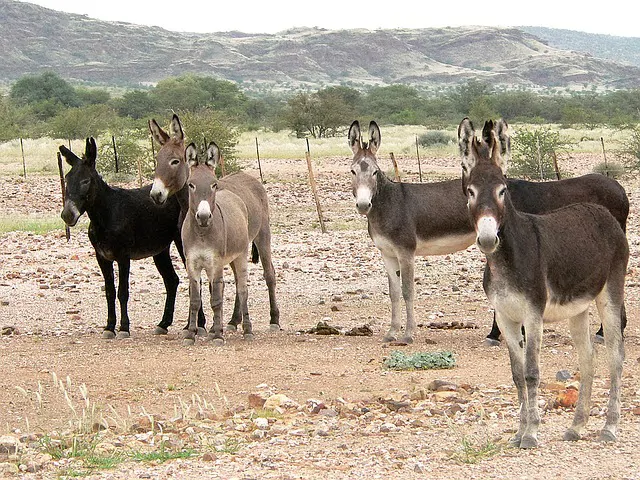 The University of Liverpool and three equine welfare organizations have joined forces to combat epizootic lymphangitis, which is rampant in sub-Saharan Africa. In this region, horses, donkeys, and mules are still used for agriculture and transportation, and the disease has devastating consequences for livestock populations as well as for the local economy, depriving the owners of these working equines of their income.
The research will be conducted on a large scale in the field in Ethiopia, The Gambia, and Senegal. The project aims to better understand epizootic lymphangitis, which affects not only horses but also donkeys, mules, and even camels. The goal is to develop effective action plans for prevention and treatment, in order to improve equine welfare and reduce the impact of this disease on local communities.
Caused by Histoplasma farciminosum
, epizootic lymphangitis of equines is a highly contagious chronic infection that is most often fatal. This microscopic fungus infects the animal through a skin wound
. Associated symptoms include skin nodules that develop into abscesses and ulcerations producing thick pus, typically on the limbs or neck, leading to a severe inflammatory reaction and lameness. The eyes and respiratory tract are often affected, presenting a clinical picture similar to that of glanders
.
Epizootic lymphangitis is endemic in Africa, but cases have also been reported in South America and Asia. Classified as an “exotic” disease, it is transmitted to humans only in exceptional cases. In tropical countries where it is endemic, the resulting economic impact is significant.
* Spana (Society for the Protection of Animals Abroad), for the Working Animals of the World.
Brooke, Action for Working Horses and Donkeys.
GHDT (Gambia Horse and Donkey Trust)
Brooke is an equine welfare organization based in the United Kingdom. Active in sub-Saharan Africa since 2001, its funding programs have helped approximately 13 million equines in the region.
Spana operates in several developing countries and provides free veterinary care to farm animals.
The Gambia Horse and Donkey
Trust
offers training on equine welfare to communities in The Gambia and operates mobile veterinary clinics.
The University of Liverpool and three equine welfare organizations have joined forces to combat epizootic lymphangitis, which is rampant in sub-Saharan Africa. In this region, horses, donkeys, and mules are still used for agriculture and transportation, and the disease has devastating consequences for livestock populations as well as for the local economy, depriving the owners of these working equines of their income.
The research will be conducted on a large scale in the field in Ethiopia, The Gambia, and Senegal. The project aims to better understand epizootic lymphangitis, which affects not only horses but also donkeys, mules, and even camels. The goal is to develop effective action plans for prevention and treatment, in order to improve equine welfare and reduce the impact of this disease on local communities.
Caused by Histoplasma farciminosum
, epizootic lymphangitis of equines is a highly contagious chronic infection that is most often fatal. This microscopic fungus infects the animal through a skin wound
. Associated symptoms include skin nodules that develop into abscesses and ulcerations producing thick pus, typically on the limbs or neck, leading to a severe inflammatory reaction and lameness. The eyes and respiratory tract are often affected, presenting a clinical picture similar to that of glanders
.
Epizootic lymphangitis is endemic in Africa, but cases have also been reported in South America and Asia. Classified as an “exotic” disease, it is transmitted to humans only in exceptional cases. In tropical countries where it is endemic, the resulting economic impact is significant.
* Spana (Society for the Protection of Animals Abroad), for the Working Animals of the World.
Brooke, Action for Working Horses and Donkeys.
GHDT (Gambia Horse and Donkey Trust)
Brooke is an equine welfare organization based in the United Kingdom. Active in sub-Saharan Africa since 2001, its funding programs have helped approximately 13 million equines in the region.
Spana operates in several developing countries and provides free veterinary care to farm animals.
The Gambia Horse and Donkey
Trust
offers training on equine welfare to communities in The Gambia and operates mobile veterinary clinics.
Read next
Research & Diagnostics
10/09/2026
WHO sets new diagnostic targets for Echinococcus granulosus in humans, dogs and sheep
Research & Diagnostics
10/09/2026
Nipah virus in wastewater: promising for early warning?
Research & Diagnostics
10/01/2026
Commentaires
No comments yet.
Sign in to comment