

Back to articles
Equine influenza: A new vaccine targets the influenza A H3N8 virus more effectively
V
Vetitude
05/15/2018
3 min read
0 comments
Share:
American and British researchers have developed a new vaccine against equine influenza that is both safer and more effective than existing vaccines, which have not changed in nearly a quarter-century. Their study, published in the journal *Virology*, aims to update vaccination against this highly contagious infectious disease that is rampant in Europe and North America, in order to better prevent and control the spread of the influenza virus in horses—but not only that.
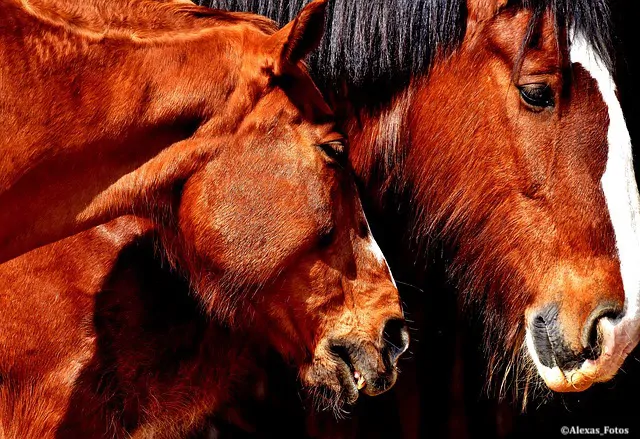 Researchers at the University of Rochester have developed a new live-attenuated equine influenza vaccine designed to protect both horses and humans. According to virologists, it is important to prevent the spread of the flu among animals, which are the most likely source of future human pandemics. Thus, horses, pigs, and dogs can be infected by multiple influenza viruses and are potential “mixing reservoirs,” capable of generating new influenza strains that could infect humans. Although the emergence of these new variants with high epidemic potential—since affected individuals would not be protected by preexisting acquired immunity—has not yet been observed, it remains a possibility and is under close surveillance.
Influenza A subtype H3N8 (AE-2) is currently circulating among equines in Europe and North America, where the disease is endemic. Horses often travel long distances to participate in equestrian competitions or horse breeding shows. It takes only one infected horse, introduced into a susceptible, unvaccinated equine population, for the influenza virus to spread rapidly. As a result, influenza outbreaks occur periodically, and the disease spreads rapidly as horses are moved from place to place. Worldwide, only the AE-2 influenza virus has been isolated over the past twenty years.
The new equine vaccine, developed using a genetic engineering technique called reverse genetics, is a live-attenuated vaccine. Previous research has shown that live-attenuated vaccines elicit stronger immune responses and provide longer-lasting protection than inactivated or killed vaccines (such as the traditional influenza vaccine). Administered intranasally, it is designed to stop the virus at the point of entry into the horse’s body—the nose—preventing it from traveling further into the respiratory tract and reaching the lungs. Tested in mice and horses, a single spray dose of the vaccine induced protection against the currently circulating H3N8 equine influenza virus. The vaccine was well tolerated and caused no side effects. Vaccinated horses showed none of the clinical signs of the disease (nasal discharge, cough, fever) when naturally exposed to the influenza virus.
Admittedly, this trial included only six horses, but planning for a larger study is already underway. The use of reverse genetics to create the new equine vaccine also gives it an additional advantage: it can be quickly and easily updated to adapt to new emerging or derived viral strains. Traditional equine vaccines, which are produced in eggs, take months to manufacture and do not allow for such flexible updates to their composition.
Researchers at the University of Rochester have developed a new live-attenuated equine influenza vaccine designed to protect both horses and humans. According to virologists, it is important to prevent the spread of the flu among animals, which are the most likely source of future human pandemics. Thus, horses, pigs, and dogs can be infected by multiple influenza viruses and are potential “mixing reservoirs,” capable of generating new influenza strains that could infect humans. Although the emergence of these new variants with high epidemic potential—since affected individuals would not be protected by preexisting acquired immunity—has not yet been observed, it remains a possibility and is under close surveillance.
Influenza A subtype H3N8 (AE-2) is currently circulating among equines in Europe and North America, where the disease is endemic. Horses often travel long distances to participate in equestrian competitions or horse breeding shows. It takes only one infected horse, introduced into a susceptible, unvaccinated equine population, for the influenza virus to spread rapidly. As a result, influenza outbreaks occur periodically, and the disease spreads rapidly as horses are moved from place to place. Worldwide, only the AE-2 influenza virus has been isolated over the past twenty years.
The new equine vaccine, developed using a genetic engineering technique called reverse genetics, is a live-attenuated vaccine. Previous research has shown that live-attenuated vaccines elicit stronger immune responses and provide longer-lasting protection than inactivated or killed vaccines (such as the traditional influenza vaccine). Administered intranasally, it is designed to stop the virus at the point of entry into the horse’s body—the nose—preventing it from traveling further into the respiratory tract and reaching the lungs. Tested in mice and horses, a single spray dose of the vaccine induced protection against the currently circulating H3N8 equine influenza virus. The vaccine was well tolerated and caused no side effects. Vaccinated horses showed none of the clinical signs of the disease (nasal discharge, cough, fever) when naturally exposed to the influenza virus.
Admittedly, this trial included only six horses, but planning for a larger study is already underway. The use of reverse genetics to create the new equine vaccine also gives it an additional advantage: it can be quickly and easily updated to adapt to new emerging or derived viral strains. Traditional equine vaccines, which are produced in eggs, take months to manufacture and do not allow for such flexible updates to their composition.
Read next
Research & Diagnostics
10/09/2026
WHO sets new diagnostic targets for Echinococcus granulosus in humans, dogs and sheep
Research & Diagnostics
10/09/2026
Nipah virus in wastewater: promising for early warning?
Research & Diagnostics
10/01/2026
Commentaires
No comments yet.
Sign in to comment