

Back to articles
Research & Diagnostics
AAEP
American Association of Equine Practitioners
Biosecurity
Epizootic lymphangitis
Histoplasma farciminosum
Infectious Diseases
Lymphangitis
Mushroom
Streptothricose
WOAH
World Organisation for Animal Health
Epizootic lymphangitis: an “exotic” equine disease under surveillance
MR
Mia Rozenbaum
07/28/2021
3 min read
0 comments
Share:
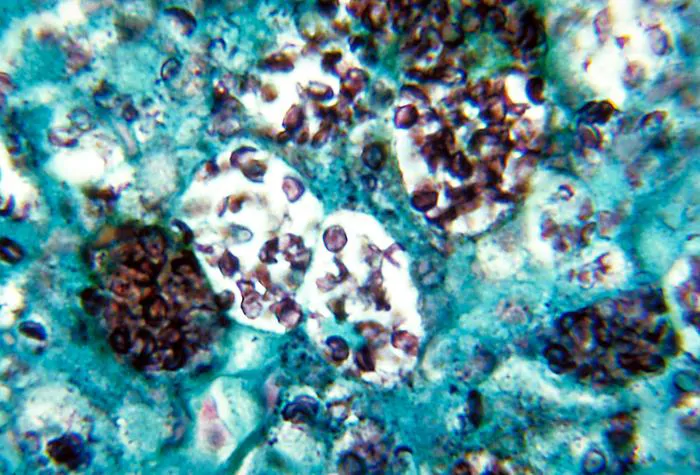
The American Association of Equine Practitioners (AAEP) has updated its guidelines on epizootic lymphangitis to help veterinarians identify, diagnose, and control this disease in horses, noting that it can also affect dogs, cattle, camelids, and even humans. Found primarily in Africa, the Middle East, Russia, and Asia, the pathogen, Histoplasma farciminosum, is a microscopic fungus that is highly resistant in the environment and is a cause for concern among American equine practitioners.
Epizootic lymphangitis is a contagious, chronic infectious disease that affects the skin, blood vessels, and lymph nodes in the limbs, neck, and chest of horses, as well as other equine species. The causative fungus, Histoplasma capsulatum var. farciminosum, enters the animal through a skin wound and causes lymphangitis, which progresses to descending edema and leads to progressive weakness in infected equines.
Although not listed by the World Organisation for Animal Health (WOAH), the disease has significant socioeconomic implications in countries where it is endemic, some of which export products of animal origin, particularly to the U.S. market. While the fungus has not yet colonized the United States, it is circulating in other countries around the world and is a cause for concern. If it is introduced into the United States, it will be particularly difficult to eradicate. The fungus can survive in dust and soil for long periods and is highly resistant to physical and chemical agents. A preventive control campaign is therefore necessary to effectively combat Histoplasma farciminosum.
However, epizootic lymphangitis can be clinically confused with other diseases, including ulcerative lymphangitis or cutaneous streptotrichosis. To raise awareness among veterinarians, the AAEP has therefore updated its guidelines on the disease. The association deemed it useful to clarify the disease’s pathophysiology for practitioners and public health agencies to help them identify, diagnose, and prevent epizootic lymphangitis. Any suspected cases in the United States must be immediately reported to the USDA, as well as to animal health professionals in all fifty U.S. states and territories. Control measures used in countries with endemicity, such as vaccination, are neither available nor recommended in the United States at this time. Control of epizootic lymphangitis in regions of the world where it is not widely established involves equine slaughter and the implementation of strict biosecurity measures to prevent the spread of the pathogenic fungus. In countries where the disease is endemic, such culling is neither practical nor economically feasible.
Read next
Research & Diagnostics
10/09/2026
WHO sets new diagnostic targets for Echinococcus granulosus in humans, dogs and sheep
Research & Diagnostics
10/09/2026
Nipah virus in wastewater: promising for early warning?
Research & Diagnostics
10/01/2026
Commentaires
No comments yet.
Sign in to comment