

Back to articles
Research & Diagnostics
Claim
Disaster
Emergency
Emergency Center
Fires
Floods
Natural Disasters
Rescue
Shelter
Disasters: The Urgency of Creating an Animal Management Plan in Light of Their Recurrence
BN
Bertrand Neveux
08/31/2023
3 min read
0 comments
Share:
Disasters—whether natural or man-made—have always existed, and animals generally pay a heavy price. This summer has once again highlighted the importance of thinking ahead about what to do to save your pet from fire, flood, or any other catastrophic event.
Social media and media coverage of tragic events are increasingly taking into account the impact on pets and domestic animals, as well as on wildlife. It was really in 2011, following the tsunami in Japan, that veterinary and animal welfare organizations realized the total lack of preparedness among rescue teams and animal owners to care for animals when a disaster strikes. For in addition to the distress felt by disaster victims, the loss of their pet reinforces the feeling of having lost everything. As for the animal, while it may sometimes take steps to ensure its own survival, it is not capable of coping with major disasters—whether natural or man-made—and unfortunately remains vulnerable and dependent on humans.
This is why it is urgent to raise awareness among the general public—as well as among professionals—about the “animal” factor. In fact, in 2015, the European Veterinary Federation had already organized a conference on the topic “Natural Disasters and One Health: Are We Ready to Respond? .”
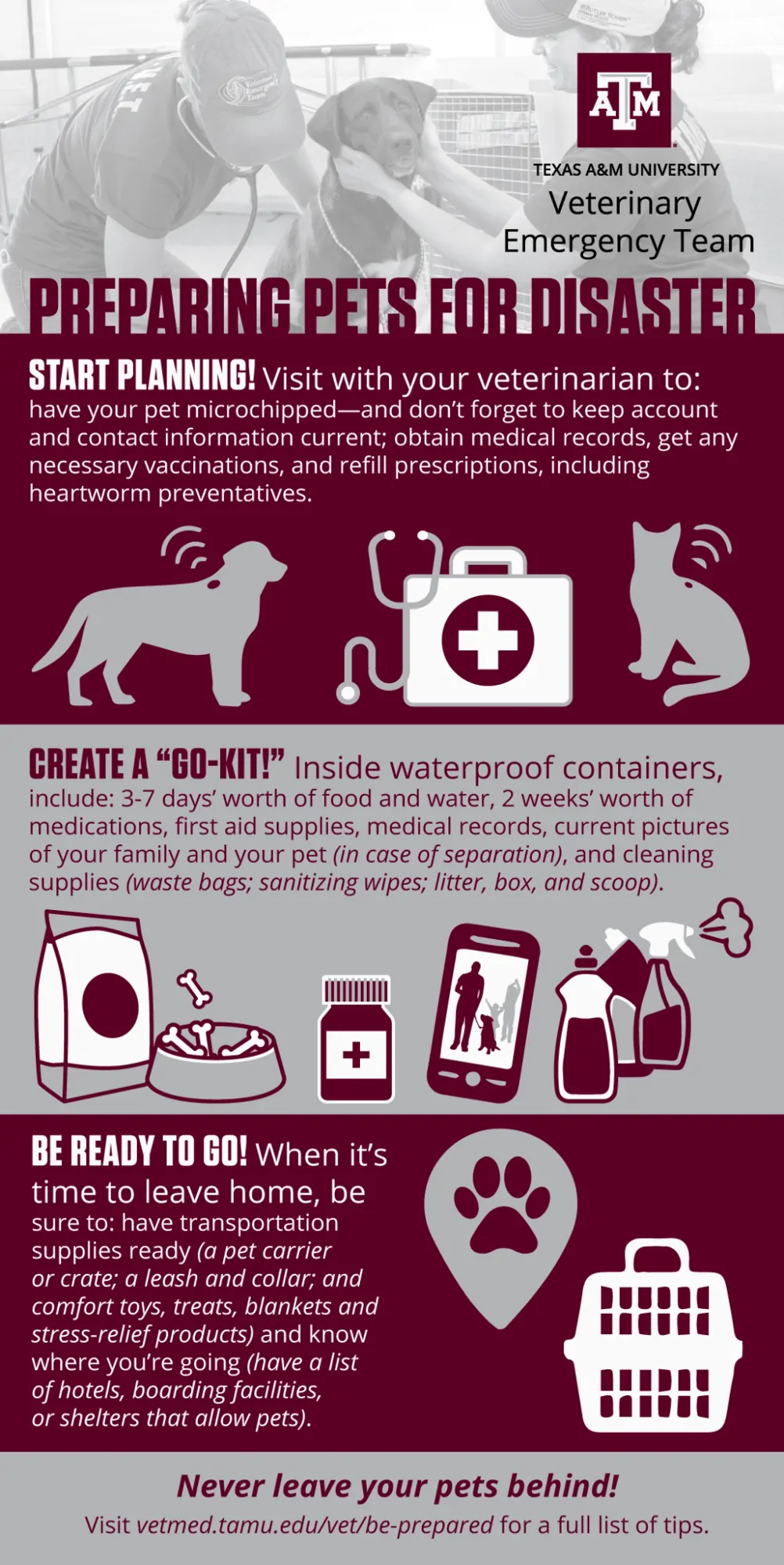
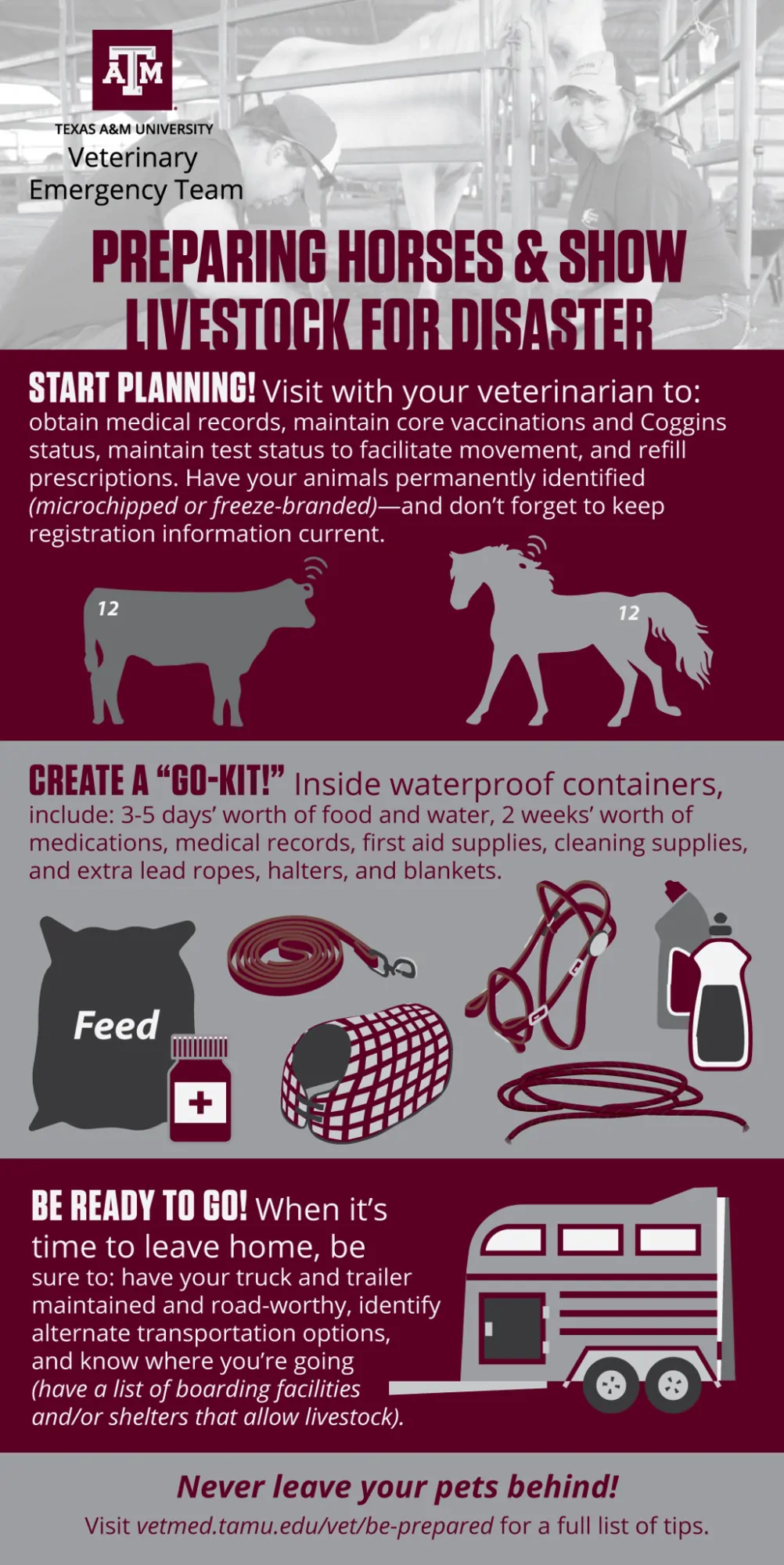
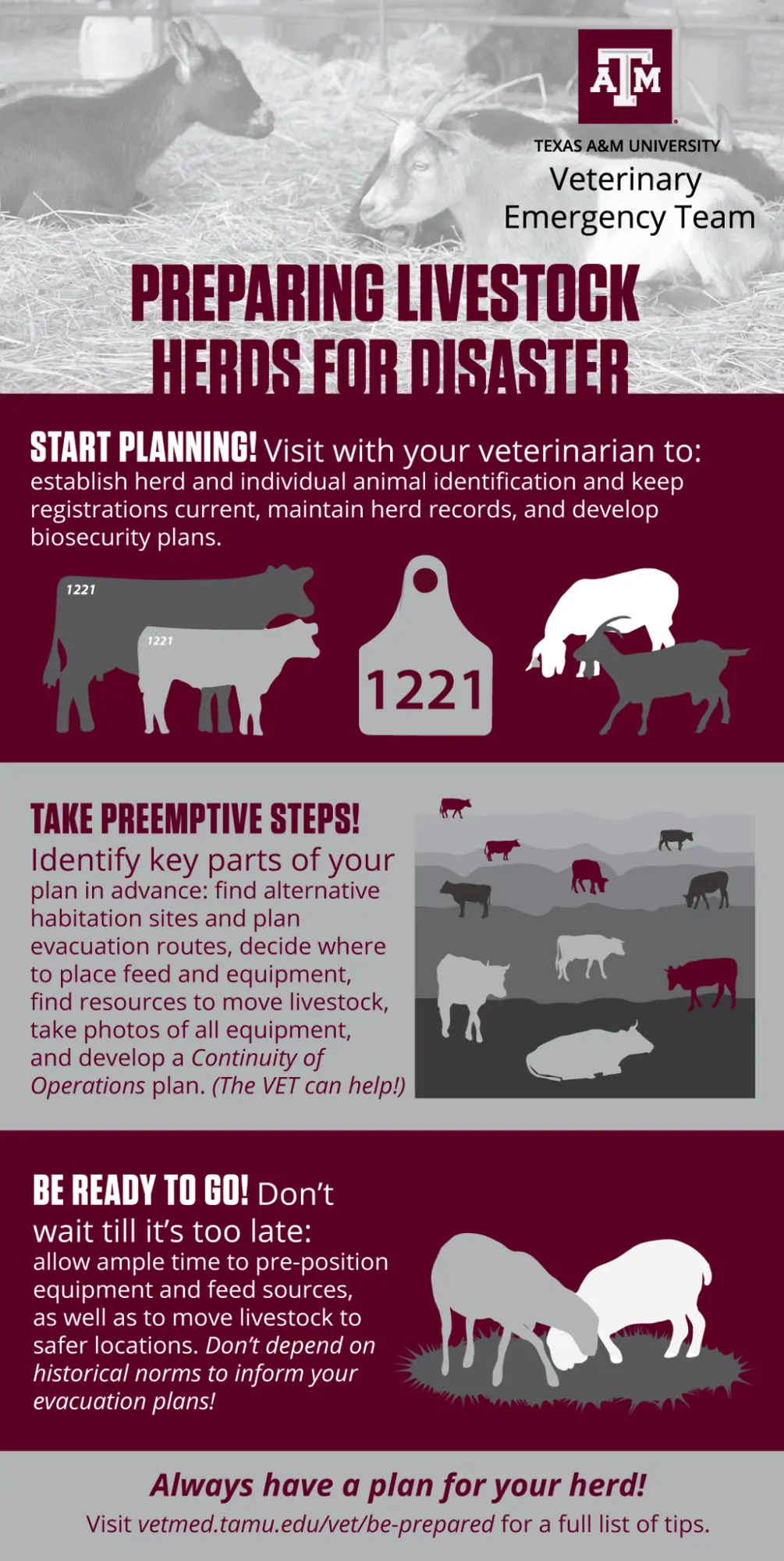
 This summer, it is the Texas Veterinary Medical University’s turn to propose a comprehensive strategy to ensure readiness should an event occur. Their approach is designed to be exhaustive and takes into account not only pets but also livestock and horses. Today, 90% of Americans who own pets do not know how to respond to a major disaster in a country that is, in fact, at high risk. As a result, the university’s veterinary emergency center provides a checklist of what to do in advance and during the evacuation of pets, livestock, and horses, detailing what an evacuation kit should contain. But that’s not enough. You also need to know where to go for shelter—and that shelter must accept animals! While emergency shelters do exist, animals are generally taken in without any information about them.
It would therefore be in the best interest of both animal owners and animals to provide as much information as possible when the animals are taken in separately (the animal’s identification number, vaccinations, treatments, etc.), or even to bring a few photos and a small amount of their usual food.
This summer, it is the Texas Veterinary Medical University’s turn to propose a comprehensive strategy to ensure readiness should an event occur. Their approach is designed to be exhaustive and takes into account not only pets but also livestock and horses. Today, 90% of Americans who own pets do not know how to respond to a major disaster in a country that is, in fact, at high risk. As a result, the university’s veterinary emergency center provides a checklist of what to do in advance and during the evacuation of pets, livestock, and horses, detailing what an evacuation kit should contain. But that’s not enough. You also need to know where to go for shelter—and that shelter must accept animals! While emergency shelters do exist, animals are generally taken in without any information about them.
It would therefore be in the best interest of both animal owners and animals to provide as much information as possible when the animals are taken in separately (the animal’s identification number, vaccinations, treatments, etc.), or even to bring a few photos and a small amount of their usual food.
Eyewitness Accounts from the 2022 Fires in Gironde
Fires in Gironde: Animal Rescue Animals in Distress Amid the Fires in Gironde Fires in Gironde: The “Stressful” Transfer of Animals from the La Teste-de-Buch ZooNearly 500 million animals were affected by the violent wildfires in Australia
Chaos in Japan in the Hours and Weeks Following the Earthquake and Tsunami
Caring for Animals After the Tsunami in JapanRead next
Research & Diagnostics
10/09/2026
WHO sets new diagnostic targets for Echinococcus granulosus in humans, dogs and sheep
Research & Diagnostics
10/09/2026
Nipah virus in wastewater: promising for early warning?
Research & Diagnostics
10/01/2026
Commentaires
No comments yet.
Sign in to comment