

Back to articles
Research & Diagnostics
Accident
Collision
Deer
Road Safety
Standard Time
Time Change
Traffic
White-tailed deer
Wildlife
Daylight saving time leads to excess mortality among wildlife
BN
Bertrand Neveux
11/03/2022
3 min read
0 comments
Share:
A study published a few days after the switch to standard time highlights the negative effects of such a time shift on road safety. Maintaining daylight saving time year-round would significantly reduce the number of collisions with animals by decreasing traffic at dusk.
The findings are clear: collisions between vehicles and wildlife are 14 times more frequent two hours after sunset than before. These findings are based on 96 million road traffic observations and an analysis of 1,012,465 collisions with deer in the United States from 1994 to 2021. Furthermore, another notable finding is that the rate of collisions between deer and vehicles increases by 16% during the week following the time change. The study thus reveals a strong seasonal trend, peaking from late October through November: 10% of accidents occur within the two weeks following the fall time change. This also coincides with the rutting season, during which white-tailed deer increase their movements by up to 50%. The switch to standard time also shifts peak traffic hours to after dark rather than before.
Scientists have thus demonstrated that changes in morning and evening traffic patterns relative to the sun have significant repercussions, both in terms of mortality and financial impact. If daylight saving time were adopted year-round, it would prevent some 37,000 deer deaths, 33 human fatalities, and 2,054 human injuries, resulting in savings of $1.2 billion each year. The goal is to reduce road traffic as soon as night falls, which, in a country as vast as the United States, requires taking time zones into account. Previous studies have shown that the country’s latitude also plays a role.
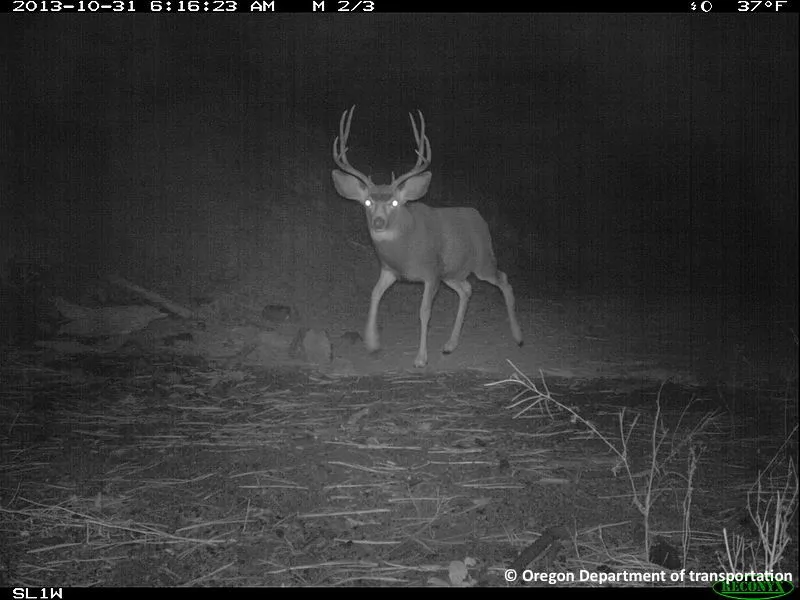 The study’s authors emphasize that the published figures are likely significantly lower than the actual numbers. Not all vehicle-wildlife collisions are recorded. It is estimated that half of them go unreported, which lends even greater significance to this research. This study has the merit of demonstrating how changes in human activity based on daylight can be an important factor to consider in wildlife conservation programs. It provides an additional argument for opponents of the time change. However, the arguments put forward in favor of ending the summer/winter time shift concern only wildlife. According to other studies, on the contrary, permanently maintaining daylight saving time would have adverse effects on human health in our latitudes.
In the United States, 2.1 million collisions between deer and vehicles are reported each year, causing more than $10 billion in economic losses, 59,000 injuries, and 440 human deaths.
The study’s authors emphasize that the published figures are likely significantly lower than the actual numbers. Not all vehicle-wildlife collisions are recorded. It is estimated that half of them go unreported, which lends even greater significance to this research. This study has the merit of demonstrating how changes in human activity based on daylight can be an important factor to consider in wildlife conservation programs. It provides an additional argument for opponents of the time change. However, the arguments put forward in favor of ending the summer/winter time shift concern only wildlife. According to other studies, on the contrary, permanently maintaining daylight saving time would have adverse effects on human health in our latitudes.
In the United States, 2.1 million collisions between deer and vehicles are reported each year, causing more than $10 billion in economic losses, 59,000 injuries, and 440 human deaths.
Read next
Research & Diagnostics
10/09/2026
WHO sets new diagnostic targets for Echinococcus granulosus in humans, dogs and sheep
Research & Diagnostics
10/09/2026
Nipah virus in wastewater: promising for early warning?
Research & Diagnostics
10/01/2026
Commentaires
No comments yet.
Sign in to comment