

Back to articles
Research & Diagnostics
Bee
Biodiversity
Bombus impatiens
Bombus lapidarius
Ecosystem
Pollination
Pollinator
Wild bees
Crop Pollination: The Contribution of Wild Bees Is Primarily Attributed to Common Species
V
Vetitude
06/17/2015
3 min read
0 comments
Share:
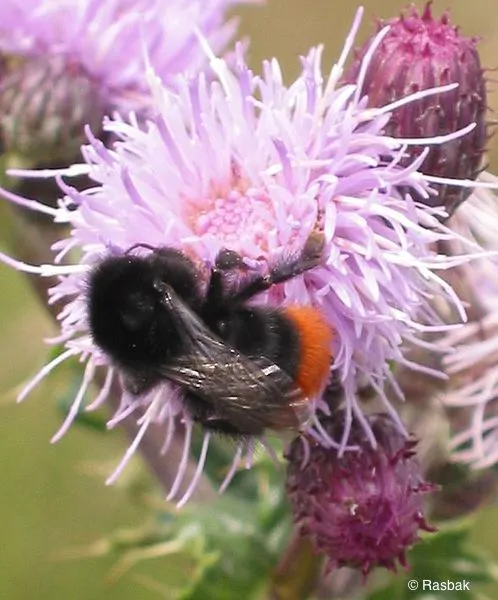
Overall, the economic contribution of wild bees to crop pollination runs into the billions, according to a study* published on June 16, 2015. It compiles data from more than 90 studies conducted in 1,394 cultivated fields across five continents. In total, more than 73,000 bees from some 785 species were monitored. The study found that only 2% of wild species (notably Bombus impatiens in the United States and Bombus lapidarius in Europe) are responsible for pollinating 80% of the world’s crops. The other species remain important for the ecosystem but have no economic value for agricultural production.
Ecosystem services have become a key argument for the conservation of biodiversity, which is in decline worldwide. However, the question of their economic profitability for humans remains to be clarified, given the costs involved in species conservation. When the economic benefit of ecosystem services is the primary driver of conservation policy, the most effective course of action is to preserve the species that provide the highest return, in the short or medium term. Focusing on the conservation of services provided by pollinators—bees foremost among them—can therefore lead to management strategies that primarily benefit a limited set of species: those that currently account for the majority of crop pollination.
 In fact, this study shows that while the economic contribution of wild bees to agricultural production is significant (an average of €2,645 per hectare of cultivated land), this ecosystem service is dominated by a small number of widespread species, regardless of the biogeographic regions considered, while endangered species are rarely observed on croplands. However, while simple conservation measures are sufficient to protect the many pollinators that predominate in agriculture, they are insufficient to support rare species. Thus, according to the authors, the provision of ecosystem services—in this case, pollination—is therefore not sufficient to serve as a general argument for the conservation of bee biodiversity.
On average, wild bee colonies contributed €2,870 per hectare to the production of the 1,394 crops studied, a contribution similar to that of honeybees (€2,570).
Across the 90 studies, a total of 73,649 bees from 785 different species visited cultivated fields. Although this figure is impressive, it represents only 12.6% of the number of species recorded in the countries where these studies were conducted. And if we consider only those bee species that visited crops at a rate of at least 5% in each of the studies, that percentage drops to 2%. And yet, these 2% of wild species contribute to the pollination of 80% of all crops studied worldwide.
Ultimately, it appears that the pollinators that predominate in crops are the most widespread and abundant in agricultural landscapes in general. A minority of common bee species provide most of the pollination services for crops. Thus, a conservation approach based strictly on ecosystem services would not benefit rare species, which would benefit more from traditional conservation efforts targeting endangered species within their ranges. Agricultural intensification is a major factor in bee decline. It is therefore not surprising that, in agricultural landscapes, endangered species contribute little to pollination and benefit little from general conservation measures. To be effective, these measures should therefore target these bee species and their habitats, rather than focusing on crop pollination. This distinction must be made so that policymakers and farmers will agree to protect species that have no clearly defined economic value to humans.
* http://www.nature.com/ncomms/2015/150616/ncomms8414/full/ncomms8414.html
In fact, this study shows that while the economic contribution of wild bees to agricultural production is significant (an average of €2,645 per hectare of cultivated land), this ecosystem service is dominated by a small number of widespread species, regardless of the biogeographic regions considered, while endangered species are rarely observed on croplands. However, while simple conservation measures are sufficient to protect the many pollinators that predominate in agriculture, they are insufficient to support rare species. Thus, according to the authors, the provision of ecosystem services—in this case, pollination—is therefore not sufficient to serve as a general argument for the conservation of bee biodiversity.
On average, wild bee colonies contributed €2,870 per hectare to the production of the 1,394 crops studied, a contribution similar to that of honeybees (€2,570).
Across the 90 studies, a total of 73,649 bees from 785 different species visited cultivated fields. Although this figure is impressive, it represents only 12.6% of the number of species recorded in the countries where these studies were conducted. And if we consider only those bee species that visited crops at a rate of at least 5% in each of the studies, that percentage drops to 2%. And yet, these 2% of wild species contribute to the pollination of 80% of all crops studied worldwide.
Ultimately, it appears that the pollinators that predominate in crops are the most widespread and abundant in agricultural landscapes in general. A minority of common bee species provide most of the pollination services for crops. Thus, a conservation approach based strictly on ecosystem services would not benefit rare species, which would benefit more from traditional conservation efforts targeting endangered species within their ranges. Agricultural intensification is a major factor in bee decline. It is therefore not surprising that, in agricultural landscapes, endangered species contribute little to pollination and benefit little from general conservation measures. To be effective, these measures should therefore target these bee species and their habitats, rather than focusing on crop pollination. This distinction must be made so that policymakers and farmers will agree to protect species that have no clearly defined economic value to humans.
* http://www.nature.com/ncomms/2015/150616/ncomms8414/full/ncomms8414.html
Read next
Research & Diagnostics
10/09/2026
WHO sets new diagnostic targets for Echinococcus granulosus in humans, dogs and sheep
Research & Diagnostics
10/09/2026
Nipah virus in wastewater: promising for early warning?
Research & Diagnostics
10/01/2026
Commentaires
No comments yet.
Sign in to comment