

Back to articles
Research & Diagnostics
African swine fever
Animal
Animal disease
Animal health
Animal Protection Associations
Animal welfare
Antibiotic resistance
Antibiotics
Antimicrobial resistance
Avian influenza
Best Practices in Animal Husbandry
Breeder
Chat
Communicable animal disease
Dog
EFSA
European Food Safety Authority
Foot-and-mouth disease
Mammal
Marit Paulsen
Pets
Pork
Poultry
Slaughterhouse
Stray Animals
Veterinarian
Veterinary medicinal product
Zoonosis
Communicable Animal Diseases: Brussels Aims to “Prevent Rather Than Cure” and Simplify Legislation
V
Vetitude
06/03/2015
4 min read
0 comments
Share:
An informal agreement was reached on June 1, 2015, between Members of the European Parliament, the European Commission, and ministers from national governments regarding animal health. Their proposal aims to streamline and simplify existing legislation on communicable diseases such as foot-and-mouth disease, avian influenza, and African swine fever. The text also aims to help prevent and stop the emergence of new emerging diseases, while keeping pace with scientific progress.
The EU’s legislative proposal on diseases transmissible between animals and potentially to humans seeks to update a multitude of scattered provisions of European legislation. With this proposal, numerous legal acts—some of which date back to 1964—will be streamlined and consolidated into a single legislative package. The goal is to make the law clear and understandable for everyone who works with animals, whether they are veterinarians, livestock farmers, slaughterhouse workers, and so on.
 This new legislation, which “will
serve as an important toolkit for the future,”
will also have an impact on pet owners, since “the principle is the same whether you’re caring for a dog, a cat, or 3,000 pigs.”
The approved rules thus clarify the responsibilities of breeders, retailers, and animal professionals—including veterinarians—as well as animal owners, who are required to ensure the good health of animals and prevent the introduction or spread of diseases. Veterinarians, in particular, should be legally required to raise their clients’ awareness of the link between animal health and human health and human well-being, and to better inform animal owners about the issue of treatment resistance, including antimicrobial resistance.
The informal agreement also emphasizes prevention, with the goal now being to “prevent rather than cure”
animal diseases through
improved livestock management and the responsible use of veterinary medicinal products. All farmers, animal owners, and animal dealers will be required to follow the principles of good animal husbandry practices, as well as the prudent use of medications. “This should make it much more difficult from now on to use antibiotics to compensate for poor animal husbandry practices
,”
said Marit Paulsen.
As part of the agreement, the European Parliament, the European Commission, and the Council issued a joint statement calling on EU member states “to collect relevant, comparable, and sufficiently detailed data on the actual use of antibiotics in animals and to send this data to Brussels.”
This data will then be published on a regular basis.
With 13.7 million livestock farms in the European Union, home to some 2 billion poultry and 334 million mammals, animal production is worth 156 billion euros annually. In this context, 70% of infectious diseases affecting animals also affect humans. To combat those that could have a significant impact on public health, agricultural production, and animal welfare and health, the legislative proposal aims to empower the Commission to take urgent measures.
And to ensure the effectiveness of decisions made regarding disease prevention and control, MEPs have included provisions to:
This new legislation, which “will
serve as an important toolkit for the future,”
will also have an impact on pet owners, since “the principle is the same whether you’re caring for a dog, a cat, or 3,000 pigs.”
The approved rules thus clarify the responsibilities of breeders, retailers, and animal professionals—including veterinarians—as well as animal owners, who are required to ensure the good health of animals and prevent the introduction or spread of diseases. Veterinarians, in particular, should be legally required to raise their clients’ awareness of the link between animal health and human health and human well-being, and to better inform animal owners about the issue of treatment resistance, including antimicrobial resistance.
The informal agreement also emphasizes prevention, with the goal now being to “prevent rather than cure”
animal diseases through
improved livestock management and the responsible use of veterinary medicinal products. All farmers, animal owners, and animal dealers will be required to follow the principles of good animal husbandry practices, as well as the prudent use of medications. “This should make it much more difficult from now on to use antibiotics to compensate for poor animal husbandry practices
,”
said Marit Paulsen.
As part of the agreement, the European Parliament, the European Commission, and the Council issued a joint statement calling on EU member states “to collect relevant, comparable, and sufficiently detailed data on the actual use of antibiotics in animals and to send this data to Brussels.”
This data will then be published on a regular basis.
With 13.7 million livestock farms in the European Union, home to some 2 billion poultry and 334 million mammals, animal production is worth 156 billion euros annually. In this context, 70% of infectious diseases affecting animals also affect humans. To combat those that could have a significant impact on public health, agricultural production, and animal welfare and health, the legislative proposal aims to empower the Commission to take urgent measures.
And to ensure the effectiveness of decisions made regarding disease prevention and control, MEPs have included provisions to:
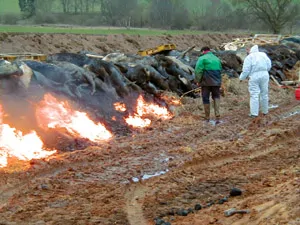 Furthermore, it is specified that all disease control measures must take animal welfare into account, in order to prevent the animals concerned—including strays—from experiencing any pain, distress, or suffering.
To address the issue of stray animals that may transmit diseases, MEPs have included provisions requiring the registration of all professional breeders and animal sellers
, as well as empowering the Commission to request that EU Member States, if necessary, establish a computerized database listing all dogs and other animals.
The draft text must now be approved by the Parliament’s Committee on Agriculture in about ten days, after which it will be reviewed by the Council. Finally, the legislative proposal is expected to be approved by the full Parliament during its second reading.
Furthermore, it is specified that all disease control measures must take animal welfare into account, in order to prevent the animals concerned—including strays—from experiencing any pain, distress, or suffering.
To address the issue of stray animals that may transmit diseases, MEPs have included provisions requiring the registration of all professional breeders and animal sellers
, as well as empowering the Commission to request that EU Member States, if necessary, establish a computerized database listing all dogs and other animals.
The draft text must now be approved by the Parliament’s Committee on Agriculture in about ten days, after which it will be reviewed by the Council. Finally, the legislative proposal is expected to be approved by the full Parliament during its second reading.
“The new animal health rules will establish the first-ever link between animal welfare and public health in European legislation, and will be an important tool in the fight against antibiotic resistance in humans, animals, and the environment,”stressed the Parliament’s chief negotiator, Swedish Liberal MEP Marit Paulsen.
- involve both the European Parliament and the Council in establishing and updating a list of potentially dangerous diseases, such as African swine fever, avian influenza, or foot-and-mouth disease, in consultation with experts from the European Food Safety Authority (EFSA);
- involve stakeholders (veterinary professional organizations, agricultural professional organizations, animal protection associations, etc.) in drafting and updating emergency plans.
Read next
Research & Diagnostics
10/09/2026
WHO sets new diagnostic targets for Echinococcus granulosus in humans, dogs and sheep
Research & Diagnostics
10/09/2026
Nipah virus in wastewater: promising for early warning?
Research & Diagnostics
10/01/2026
Commentaires
No comments yet.
Sign in to comment