

Back to articles
Research & Diagnostics
BirdLife International
Common Birds
Pan-European Common Bird Monitoring Scheme
Common European birds are disappearing faster than rare species
B
bertrand-neveux
03/16/2015
3 min read
0 comments
Share:
The number of birds in Europe fell by more than 420 million between 1980 and 2009. A recent study*, which compiled data on 144 species across 25 countries, reveals that 90% of the decline involves common birds, such as the house sparrow, the skylark, the gray partridge, and the starling. Only the blackbird and the blue tit seem to be escaping this mass decline.
To address the global decline in biodiversity, conservation programs have primarily focused on the rarest species, those facing the threat of extinction. In contrast, the decline of common species has received far less attention. Yet, given the sheer number of individuals they comprise, these species have a major impact on the structure and characteristics of ecosystems.
 This is particularly true of birds, which play a vital role in the functioning of many ecosystems. As such, they have been the subject of intensive monitoring programs in Europe for decades. They serve as excellent indicators for studying how the populations of both rare and common species change over time and across a wide geographic area.
In this study, researchers used data from the Pan-European Common Bird Monitoring Scheme
and BirdLife International
to determine how the population sizes and biomass of 144 bird species have changed over thirty years in 25 European countries. Three factors likely to influence population size were also taken into account: habitat type, species size, and dietary preferences.
In 1980, there were approximately 2.06 billion birds worldwide. By 2009, that number had fallen by about 20 percent, dropping to 1.64 billion birds—a difference of more than 420 million. Nearly 90 percent of the losses occurred among the 36 most common species.
This rapid decline is due to the fact that most conservation efforts focus on rare species rather than common birds.
The total biomass of birds has not declined as much as the population decline might suggest. In fact, it has decreased by nearly 7.6 percent, falling from 93,081 metric tons in 1980 to 86,037 metric tons in 2009. This can be explained by a faster decline in small birds compared to larger species
. This reduction in the number of small birds has a particular impact on the control of insect pests, seed dispersal, and the removal of carcasses.
This is particularly true of birds, which play a vital role in the functioning of many ecosystems. As such, they have been the subject of intensive monitoring programs in Europe for decades. They serve as excellent indicators for studying how the populations of both rare and common species change over time and across a wide geographic area.
In this study, researchers used data from the Pan-European Common Bird Monitoring Scheme
and BirdLife International
to determine how the population sizes and biomass of 144 bird species have changed over thirty years in 25 European countries. Three factors likely to influence population size were also taken into account: habitat type, species size, and dietary preferences.
In 1980, there were approximately 2.06 billion birds worldwide. By 2009, that number had fallen by about 20 percent, dropping to 1.64 billion birds—a difference of more than 420 million. Nearly 90 percent of the losses occurred among the 36 most common species.
This rapid decline is due to the fact that most conservation efforts focus on rare species rather than common birds.
The total biomass of birds has not declined as much as the population decline might suggest. In fact, it has decreased by nearly 7.6 percent, falling from 93,081 metric tons in 1980 to 86,037 metric tons in 2009. This can be explained by a faster decline in small birds compared to larger species
. This reduction in the number of small birds has a particular impact on the control of insect pests, seed dispersal, and the removal of carcasses.
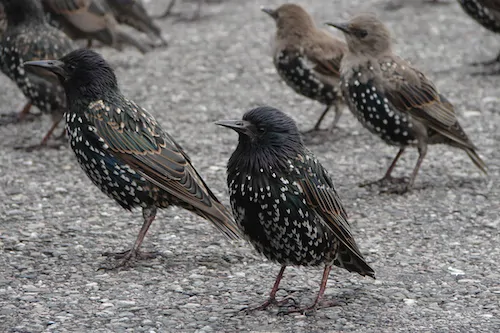 Most of the common species that are disappearing are field birds, likely due to agricultural development.
Habitat type or dietary preferences do not affect the rate of population decline. Rather, this decline is linked to the deterioration of environmental quality on a scale larger than that of specific small habitats. While targeted conservation efforts are in place to increase the populations of rare species—such as white storks or harriers—they offer little protection to the most widespread common birds.
According to the authors, while ecosystems must be preserved as a whole, conservation programs for rare species must better incorporate goals aimed at increasing the overall number of birds.
* R. Inger et al. (2014). Common European birds are declining rapidly while less abundant species’ numbers are rising. Ecology Letters
, doi:10.1111/ele.12387.
Most of the common species that are disappearing are field birds, likely due to agricultural development.
Habitat type or dietary preferences do not affect the rate of population decline. Rather, this decline is linked to the deterioration of environmental quality on a scale larger than that of specific small habitats. While targeted conservation efforts are in place to increase the populations of rare species—such as white storks or harriers—they offer little protection to the most widespread common birds.
According to the authors, while ecosystems must be preserved as a whole, conservation programs for rare species must better incorporate goals aimed at increasing the overall number of birds.
* R. Inger et al. (2014). Common European birds are declining rapidly while less abundant species’ numbers are rising. Ecology Letters
, doi:10.1111/ele.12387.
Read next
Research & Diagnostics
10/09/2026
WHO sets new diagnostic targets for Echinococcus granulosus in humans, dogs and sheep
Research & Diagnostics
10/09/2026
Nipah virus in wastewater: promising for early warning?
Research & Diagnostics
10/01/2026
Commentaires
No comments yet.
Sign in to comment