

Back to articles
Research & Diagnostics
Beagle
Canid
Canine Genetics
Canine Reproduction
Canine species
Cocker Spaniel
Dalmatian
Dog
Dog Breeding
Dog semen
FIV
Golden Retriever
Hereditary Dog Diseases
In Vitro Fertilization
Litter of puppies
Pedigree dog
Puppy
Canine Reproduction: First Successful In Vitro Fertilization in the United States
V
Vetitude
12/18/2015
3 min read
0 comments
Share:
For the first time, a litter of puppies conceived through FIV using previously frozen embryos was born this fall at Cornell University’s College of Veterinary Medicine. Since the 1970s, research on this technique had failed to yield results. That has now changed. Thanks to this technological breakthrough, the seven puppies—three females and four males—born on day 65 via cesarean section are doing well.
This world first in canine reproduction, published online on December 9, 2015, in the journal *PLoS One*
, opens up new possibilities for the conservation of endangered canid species, the eradication of hereditary canine diseases, as well as the study of genetic diseases. Dogs, in fact, share more than 350 hereditary diseases with humans—nearly twice as many as other animal species
.
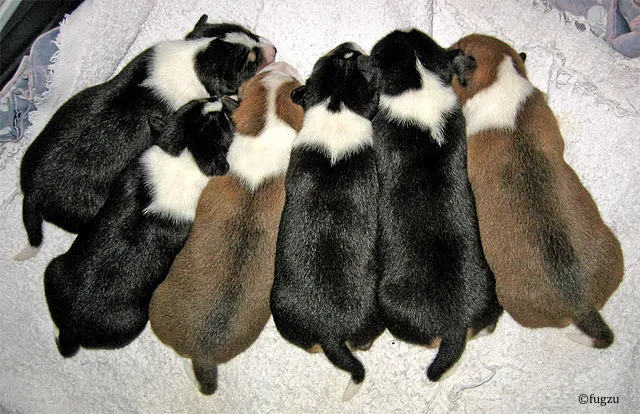 To achieve this successful in vitro
fertilization, nineteen fertilized embryos were implanted into the recipient bitch, who gave birth to seven healthy puppies, derived from the eggs and sperm of three biological females and two biological males of the Beagle and Cocker Spaniel breeds.
The first challenge was to collect mature oocytes from the oviducts of the donor bitches. The researchers first attempted to collect oocytes at the same stage of maturation as in other animals, but since the canine reproductive cycle differs from that of other mammals, this attempt failed. Jennifer Nagashima and her team then observed that if they left the oocytes in the oviduct for one additional day (collecting them on Day 6 rather than Day 5 after the LH surge), they reached a stage of maturation that significantly improved fertilization.
The second challenge relates to the capacitation of dog sperm in the female’s oviduct. This other characteristic specific to dogs forced the researchers to simulate this process in the laboratory. They found that adding magnesium chloride to the storage medium enabled sperm capacitation, as is the case with bovine semen. The sperm remained in this magnesium-enriched capacitation medium for two and a half to three and a half hours. The oocytes and capacitated sperm were then combined in a controlled medium for fourteen hours.
Ultimately, thanks to the resolution of these two challenges, the study reported a success rate of 80 to 90 percent for in vitro
fertilization out of 146 oocytes.
The final challenge for the researchers was to freeze the resulting embryos, then thaw them for implantation into the five female recipients at the appropriate time in their reproductive cycle (on Day 8 or Day 10). The first four embryo transfers, performed by making a puncture in the wall of the oviduct, failed. For the fifth attempt, the transfer procedure was therefore modified: access to the infundibulum was cleared for both fallopian tubes so that the embryos could be injected naturally through this pathway.
In the future, with this new canine reproductive technique, it will become possible to manipulate the embryo to correct genetic abnormalities in its genome.
Researchers may then, one day, eradicate genetic and hereditary diseases in dogs. In breeding selection, inbreeding has led to harmful excesses. As a result, certain dog breeds are predisposed to several diseases (Golden Retrievers and lymphoma, Dalmatians and urinary stones, etc.). By combining gene-editing techniques with in vitro
fertilization, it may be possible to eradicate a genetic disease before it develops…*
Jennifer B. Nagashima et al.: “Live births from domestic dog (Canis familiaris) embryos produced by in vitro fertilization,” December 9, 2015.
http://journals.plos.org/plosone/article?id=10.1371/journal.pone.0143930
To achieve this successful in vitro
fertilization, nineteen fertilized embryos were implanted into the recipient bitch, who gave birth to seven healthy puppies, derived from the eggs and sperm of three biological females and two biological males of the Beagle and Cocker Spaniel breeds.
The first challenge was to collect mature oocytes from the oviducts of the donor bitches. The researchers first attempted to collect oocytes at the same stage of maturation as in other animals, but since the canine reproductive cycle differs from that of other mammals, this attempt failed. Jennifer Nagashima and her team then observed that if they left the oocytes in the oviduct for one additional day (collecting them on Day 6 rather than Day 5 after the LH surge), they reached a stage of maturation that significantly improved fertilization.
The second challenge relates to the capacitation of dog sperm in the female’s oviduct. This other characteristic specific to dogs forced the researchers to simulate this process in the laboratory. They found that adding magnesium chloride to the storage medium enabled sperm capacitation, as is the case with bovine semen. The sperm remained in this magnesium-enriched capacitation medium for two and a half to three and a half hours. The oocytes and capacitated sperm were then combined in a controlled medium for fourteen hours.
Ultimately, thanks to the resolution of these two challenges, the study reported a success rate of 80 to 90 percent for in vitro
fertilization out of 146 oocytes.
The final challenge for the researchers was to freeze the resulting embryos, then thaw them for implantation into the five female recipients at the appropriate time in their reproductive cycle (on Day 8 or Day 10). The first four embryo transfers, performed by making a puncture in the wall of the oviduct, failed. For the fifth attempt, the transfer procedure was therefore modified: access to the infundibulum was cleared for both fallopian tubes so that the embryos could be injected naturally through this pathway.
In the future, with this new canine reproductive technique, it will become possible to manipulate the embryo to correct genetic abnormalities in its genome.
Researchers may then, one day, eradicate genetic and hereditary diseases in dogs. In breeding selection, inbreeding has led to harmful excesses. As a result, certain dog breeds are predisposed to several diseases (Golden Retrievers and lymphoma, Dalmatians and urinary stones, etc.). By combining gene-editing techniques with in vitro
fertilization, it may be possible to eradicate a genetic disease before it develops…*
Jennifer B. Nagashima et al.: “Live births from domestic dog (Canis familiaris) embryos produced by in vitro fertilization,” December 9, 2015.
http://journals.plos.org/plosone/article?id=10.1371/journal.pone.0143930
Read next
Research & Diagnostics
10/09/2026
WHO sets new diagnostic targets for Echinococcus granulosus in humans, dogs and sheep
Research & Diagnostics
10/09/2026
Nipah virus in wastewater: promising for early warning?
Research & Diagnostics
10/01/2026
Commentaires
No comments yet.
Sign in to comment