

Back to articles
Research & Diagnostics
Bernese Mountain Dog
Bichon
Breed
Bulldog
Cancer
Castration
Dachshund
Diagnosis
Flat-Coated Retriever
Great Dane
Histiocytic sarcoma
Irish Water Spaniel
Irish Wolfhound
Lymphoid Leukemia
Lymphoma
Mammary gland
Mastiff
Mastocytoma
Melanoma
Retriever
Saint Bernard
Shih Tzu
Spaniel
Sterilization
Vizsla
Cancer in Dogs: Age at Diagnosis Is Related to Breed, Weight, and Sex
V
Vetitude
03/13/2023
3 min read
0 comments
Share:
A study involving more than 3,000 dogs with cancer suggests that screening should be routine starting at age 7—or even as early as age 4 for certain breeds. In fact, large-breed males are at a higher risk of developing the disease at a relatively young age.
The stakes are high, as cancer is the leading cause of death in dogs. About 50% of Spaniels, Irish Water Spaniels, Retrievers, and Flat-Coated Retrievers die from cancer, while the cancer-related mortality rate is significantly lower in breeds such as the Shih Tzu and the Dachshund. Furthermore, while cancer development is not linear, the preclinical phase in dogs can span several years. The study conducted in the United States reveals that, for a dog weighing 75 kg or more, the median age at diagnosis is 5 years, compared to 11 years for a dog weighing 2.5 to 5 kg.
[caption id="attachment_10577" align="alignnone" width="2432"]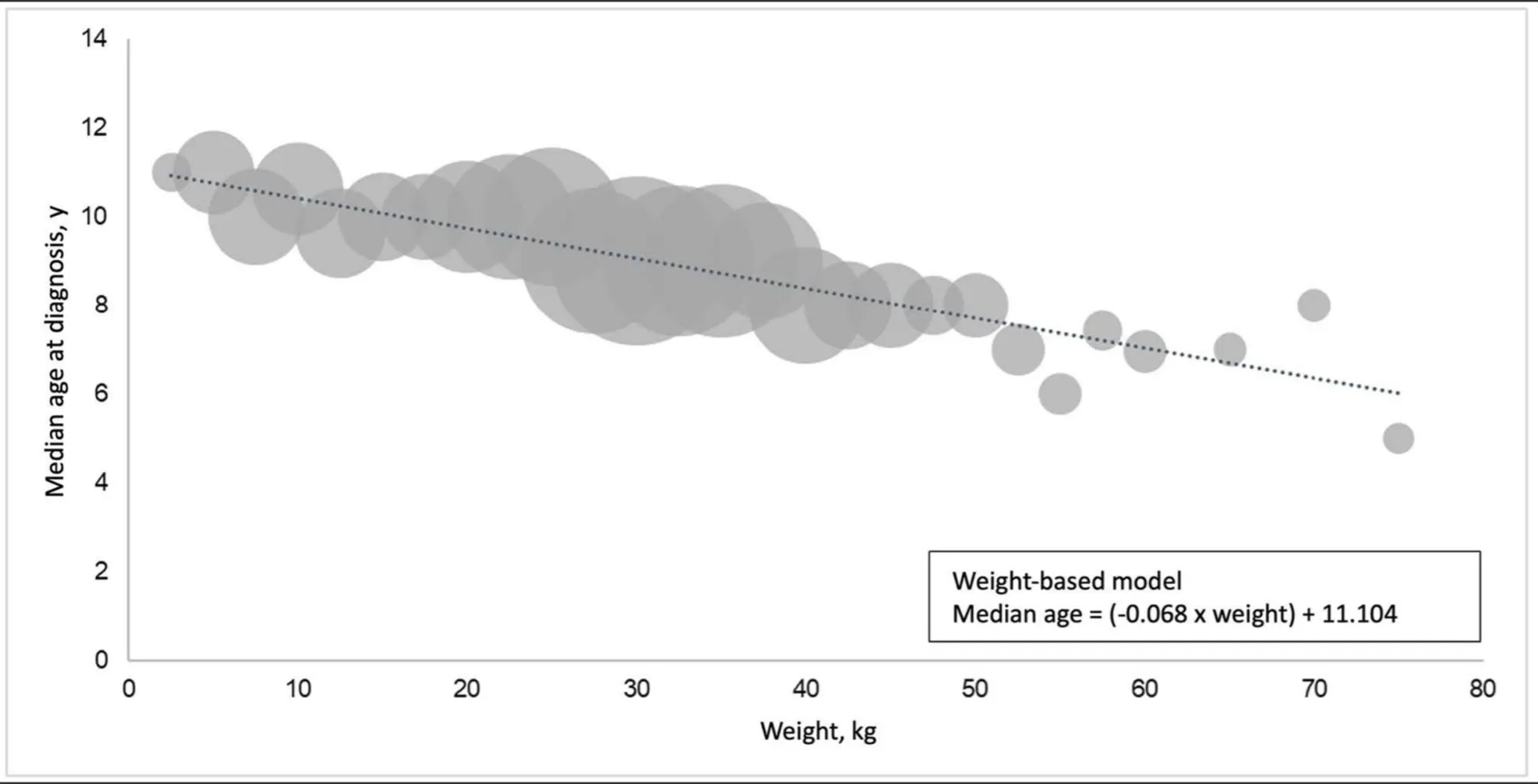 For dogs weighing 75 kg or more, the median age at diagnosis is 5 years, compared to 11 years for dogs weighing 2.5 to 5 kg[/caption]
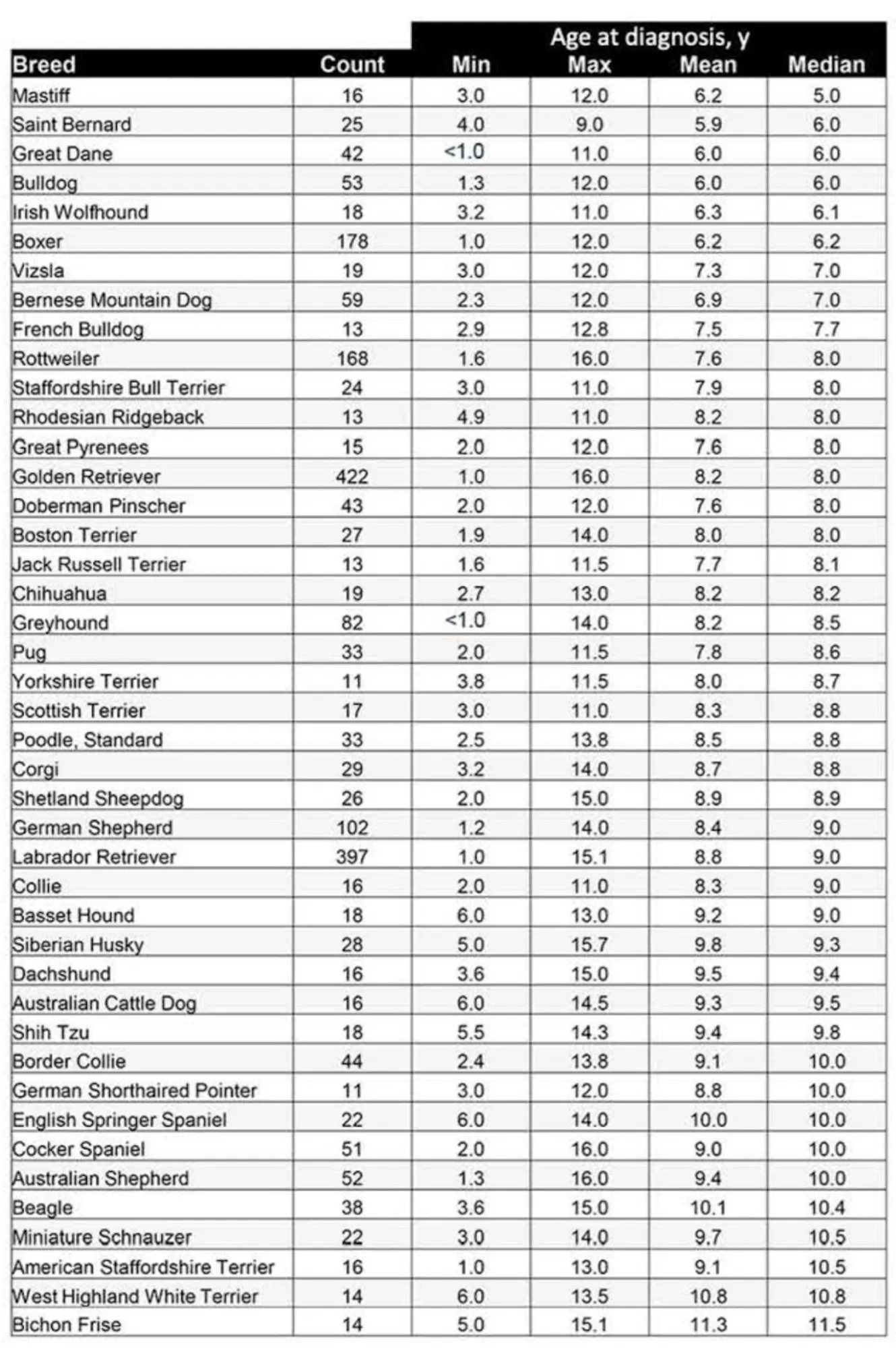 Pedigree dogs are diagnosed around 8.2 years of age, compared to 9.2 years for mixed-breed dogs[/caption]
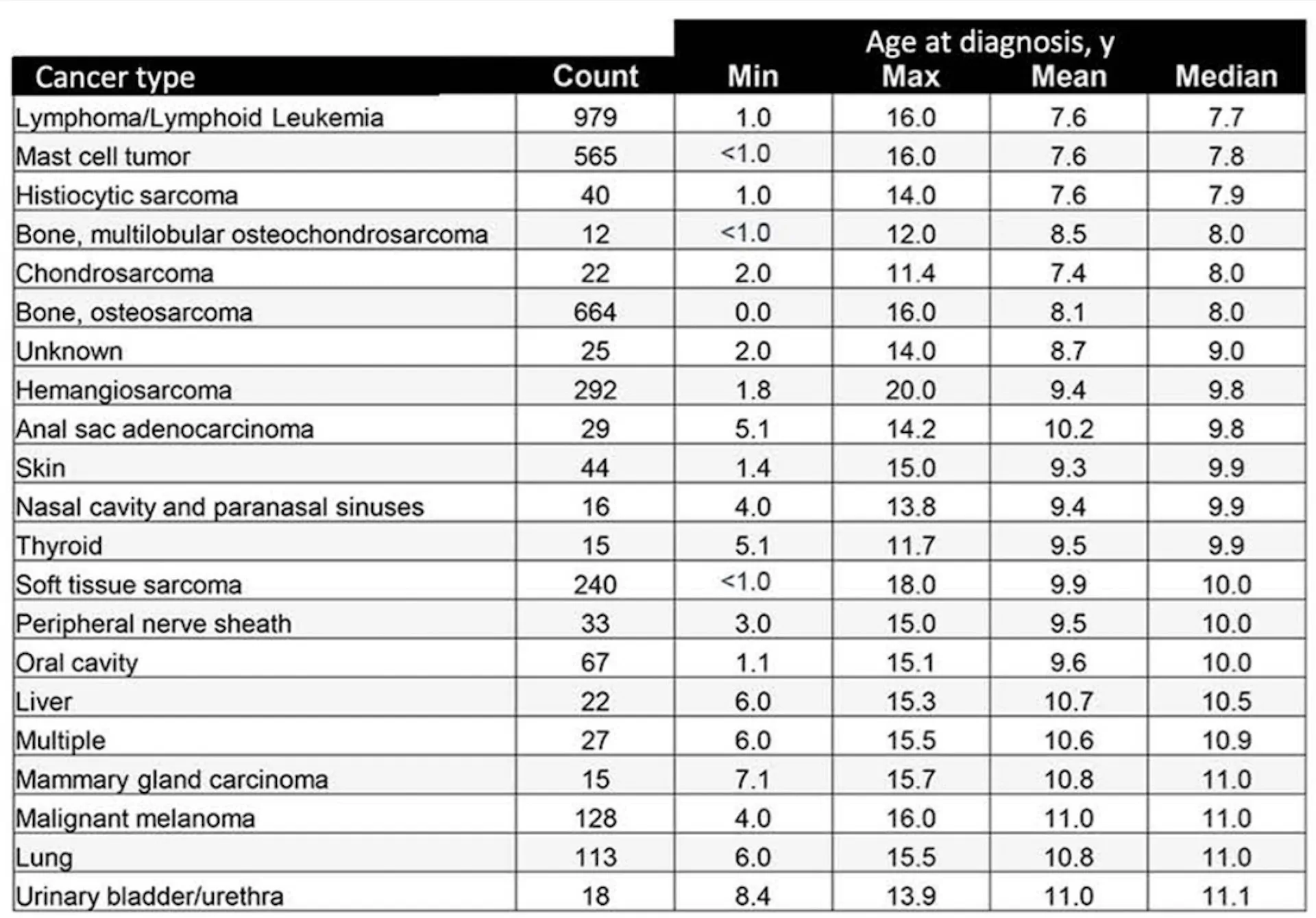 Lymphoma or lymphoid leukemia, mastocytoma, and histiocytic sarcoma are associated with a median age at diagnosis of less than 8 years[/caption]
Blood tests can already detect tumor DNA even before the first clinical signs appear. The authors of the study therefore recommend offering pet owners screening based on blood tests two years before the median age of diagnosis, depending on the dog’s breed or weight.
Lymphoma or lymphoid leukemia, mastocytoma, and histiocytic sarcoma are associated with a median age at diagnosis of less than 8 years[/caption]
Blood tests can already detect tumor DNA even before the first clinical signs appear. The authors of the study therefore recommend offering pet owners screening based on blood tests two years before the median age of diagnosis, depending on the dog’s breed or weight.
The “Breed” Factor
Pedigree dogs are diagnosed around 8.2 years of age, compared to 9.2 years for mixed-breed dogs. Several breeds were studied: Mastiffs, Saint Bernards, Great Danes, and Bulldogs are diagnosed at a median age of 6 years—the earliest among the breeds studied. The median age of diagnosis for the Irish Wolfhound, Vizsla, and Bernese Mountain Dog ranges from 6.1 to 7 years. As for the Bichon Frisé, its median age of diagnosis is the highest: 11.5 years. [caption id="attachment_10575" align="alignnone" width="1516"]The “Sex” Factor
Females are generally diagnosed at a later age than males (an average of 8.3 years, compared to 8.7 years). Note that castration significantly delays the age of diagnosis! Castrated males were diagnosed with cancer at an earlier age than females who underwent sterilization (average of 8.5 years, versus 8.9 years), but a significant difference is observed between neutered and unneutered males (average of 8.5 years versus 7.6 years) and between females who have undergone sterilization and those who have not (average of 8.9 years versus 7.3 years).The “type of cancer” factor
Lymphoma or lymphoid leukemia, mastocytoma, and histiocytic sarcoma are associated with a median age at diagnosis of less than 8 years, whereas malignant melanoma and cancers of the mammary gland, lung, and bladder or urethra are diagnosed at a median age of 11 years or older. [caption id="attachment_10576" align="alignnone" width="1920"]Read next
Research & Diagnostics
10/09/2026
WHO sets new diagnostic targets for Echinococcus granulosus in humans, dogs and sheep
Research & Diagnostics
10/09/2026
Nipah virus in wastewater: promising for early warning?
Research & Diagnostics
10/01/2026
Commentaires
No comments yet.
Sign in to comment