

Back to articles
Research & Diagnostics
Animal
Brucella melitensis
Brucellosis
Capra ibex
CNPN
FNE
France Nature Environment
Frapna
French Agency for Food, Environmental and Occupational Health & Safety
Ibex
LPO
National Council for Nature Conservation
National Office for Hunting and Wildlife
ONCFS
Public health
Quotes
Slaughter
Vaccination
Veterinarian
Brucellosis: Another Mass Cull Looms for the Ibex of Haute-Savoie
V
Vetitude
09/24/2015
4 min read
0 comments
Share:
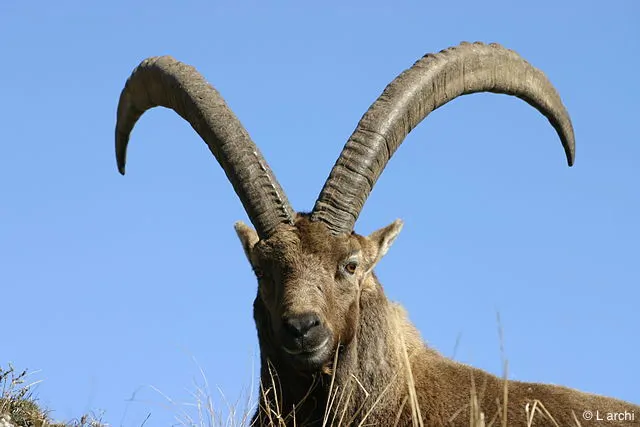
Starting this fall, more than two-thirds of the ibex in the Bargy Massif are expected to be culled to combat brucellosis affecting the herd. About 60 animals, identified as seronegative, are expected to be spared. The prefect of Haute-Savoie has issued a decree* to this effect, against the advice** of experts from the French Agency for Food, Environmental and Occupational Health & Safety (ANSES) and the National Council for Nature Conservation (CNPN). For the third consecutive year, the protected species Capra ibex has thus been at the center of a controversy pitting nature conservation groups against agricultural unions in this Alpine mountain range.
In an effort to eradicate brucellosis, which affects 40% of the Bargy ibex population, animals whose infection status is unknown will be captured by agents of the National Office for Hunting and Wildlife (ONCFS). All animals testing seropositive will be euthanized directly by veterinarians.
In addition, the prefect also plans to have ONCFS agents cull ibex that are not part of the “healthy core” of 61 individuals that tested seronegative this year. Some 230 animals, out of approximately 300, are expected to be culled this fall. Postmortem samples will be collected for analysis. In the spring, the tagged individuals from the healthy core group will be tested again, and the seropositive individuals will in turn be subject to a capture and euthanasia operation.
And if the Bargy population, once cleared of the disease, struggles to recover from these culling measures, there are plans to reintroduce disease-free ibex from other Alpine ranges in 2016.
Contrary to the prefectoral order, which emphasizes the protection of public health, domestic livestock, and wildlife, four nature conservation organizations (France Nature Environnement, the LPO, Frapna, and Aspas) are mobilizing against this decision, which disregards the unfavorable opinion issued by the CNPN on September 15.
 One of the scenarios proposed by ANSES—vaccination—was not selected due to reliability concerns and implementation difficulties.
According to experts, the Bargy ibex do not pose a significant danger to farm animals or humans. In any case, the risk
is “far lower than that associated with imported brucellosis, which accounts for more than 80% of human brucellosis cases in France each year
.” Furthermore, the outbreak in the Bargy massif cannot be eradicated without implementing a long-term management strategy, involving a combination of measures that include the gradual culling of seropositive animals over several years, as well as preventive vaccination.
For its part, the Savoie Departmental Federation of Farm Unions is calling for an efficient and rapid cull before the rutting season. It believes that the ibex in the Bargy Massif are solely responsible for the Brucella melitensis
infection at a dairy farm in Le Grand-Bornand in April 2012, as well as for two cases of human brucellosis that occurred in 2012 and 2013 in that same town, located in the heart of the Reblochon production area.
Last year, the Bargy herd had already narrowly escaped stamping out. Following intervention by Ségolène Royal, Minister of Ecology, the brucellosis eradication protocol was revised to incorporate the latest available scientific data. The government had then limited itself to a targeted cull of only those ibex tested positive for the disease, without succeeding in reducing the prevalence of the disease. This year, conservationists intend to challenge the new prefectoral order before the Grenoble Administrative Court, in the hope of securing another reprieve.
* Order DDT-2015-0513 of September 16, 2015,
regarding “the authorization to capture, euthanasia of seropositive ibex for the purpose of establishing a healthy core population and monitoring it, and ordering the culling of untested seronegative ibex in 2015 in the Bargy Mountains (Haute-Savoie), in 2015 and 2016, to control the enzootic brucellosis within this population, in the interest of public health and to prevent damage to livestock and mountain agricultural sectors.”
http://www.haute-savoie.gouv.fr/content/download/18517/114485/file/62%20special-17septembre15recueil.pdf
** https://www.anses.fr/fr/system/files/SANT2014sa0218Ra.pdf
One of the scenarios proposed by ANSES—vaccination—was not selected due to reliability concerns and implementation difficulties.
According to experts, the Bargy ibex do not pose a significant danger to farm animals or humans. In any case, the risk
is “far lower than that associated with imported brucellosis, which accounts for more than 80% of human brucellosis cases in France each year
.” Furthermore, the outbreak in the Bargy massif cannot be eradicated without implementing a long-term management strategy, involving a combination of measures that include the gradual culling of seropositive animals over several years, as well as preventive vaccination.
For its part, the Savoie Departmental Federation of Farm Unions is calling for an efficient and rapid cull before the rutting season. It believes that the ibex in the Bargy Massif are solely responsible for the Brucella melitensis
infection at a dairy farm in Le Grand-Bornand in April 2012, as well as for two cases of human brucellosis that occurred in 2012 and 2013 in that same town, located in the heart of the Reblochon production area.
Last year, the Bargy herd had already narrowly escaped stamping out. Following intervention by Ségolène Royal, Minister of Ecology, the brucellosis eradication protocol was revised to incorporate the latest available scientific data. The government had then limited itself to a targeted cull of only those ibex tested positive for the disease, without succeeding in reducing the prevalence of the disease. This year, conservationists intend to challenge the new prefectoral order before the Grenoble Administrative Court, in the hope of securing another reprieve.
* Order DDT-2015-0513 of September 16, 2015,
regarding “the authorization to capture, euthanasia of seropositive ibex for the purpose of establishing a healthy core population and monitoring it, and ordering the culling of untested seronegative ibex in 2015 in the Bargy Mountains (Haute-Savoie), in 2015 and 2016, to control the enzootic brucellosis within this population, in the interest of public health and to prevent damage to livestock and mountain agricultural sectors.”
http://www.haute-savoie.gouv.fr/content/download/18517/114485/file/62%20special-17septembre15recueil.pdf
** https://www.anses.fr/fr/system/files/SANT2014sa0218Ra.pdf
Furthermore, “studies conducted by some fifteen European experts convened by ANSES between October 2014 and July 2015 have demonstrated that mass, rapid, and indiscriminate culling, far from reducing the disease, actually increases the risks, particularly through the dispersal of animals,” these organizations emphasize.
Read next
Research & Diagnostics
10/09/2026
WHO sets new diagnostic targets for Echinococcus granulosus in humans, dogs and sheep
Research & Diagnostics
10/09/2026
Nipah virus in wastewater: promising for early warning?
Research & Diagnostics
10/01/2026
Commentaires
No comments yet.
Sign in to comment