

Back to articles
Bourbon, a new tick-borne virus that is deadly to humans
B
bertrand-neveux
02/23/2015
2 min read
0 comments
Share:
An unknown virus, dubbed “Bourbon,” has just been isolated in the United States. It is believed to have caused the death of a man in Kansas in the spring of 2014, according to analyses by the CDC released on February 20. Its likely route of transmission: ticks.
[caption id="attachment_2067" align="alignleft" width="162"]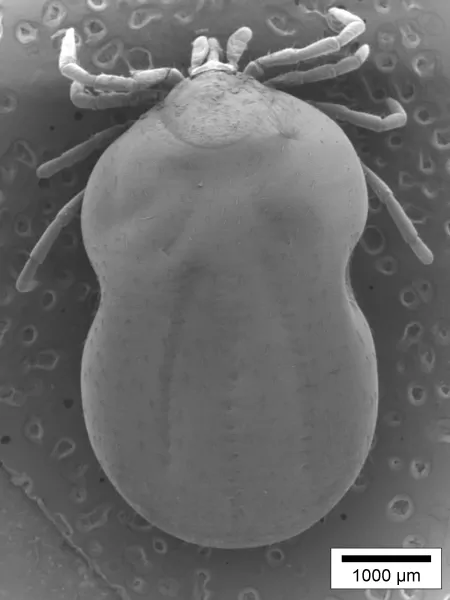 ©Merial[/caption]
The deceased man, who was in his fifties and previously in good health, was bitten by ticks numerous times before developing symptoms of fever and headaches, according to the CDC* study. He was diagnosed with thrombocytopenia and leukopenia and was prescribed doxycycline. His condition deteriorated rapidly—particularly his kidney and respiratory function—despite treatment with doxycycline. He died eleven days after the onset of clinical signs.
The results of molecular and serological tests targeting fungal pathogens and those known to be transmitted by ticks were negative. However, a sample tested for antibodies against the Heartland virus indicated the presence of another virus. Through next-generation sequencing and phylogenetic analysis, the virus was identified as a new member of the genus Thogotovirus.
Associated with ticks or mosquitoes in certain parts of Europe, Asia, and Africa, this is the first time a virus from this family has caused a fatal illness in humans in the United States, and only the eighth known case of symptomatic infection with a Thogotovirus.
Currently, it is unknown how many human infections can be attributed to this new pathogen. Based on information from the Kansas case, infection with the Bourbon virus should be considered in patients presenting with fever, leukopenia, and thrombocytopenia with no other more likely explanation, who test negative for other tick-borne diseases, and who have not responded to doxycycline.
Thus, more comprehensive virological characterizations and fieldwork are underway to better understand the virus’s biology and identify its potential vectors and reservoirs. These data will be essential for characterizing the epidemiology of Bourbon virus disease and implementing prevention and control measures.
©Merial[/caption]
The deceased man, who was in his fifties and previously in good health, was bitten by ticks numerous times before developing symptoms of fever and headaches, according to the CDC* study. He was diagnosed with thrombocytopenia and leukopenia and was prescribed doxycycline. His condition deteriorated rapidly—particularly his kidney and respiratory function—despite treatment with doxycycline. He died eleven days after the onset of clinical signs.
The results of molecular and serological tests targeting fungal pathogens and those known to be transmitted by ticks were negative. However, a sample tested for antibodies against the Heartland virus indicated the presence of another virus. Through next-generation sequencing and phylogenetic analysis, the virus was identified as a new member of the genus Thogotovirus.
Associated with ticks or mosquitoes in certain parts of Europe, Asia, and Africa, this is the first time a virus from this family has caused a fatal illness in humans in the United States, and only the eighth known case of symptomatic infection with a Thogotovirus.
Currently, it is unknown how many human infections can be attributed to this new pathogen. Based on information from the Kansas case, infection with the Bourbon virus should be considered in patients presenting with fever, leukopenia, and thrombocytopenia with no other more likely explanation, who test negative for other tick-borne diseases, and who have not responded to doxycycline.
Thus, more comprehensive virological characterizations and fieldwork are underway to better understand the virus’s biology and identify its potential vectors and reservoirs. These data will be essential for characterizing the epidemiology of Bourbon virus disease and implementing prevention and control measures.
* Novel Thogotovirus Species Associated with Febrile Illness and Death, United States, 2014, EID, vol. 21, no. 5, to be published in May 2015.
Read next
Research & Diagnostics
10/09/2026
WHO sets new diagnostic targets for Echinococcus granulosus in humans, dogs and sheep
Research & Diagnostics
10/09/2026
Nipah virus in wastewater: promising for early warning?
Research & Diagnostics
10/01/2026
Commentaires
No comments yet.
Sign in to comment