

Back to articles
Research & Diagnostics
Biodiversity
Butterfly
Dragonfly
Extinct Species
International Union for Conservation of Nature
Invertebrates
IUCN
Mollusk
Snail
Species
Terrestrial species
Wildlife
Biodiversity, the Sixth Mass Extinction: 7% of known terrestrial species are believed to have already gone extinct
V
Vetitude
06/26/2015
4 min read
0 comments
Share:
Invertebrates account for more than 99% of species diversity, but the status of only a tiny fraction of them has been assessed, resulting in a significant underestimation of the global extinction rate. Based on a random sample of invertebrate species and an extrapolation of the results to all terrestrial biodiversity, a study* concludes that Earth has already lost 7% of known species—approximately 130,000—rather than the 1.3% reported by the International Union for Conservation of Nature (IUCN) Red List, which is based solely on assessed species.
The massive decline in biodiversity due to human activities is very real, according to a multidisciplinary team of French researchers**, including members from the Institute of Systematics, Evolution, and Biodiversity, the Center for Conservation Science, and the University of Hawaii. Yet fewer than a thousand species—out of the approximately 1.9 million recorded on the planet—are officially listed as extinct. But the fact is that, until now, biologists have focused on vertebrates—particularly mammals and birds—neglecting the vast majority of species that suffer from both a lack of knowledge and a shortage of conservation strategies.
While an asteroid was likely the cause of the fifth mass extinction—which wiped out the dinosaurs 65 million years ago—humans are undoubtedly responsible for the sixth, which is currently underway.
 Each year, the IUCN Red List provides a global assessment of species that are extinct or critically endangered. According to its latest update on June 23, it currently lists 77,340 assessed species of flora and fauna, of which 22,784 are endangered. Habitat loss and degradation are the most significant threats to 85% of all listed species. Illegal trade and invasive species are also major causes of population decline.
But over the past four centuries, only 800 plant and animal species have been classified as extinct by the IUCN, while at the same time, biologists discover and describe an average of 18,000 new species each year, adding to the two million already known. This discrepancy stems from the fact that measurements of population decline are based primarily on vertebrates, for which reliable data exists and on which most conservation efforts are focused. When the Red List reports “only” 1.3% extinction among mammals and birds, this figure primarily reflects the success of conservation efforts (the creation of reserves and protected areas, captive breeding programs, etc.). Invertebrates, on the other hand, remain poorly understood and neglected: only 15,911 species are listed by the IUCN, out of approximately 1.4 million described taxa
, and these belong to relatively well-studied groups, such as butterflies, dragonflies, certain snails, etc. Due to the lack of information on threats to invertebrates, most species are excluded from the Red List assessment process.
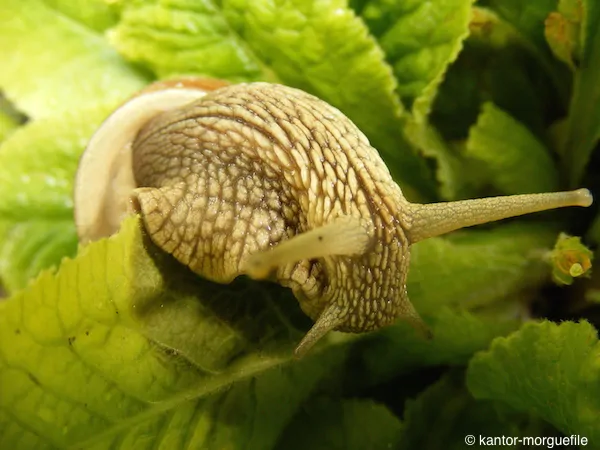
To assess the conservation status of poorly understood species, the multidisciplinary research team (comprising experts in systematics, conservation biology, mathematics, and bioinformatics) re-examined the data underlying the measurement of the sixth mass extinction, focusing specifically on invertebrates. To do so, the researchers chose terrestrial mollusks as their model. To assess the status of 200 randomly selected snail species, they sought the opinions of 35 expert naturalists worldwide and, at the same time, collected all existing information on these 200 species (including 932 bibliographic references, data from the collections of several natural history museums, as well as from hobbyists and collectors, etc.). This literature review fed into a probabilistic mathematical model designed to measure the “chances” of extinction for each species. The conclusions of these two independent approaches—expert opinion and the mathematical model—are remarkably consistent. The experts estimated that 10% of the species in the sample are extinct. When extrapolated to other categories of biodiversity, these results suggest that 7% of the planet’s terrestrial species are already extinct—not just 1.3%.
On oceanic islands, such as Hawaii, this rate is even higher.
Ultimately, this study proposes an alternative approach aimed at measuring global extinction rates, rather than assessing threats and conservation measures. This introduces a certain degree of uncertainty for individual species, but on a large scale, the goal is to provide an estimate of the actual rate of extinction. The Red List and this approach are not mutually exclusive but represent complementary mechanisms for documenting the decline in biodiversity.
* Claire Régnier et al. Mass extinction in poorly known taxa. 2015, PNAS, http://www.pnas.org/content/112/25/7761.full
** Institute of Systematics, Evolution, and Biodiversity, UMR 7205 CNRS/MNHN/UPMC/EPHE/Sorbonne Universities; UMR 7138, CNRS Évolution Paris Seine, UPMC; Bioinformatics Workshop, UPMC; UMR 7241, Inserm U1050, Center for Interdisciplinary Research in Biology, Collège de France; UMR 7599 Laboratory of Probability and Random Models, UPMC, CNRS; UMR 7599 Laboratory of Probability and Random Models, Paris-Diderot University, CNRS; Pacific Biosciences Research Center, University of Hawaii, Honolulu; UMR 7204, Department of Ecology and Biodiversity Management, MNHN/CNRS/UPMC.
Each year, the IUCN Red List provides a global assessment of species that are extinct or critically endangered. According to its latest update on June 23, it currently lists 77,340 assessed species of flora and fauna, of which 22,784 are endangered. Habitat loss and degradation are the most significant threats to 85% of all listed species. Illegal trade and invasive species are also major causes of population decline.
But over the past four centuries, only 800 plant and animal species have been classified as extinct by the IUCN, while at the same time, biologists discover and describe an average of 18,000 new species each year, adding to the two million already known. This discrepancy stems from the fact that measurements of population decline are based primarily on vertebrates, for which reliable data exists and on which most conservation efforts are focused. When the Red List reports “only” 1.3% extinction among mammals and birds, this figure primarily reflects the success of conservation efforts (the creation of reserves and protected areas, captive breeding programs, etc.). Invertebrates, on the other hand, remain poorly understood and neglected: only 15,911 species are listed by the IUCN, out of approximately 1.4 million described taxa
, and these belong to relatively well-studied groups, such as butterflies, dragonflies, certain snails, etc. Due to the lack of information on threats to invertebrates, most species are excluded from the Red List assessment process.
To assess the conservation status of poorly understood species, the multidisciplinary research team (comprising experts in systematics, conservation biology, mathematics, and bioinformatics) re-examined the data underlying the measurement of the sixth mass extinction, focusing specifically on invertebrates. To do so, the researchers chose terrestrial mollusks as their model. To assess the status of 200 randomly selected snail species, they sought the opinions of 35 expert naturalists worldwide and, at the same time, collected all existing information on these 200 species (including 932 bibliographic references, data from the collections of several natural history museums, as well as from hobbyists and collectors, etc.). This literature review fed into a probabilistic mathematical model designed to measure the “chances” of extinction for each species. The conclusions of these two independent approaches—expert opinion and the mathematical model—are remarkably consistent. The experts estimated that 10% of the species in the sample are extinct. When extrapolated to other categories of biodiversity, these results suggest that 7% of the planet’s terrestrial species are already extinct—not just 1.3%.
On oceanic islands, such as Hawaii, this rate is even higher.
Ultimately, this study proposes an alternative approach aimed at measuring global extinction rates, rather than assessing threats and conservation measures. This introduces a certain degree of uncertainty for individual species, but on a large scale, the goal is to provide an estimate of the actual rate of extinction. The Red List and this approach are not mutually exclusive but represent complementary mechanisms for documenting the decline in biodiversity.
* Claire Régnier et al. Mass extinction in poorly known taxa. 2015, PNAS, http://www.pnas.org/content/112/25/7761.full
** Institute of Systematics, Evolution, and Biodiversity, UMR 7205 CNRS/MNHN/UPMC/EPHE/Sorbonne Universities; UMR 7138, CNRS Évolution Paris Seine, UPMC; Bioinformatics Workshop, UPMC; UMR 7241, Inserm U1050, Center for Interdisciplinary Research in Biology, Collège de France; UMR 7599 Laboratory of Probability and Random Models, UPMC, CNRS; UMR 7599 Laboratory of Probability and Random Models, Paris-Diderot University, CNRS; Pacific Biosciences Research Center, University of Hawaii, Honolulu; UMR 7204, Department of Ecology and Biodiversity Management, MNHN/CNRS/UPMC.
Read next
Research & Diagnostics
10/09/2026
WHO sets new diagnostic targets for Echinococcus granulosus in humans, dogs and sheep
Research & Diagnostics
10/09/2026
Nipah virus in wastewater: promising for early warning?
Research & Diagnostics
10/01/2026
Commentaires
No comments yet.
Sign in to comment