

Back to articles
Biodiversity: New Zealand Plans to Gradually Ban Cats from Its Territory
V
Vetitude
09/04/2018
3 min read
0 comments
Share:
New Zealand authorities are considering banning pet cats in the southern part of the country in order to protect local wildlife, particularly several species of native birds. In the Southland region, owners whose cats die will not be allowed to get another one when their pet passes away. This proposal has been met with opposition from cat owners, who denounce it as “a police state.” They will have to contend with environmental advocates, who, for their part, lament the rapid decline of the country’s local wildlife.
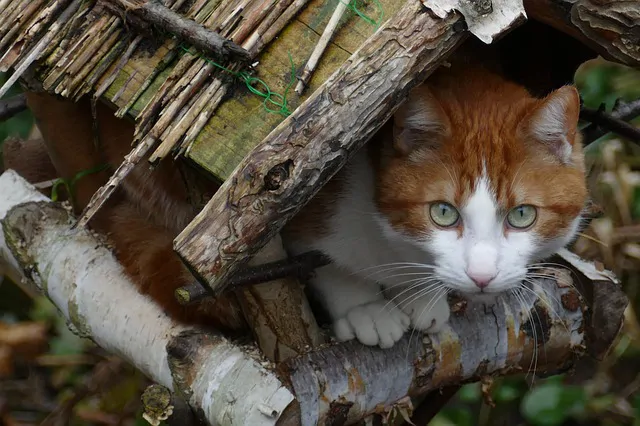 Eventually, pet cats could be banned from a region of New Zealand to protect local wildlife. The Southland Regional Council is proposing a new 10-year biosecurity strategy that includes biosecurity measures to combat some 70 invasive species, two of which specifically target pet cats
in the sensitive areas of Omaui and Stewart Island/Rakiura. Local authorities aim to protect 230 hectares of bushland and forest that are home to small native birds—such as the collared wren, the gerigone, the mahoua pipipi, and the brilliant cuckoo—as well as larger species like the tui.
A pest control plan will be implemented; cat owners will be required to have their pets undergo sterilization, microchipping, and registration with local authorities within the next six months. Furthermore, they will no longer be allowed to replace their cat after it dies.
New Zealand has the highest proportion of endangered species in the world, as it is home to more than 4,000 endangered animal species (81% of birds, 88% of reptiles, and 72% of native fish), ranging from Maui’s and Hector’s dolphins to the kiwi, the country’s national symbol. Most native species are found nowhere else.
Cats, which arrived 200 years ago with the settlers, are causing significant damage to the country’s birds, insects, and reptiles—all of which are “toothless” species. Yet New Zealand has more cats per capita than any other country in the world
. Considered essential for managing rat infestations in the country, domestic and feral cats kill some 25 million native birds each year, spread disease, and cost New Zealand’s economy and primary sector $3.3 billion annually. Efforts to eradicate them have been underway for several years.
For example, Conservation Minister Eugenie Sage recently called for a ban on cats in New Zealand’s capital, Wellington, to restore the kiwi population
. Auckland, New Zealand’s largest city, has proposed a plan to euthanize any cat without
a microchip that
is captured near an “ecologically significant site” home to vulnerable wildlife. Most importantly, the government has adopted the Predator-Free New Zealand
plan, which aims to eradicate rats, possums, stoats, and all other invasive mammals from the country by 2050.
Residents of Southland have two months to voice their opinions on the regional pest management plan and the eventual ban on domestic cats, with the deadline set for October 23, 2018. A petition opposing the measures proposed by Environment Southland is already circulating.
Eventually, pet cats could be banned from a region of New Zealand to protect local wildlife. The Southland Regional Council is proposing a new 10-year biosecurity strategy that includes biosecurity measures to combat some 70 invasive species, two of which specifically target pet cats
in the sensitive areas of Omaui and Stewart Island/Rakiura. Local authorities aim to protect 230 hectares of bushland and forest that are home to small native birds—such as the collared wren, the gerigone, the mahoua pipipi, and the brilliant cuckoo—as well as larger species like the tui.
A pest control plan will be implemented; cat owners will be required to have their pets undergo sterilization, microchipping, and registration with local authorities within the next six months. Furthermore, they will no longer be allowed to replace their cat after it dies.
New Zealand has the highest proportion of endangered species in the world, as it is home to more than 4,000 endangered animal species (81% of birds, 88% of reptiles, and 72% of native fish), ranging from Maui’s and Hector’s dolphins to the kiwi, the country’s national symbol. Most native species are found nowhere else.
Cats, which arrived 200 years ago with the settlers, are causing significant damage to the country’s birds, insects, and reptiles—all of which are “toothless” species. Yet New Zealand has more cats per capita than any other country in the world
. Considered essential for managing rat infestations in the country, domestic and feral cats kill some 25 million native birds each year, spread disease, and cost New Zealand’s economy and primary sector $3.3 billion annually. Efforts to eradicate them have been underway for several years.
For example, Conservation Minister Eugenie Sage recently called for a ban on cats in New Zealand’s capital, Wellington, to restore the kiwi population
. Auckland, New Zealand’s largest city, has proposed a plan to euthanize any cat without
a microchip that
is captured near an “ecologically significant site” home to vulnerable wildlife. Most importantly, the government has adopted the Predator-Free New Zealand
plan, which aims to eradicate rats, possums, stoats, and all other invasive mammals from the country by 2050.
Residents of Southland have two months to voice their opinions on the regional pest management plan and the eventual ban on domestic cats, with the deadline set for October 23, 2018. A petition opposing the measures proposed by Environment Southland is already circulating.
Read next
Research & Diagnostics
10/09/2026
WHO sets new diagnostic targets for Echinococcus granulosus in humans, dogs and sheep
Research & Diagnostics
10/09/2026
Nipah virus in wastewater: promising for early warning?
Research & Diagnostics
10/01/2026
Commentaires
No comments yet.
Sign in to comment