

Back to articles
Research & Diagnostics
Association for the Preservation of the Auvergne Shepherd Dog
Auvergne Shepherd
Border Collie
Herding dog
Hunting dog
Pedigree dog
Shepherd
Shepherd dog
Veterinarian
Watchdog
Working dog
Auvergne Shepherd: A Dog from the Massif Central Worth Rediscovering
V
Vetitude
08/31/2015
3 min read
0 comments
Share:
Herding dog, guarding, and hunting—these were the qualities of the shepherd dog that once roamed not only the Auvergne but also the entire Massif Central. Renowned for its intelligence, it has nevertheless gradually been replaced by the Border Collie. By the mid-1980s, its population had declined sharply, and by the early 2000s, it had all but disappeared.
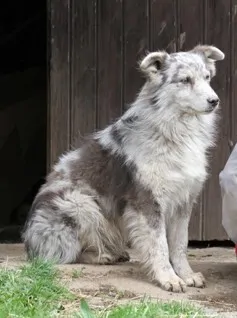 This “all-purpose” breed, now on the brink of extinction, was officially rediscovered in May 2014 on a few farms in Auvergne. The Association for the Preservation of the Auvergne Shepherd Dog, founded last November, needs support and is issuing a call for help, particularly to veterinarians in the Auvergne region. Indeed, they are on the front lines and are most likely to encounter this type of dog during their visits to farms in the region. That is why the association is asking them to note the name, age, and sex of any dog resembling an Auvergne Shepherd they encounter in the field, along with the owner’s contact information, and to send this information via email.
Similarly, anyone who may own an Auvergne Shepherd-type dog is encouraged to contact the association to help ensure the survival of this endangered dog breed.
Contact: Julien Souvignet, 06 85 38 42 58, [email protected]
For more information: http://chienbergerdauvergne.jimdo.com/
This “all-purpose” breed, now on the brink of extinction, was officially rediscovered in May 2014 on a few farms in Auvergne. The Association for the Preservation of the Auvergne Shepherd Dog, founded last November, needs support and is issuing a call for help, particularly to veterinarians in the Auvergne region. Indeed, they are on the front lines and are most likely to encounter this type of dog during their visits to farms in the region. That is why the association is asking them to note the name, age, and sex of any dog resembling an Auvergne Shepherd they encounter in the field, along with the owner’s contact information, and to send this information via email.
Similarly, anyone who may own an Auvergne Shepherd-type dog is encouraged to contact the association to help ensure the survival of this endangered dog breed.
Contact: Julien Souvignet, 06 85 38 42 58, [email protected]
For more information: http://chienbergerdauvergne.jimdo.com/
> Build: typical of French herding dogs, with a light to fairly sturdy build. The head is long, the skull rather narrow, and the muzzle fine and slightly conical. The stop is slight, and the ears are drooping or semi-drooping. The round eyes are yellow, orange, or hazel depending on coat color; the lips hang only slightly. The body is well-balanced, slightly longer than it is tall. The tail is long and well-curved, though sometimes naturally short; dewclaws are common.
> Coat: The coat is most often short to very short, dense, or even medium-length with feathering on the legs. A wire-haired coat is rare. Coat colors vary: from light fawn to heavily charcoal-tinged fawn, sometimes brindled, black, brown, or black and tan, with or without white, though white is less common. Nearly half of the dogs carry the merle gene, which is expressed from birth. It affects only black and brown coats, giving the coat a patchwork appearance that has led to these dogs being compared to hyenas.
Description of the Auvergne Shepherd
> Size: medium, approximately 50 cm at the withers. > Weight: around 20 kg for females, nearly 23 kg for males.Read next
Research & Diagnostics
10/09/2026
WHO sets new diagnostic targets for Echinococcus granulosus in humans, dogs and sheep
Research & Diagnostics
10/09/2026
Nipah virus in wastewater: promising for early warning?
Research & Diagnostics
10/01/2026
Commentaires
No comments yet.
Sign in to comment