

Back to articles
Research & Diagnostics
AFVAC
AI
Animal E-Health
Animal health
Artificial Intelligence
Augmented Reality
Big Data
Biotechnology
Blockchain
Capdouleur
CRISPR
Data
Diagnosis
E-health
Health
IBM
Telemedicine
Thierry Poitte
Veterinarian
Veterinary Council
Veterinary medicine
Vetfuturs
Virtual Reality
VR
Watson
Animal Health E-Health Workshop: Livestock Farming and Veterinary Medicine Facing Opportunities… or Threats, Part 2 of 2
V
Vetitude
07/15/2017
8 min read
0 comments
Share:
The Human e-Health Summer School was held in Castres from July 4 to 6 at the campus of the School of Engineering in Computer Science and Health Information Systems (ISIS), founded in 2006. This 11th edition brought together healthcare professionals, industry representatives, researchers, and others to discuss the applications of new technologies in the fields of health and well-being. For the second consecutive year, a thematic workshop was dedicated to animal health. This second edition confirms not only the importance of digital innovation in animal health but also its significant potential for the veterinary profession. While this technological shift has yet to fully take hold, 2017 could be the year it comes of age.
 Data control is the strategic crux of information systems. Today, livestock producers are trying to regain control over data that has been left in the hands of agricultural organizations and industry—much like grain farmers with their tractors or dairy farmers with their milking machines. Once this data is collected, livestock producers can only access it in the form of services—some of which are free, others not.
According to Denis Avignon, “livestock data must be integrated into veterinary practices, if only to meet client expectations regarding precision preventive medicine and individualized curative care.”
The fact remains, however, that agricultural professionals are not willing to pay for such a service—or, rather, to make their data available to veterinarians for free.
The stakes surrounding big data
are so high that they are also fueling another disruptive advancement: artificial intelligence (AI). For while trillions of data points are generated every day, decisions are made without truly understanding what this information reveals. Intelligent systems like Watson, launched by IBM, have therefore emerged to help make better, more informed, and scientifically grounded choices. Their capabilities have multiple applications in fields as varied as veterinary medicine, legal assistance, and music composition. Thus, AI will assist veterinarians with diagnosis, prescribing, and even follow-up care.
But the risk is that this technology could replace veterinarians altogether. While this would benefit pet owners, it would only be a short-term solution, because without veterinarians, there can be no curative veterinary medicine. Furthermore, these programs are not yet capable of operating autonomously.
Telemedicine, therefore, represents a logical and long-awaited opportunity for these technologies. While it is still prohibited, the tools exist: AI, blockchain
, augmented or virtual reality, mobility, and more. Currently, regulations require veterinarians to make a diagnosis following a clinical examination of the animal. The portability of this consultation is not yet provided for. According to Didier Avignon, “artificial intelligence should not replace veterinarians, but rather create improved veterinary medicine. The Veterinary Council remains vigilant regarding a potential loss of professional oversight.”
No, the veterinary profession is not risk-averse. It has simply identified, alongside the real opportunities, the threats inherent in e-health. Bernard Vallat, former director of the World Organisation for Animal Health, noted that “it is thanks to big data that the WOAH has been able to develop tools for managing health crises in real time, worldwide, despite the heterogeneity of veterinary services
[…] Innovation must strive for excellence, not deregulation. It is essential that the handling of health alerts be entrusted solely to professionals in health response roles.”
If only to prevent panic and the accompanying spread of fake news
.
Data control is the strategic crux of information systems. Today, livestock producers are trying to regain control over data that has been left in the hands of agricultural organizations and industry—much like grain farmers with their tractors or dairy farmers with their milking machines. Once this data is collected, livestock producers can only access it in the form of services—some of which are free, others not.
According to Denis Avignon, “livestock data must be integrated into veterinary practices, if only to meet client expectations regarding precision preventive medicine and individualized curative care.”
The fact remains, however, that agricultural professionals are not willing to pay for such a service—or, rather, to make their data available to veterinarians for free.
The stakes surrounding big data
are so high that they are also fueling another disruptive advancement: artificial intelligence (AI). For while trillions of data points are generated every day, decisions are made without truly understanding what this information reveals. Intelligent systems like Watson, launched by IBM, have therefore emerged to help make better, more informed, and scientifically grounded choices. Their capabilities have multiple applications in fields as varied as veterinary medicine, legal assistance, and music composition. Thus, AI will assist veterinarians with diagnosis, prescribing, and even follow-up care.
But the risk is that this technology could replace veterinarians altogether. While this would benefit pet owners, it would only be a short-term solution, because without veterinarians, there can be no curative veterinary medicine. Furthermore, these programs are not yet capable of operating autonomously.
Telemedicine, therefore, represents a logical and long-awaited opportunity for these technologies. While it is still prohibited, the tools exist: AI, blockchain
, augmented or virtual reality, mobility, and more. Currently, regulations require veterinarians to make a diagnosis following a clinical examination of the animal. The portability of this consultation is not yet provided for. According to Didier Avignon, “artificial intelligence should not replace veterinarians, but rather create improved veterinary medicine. The Veterinary Council remains vigilant regarding a potential loss of professional oversight.”
No, the veterinary profession is not risk-averse. It has simply identified, alongside the real opportunities, the threats inherent in e-health. Bernard Vallat, former director of the World Organisation for Animal Health, noted that “it is thanks to big data that the WOAH has been able to develop tools for managing health crises in real time, worldwide, despite the heterogeneity of veterinary services
[…] Innovation must strive for excellence, not deregulation. It is essential that the handling of health alerts be entrusted solely to professionals in health response roles.”
If only to prevent panic and the accompanying spread of fake news
.
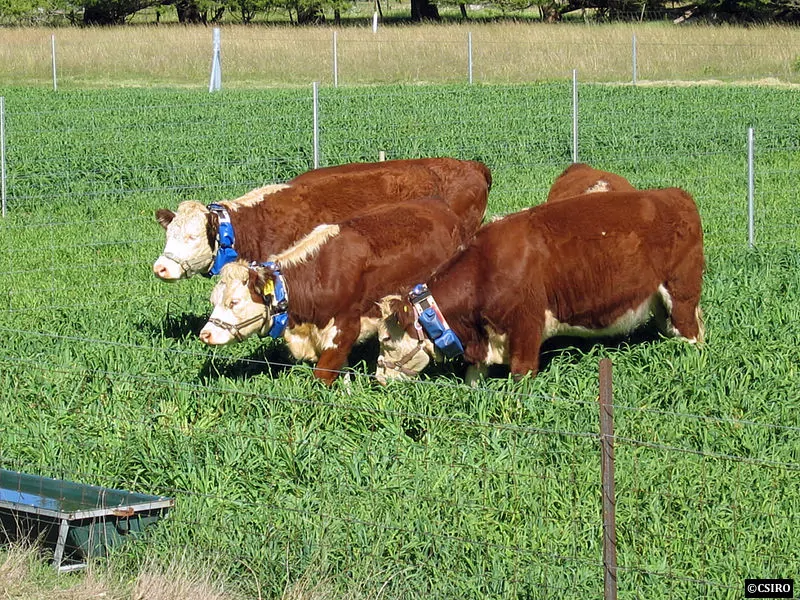 According to the Institut de l’élevage, 70% of dairy farms are already connected. Small ruminant farms are also making use of these technologies. For example, 3D-related programs are currently being developed to improve morphological monitoring and body scoring. GPS, meanwhile, makes it possible to track animals’ movements to detect animal health problems through
abnormal behavior. And heat detection has an 80% success rate, whereas a farmer alone can only achieve a maximum of 50%. “Connected tools significantly improve the farmer’s day-to-day operations, and yet the return on investment is currently unfavorable.”
The economic viability of this technology thus remains the main obstacle across the entire animal production chain.
For veterinarians not to miss this digital shift—as Vetfuturs hopes—it will be necessary to define not just a range of services, but economically viable solutions and business models
. The first edition, in 2016, highlighted the weaknesses of technological projects in the field of animal health: a lack of strategy, purely technical solutions, and a disconnect from the market. In fact, while IoT solutions appear almost every week in the animal sector, they disappear almost as quickly.
This observation is confirmed in the equine industry. The competitive horse is a highly sought-after asset. There is a great need for data
. The Hippolia cluster brings together the sector’s initiatives in France. According to Audrey Aussibal, “projects must be profitable, linked to services, respond to a market—and thus to demand—and be sustainable over the long term
.” The problem is therefore clearly identified. But it is not the only one: “The e-health landscape for horses is ahead of the curve, but it focuses more on horses in training than on those in the stable. E-health is valuable for prevention, but we are sorely lacking technical solutions for horses outdoors.”
Worse still, “it is urgent that research embrace these new tools, as there is a lack of scientific data to properly interpret the collected
data.”
Could it be that animal health e-health has simply approached the market the wrong way around? By first marketing technical products before laying the groundwork for sustainable, long-term development capable of withstanding technological changes? Putting the animal back at the center of concerns—whether the owner is a professional or not—could be the true added value that veterinary practitioners provide, as envisioned by Vetfuturs.
According to the Institut de l’élevage, 70% of dairy farms are already connected. Small ruminant farms are also making use of these technologies. For example, 3D-related programs are currently being developed to improve morphological monitoring and body scoring. GPS, meanwhile, makes it possible to track animals’ movements to detect animal health problems through
abnormal behavior. And heat detection has an 80% success rate, whereas a farmer alone can only achieve a maximum of 50%. “Connected tools significantly improve the farmer’s day-to-day operations, and yet the return on investment is currently unfavorable.”
The economic viability of this technology thus remains the main obstacle across the entire animal production chain.
For veterinarians not to miss this digital shift—as Vetfuturs hopes—it will be necessary to define not just a range of services, but economically viable solutions and business models
. The first edition, in 2016, highlighted the weaknesses of technological projects in the field of animal health: a lack of strategy, purely technical solutions, and a disconnect from the market. In fact, while IoT solutions appear almost every week in the animal sector, they disappear almost as quickly.
This observation is confirmed in the equine industry. The competitive horse is a highly sought-after asset. There is a great need for data
. The Hippolia cluster brings together the sector’s initiatives in France. According to Audrey Aussibal, “projects must be profitable, linked to services, respond to a market—and thus to demand—and be sustainable over the long term
.” The problem is therefore clearly identified. But it is not the only one: “The e-health landscape for horses is ahead of the curve, but it focuses more on horses in training than on those in the stable. E-health is valuable for prevention, but we are sorely lacking technical solutions for horses outdoors.”
Worse still, “it is urgent that research embrace these new tools, as there is a lack of scientific data to properly interpret the collected
data.”
Could it be that animal health e-health has simply approached the market the wrong way around? By first marketing technical products before laying the groundwork for sustainable, long-term development capable of withstanding technological changes? Putting the animal back at the center of concerns—whether the owner is a professional or not—could be the true added value that veterinary practitioners provide, as envisioned by Vetfuturs.
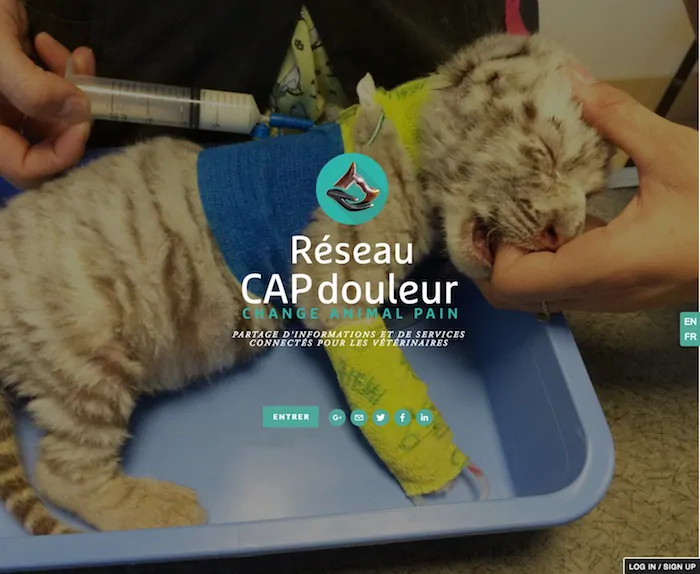 The pain management program
initiated by Thierry Poitte, a veterinarian and 2015 recipient of the Veterinary Council’s award, is now the most advanced within the Vetfuturs framework. This network for veterinarians now offers databases (bibliography, scientific monitoring), accreditation for training, and a platform for exchange among veterinary practitioners. “Capdouleur brings together both general practitioners and specialists in an interdisciplinary and cross-functional manner. To date, the veterinary network coverage encompasses 143 veterinary clinics and 489 veterinary practitioners.”
The approach is designed to be participatory, ensuring connectivity not only among veterinarians but also between veterinarians and pet owners in the context of treatment adherence. Two apps, Dolodog and Dolocat, enable pain assessment and facilitate communication on the subject. “This allows us to offer personalized medicine that recognizes pain as being influenced by both genetic and environmental factors. ”
Success will come from the international expansion of the program and the establishment of dedicated pain management centers, similar to those in human medicine. Several animal species will be treated in the coming year, particularly in rural settings.
Ultimately, this initiative meets all the criteria of a disruptive strategy driven by new technologies. Indeed, it transforms how veterinarians manage their daily work; it enables veterinary practitioners to use data
to refine their practices and further their education; they simply need to take this approach all the way by integrating it into the first veterinary blockchain
worthy of the name; it incorporates the first elements of artificial intelligence. Finally, it offers what every user of new technologies seeks: freedom and autonomy from traditional models of veterinary science, veterinary training, and communication
.
The pain management program
initiated by Thierry Poitte, a veterinarian and 2015 recipient of the Veterinary Council’s award, is now the most advanced within the Vetfuturs framework. This network for veterinarians now offers databases (bibliography, scientific monitoring), accreditation for training, and a platform for exchange among veterinary practitioners. “Capdouleur brings together both general practitioners and specialists in an interdisciplinary and cross-functional manner. To date, the veterinary network coverage encompasses 143 veterinary clinics and 489 veterinary practitioners.”
The approach is designed to be participatory, ensuring connectivity not only among veterinarians but also between veterinarians and pet owners in the context of treatment adherence. Two apps, Dolodog and Dolocat, enable pain assessment and facilitate communication on the subject. “This allows us to offer personalized medicine that recognizes pain as being influenced by both genetic and environmental factors. ”
Success will come from the international expansion of the program and the establishment of dedicated pain management centers, similar to those in human medicine. Several animal species will be treated in the coming year, particularly in rural settings.
Ultimately, this initiative meets all the criteria of a disruptive strategy driven by new technologies. Indeed, it transforms how veterinarians manage their daily work; it enables veterinary practitioners to use data
to refine their practices and further their education; they simply need to take this approach all the way by integrating it into the first veterinary blockchain
worthy of the name; it incorporates the first elements of artificial intelligence. Finally, it offers what every user of new technologies seeks: freedom and autonomy from traditional models of veterinary science, veterinary training, and communication
.
Data and Telemedicine: Points of Tension
An Economic Model to Be Created
Biotechnology won’t wait
Another approach reinforces the veterinarian’s role: animal research, whether medical, in the field of animal husbandry, or even basic. Denis Avignon emphasized the veterinary profession’s position in this field: “Biotechnology is evolving rapidly with disruptive technologies such as gene editing via CRISPR (Clustered Regularly Interspaced Short Palindromic Repeats). Working with DNA requires much smaller budgets, thanks to this fast, effective, and accessible tool. However, this will raise ethical issues.” CRISPR editing, a French invention, now makes it possible to reliably create mutations for various purposes: developing animal strains resistant to numerous genetic diseases, cancers, and infections; improving living organisms by selecting or deleting genes, etc. Animals are the primary focus. The ethical debate is not new; it is similar to that surrounding genetically modified organisms (GMOs). The major difference lies in the ease of the method and its widespread adoption. “ The impact of an approach from animal husbandry or medicine on animal health is real. Practitioners must be able to incorporate this development into their daily practice—not by 2050, but within the next two or three years. It is also a matter of animal welfare. ” Except that the veterinary profession, at least in France, does not seem willing to take action against practices that cause disabilities in certain animal species. For brachycephalic dog breeds, condemnation of the “hypertype” has always come from colleagues in other countries—often Anglo-Saxon ones, but not exclusively. Neither the French Association of Pet Veterinarians (AFVAC) nor any professional associations or regulatory bodies has taken a position on this issue. It is therefore difficult to legitimize the veterinarian’s role as a watchdog and guardian of ethics. Unless the positions in favor of animal welfare taken by the former president of the Order, Michel Baussier—against slaughter without stunning and bullfighting—usher in a new era.Capdouleur: The Veterinary Excellence We Expect
Read next
Research & Diagnostics
10/09/2026
WHO sets new diagnostic targets for Echinococcus granulosus in humans, dogs and sheep
Research & Diagnostics
10/09/2026
Nipah virus in wastewater: promising for early warning?
Research & Diagnostics
10/01/2026
Commentaires
No comments yet.
Sign in to comment