

Back to articles
Research & Diagnostics
Aging
Cognitive
Disobedience
Dog
Dog Trainer
Dopamine
Old Dog
Senior Dog
Senior Dogs
Stubbornness
Thesis
Veterinarian
Veterinary medicine
Walk
Animal-Computer Interaction: An Elderly Dog Stimulated by Touchscreen Games
V
Vetitude
02/11/2018
3 min read
0 comments
Share:
A team from the Austrian University of Veterinary Medicine (Vetmeduni Vienna) investigated the benefits of interactive cognitive training for older dogs. After all, lifelong learning is good for dogs, too. Just as with older adults, the use of educational computer exercises helps stimulate the cognitive functions of older dogs and slow the effects of aging. The goal now is to develop a method and software that owners can easily use at home to improve the daily well-being of senior dogs.
 Senior dogs suffer in particular from reduced mobility and motivation, which affect their quality of life. As they age, their owners—while often forgiving disobedience or stubbornness—increasingly, and sometimes unconsciously, reduce the level of daily activity and mental and physical stimulation. However, stopping all activities such as walks, play, and training can lead to faster aging in dogs, with a negative impact on their well-being and may even weaken the bond between the owner and their pet.
As in humans, dopamine production in dogs decreases with age, leading to a decline in memory and motivation. But according to a new study conducted by the Messerli Research Institute at Vetmeduni Vienna, older dogs remain capable of learning, and this natural mental decline can be countered by regular cognitive training—in this case, through computer-based puzzles.
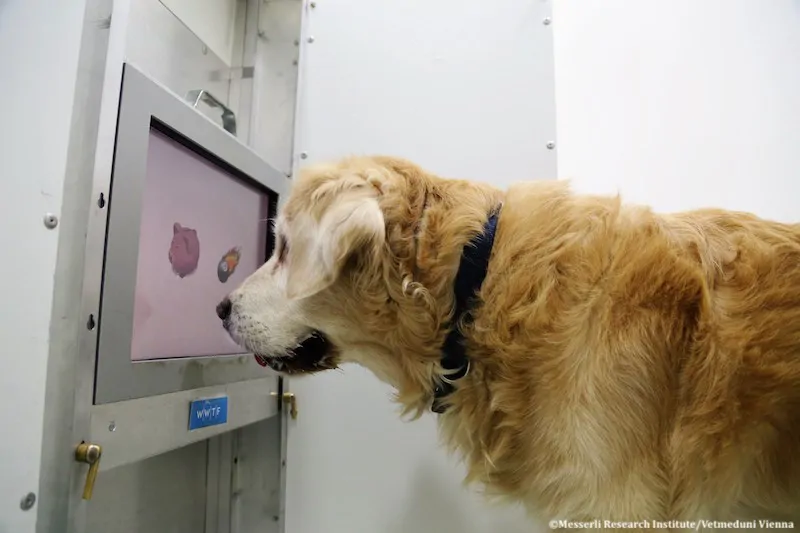
Interactive games were experimentally tested on older dogs using a touchscreen, paired with specific software and a training method. All the dogs responded positively to this cognitive training, even showing great enthusiasm. According to the authors, it is thus possible to slow down aging and improve the quality of life for older dogs through the at-home use of an adapted computer. Future research will need to clarify the effects of tactile interaction on the physiological, behavioral, and cognitive aspects of older dogs, as well as on their motivation, well-being, and the owner-dog relationship.
In any case, simple computer exercises, combined with a reward system, can effectively replace physical activity that has become nonexistent, while keeping senior dogs mentally fit. Even older dogs are ready to solve puzzles and learn once they’ve emerged from the apathy associated with their advanced age. However, the method must now be adapted from the research laboratory to owners’ homes.
In the future, collaboration between researchers in animal-computer interaction, veterinarians, and dog trainers should make it possible to develop the hardware and software needed to expand the potential of this training and enrichment tool. The research team hopes that its study will motivate not only computer scientists and software developers, but also interested dog owners, to consider future collaboration. Their approach could lead to research aimed at increasing our understanding of the importance of lifelong learning in animals.
Senior dogs suffer in particular from reduced mobility and motivation, which affect their quality of life. As they age, their owners—while often forgiving disobedience or stubbornness—increasingly, and sometimes unconsciously, reduce the level of daily activity and mental and physical stimulation. However, stopping all activities such as walks, play, and training can lead to faster aging in dogs, with a negative impact on their well-being and may even weaken the bond between the owner and their pet.
As in humans, dopamine production in dogs decreases with age, leading to a decline in memory and motivation. But according to a new study conducted by the Messerli Research Institute at Vetmeduni Vienna, older dogs remain capable of learning, and this natural mental decline can be countered by regular cognitive training—in this case, through computer-based puzzles.
Interactive games were experimentally tested on older dogs using a touchscreen, paired with specific software and a training method. All the dogs responded positively to this cognitive training, even showing great enthusiasm. According to the authors, it is thus possible to slow down aging and improve the quality of life for older dogs through the at-home use of an adapted computer. Future research will need to clarify the effects of tactile interaction on the physiological, behavioral, and cognitive aspects of older dogs, as well as on their motivation, well-being, and the owner-dog relationship.
In any case, simple computer exercises, combined with a reward system, can effectively replace physical activity that has become nonexistent, while keeping senior dogs mentally fit. Even older dogs are ready to solve puzzles and learn once they’ve emerged from the apathy associated with their advanced age. However, the method must now be adapted from the research laboratory to owners’ homes.
In the future, collaboration between researchers in animal-computer interaction, veterinarians, and dog trainers should make it possible to develop the hardware and software needed to expand the potential of this training and enrichment tool. The research team hopes that its study will motivate not only computer scientists and software developers, but also interested dog owners, to consider future collaboration. Their approach could lead to research aimed at increasing our understanding of the importance of lifelong learning in animals.
Read next
Research & Diagnostics
10/09/2026
WHO sets new diagnostic targets for Echinococcus granulosus in humans, dogs and sheep
Research & Diagnostics
10/09/2026
Nipah virus in wastewater: promising for early warning?
Research & Diagnostics
10/01/2026
Commentaires
No comments yet.
Sign in to comment