

Back to articles
Research & Diagnostics
Animal-Assisted Interventions
Animal-assisted therapy
Assistance dog
Dog
Geriatrics
Hospital
Intensive Care
Johns Hopkins
Pain
Pediatrics
Therapy dog
Animal-Assisted Therapy: Therapy Dogs Are Now Working in Intensive Care Units
V
Vetitude
02/15/2018
3 min read
0 comments
Share:
The presence of therapy dogs in intensive care units may come as a surprise, yet they help alleviate patients’ physical and emotional pain and promote their recovery in a more “humanized” environment. At least, that is what clinicians at Johns Hopkins Hospital in the United States have observed after testing the approach within their department. According to them, the benefits of having animals in the ICU are very real, although further evaluations are needed. This is an example of a non-pharmacological intervention that is just waiting to be successfully replicated elsewhere, in accordance with recommended risk management protocols.
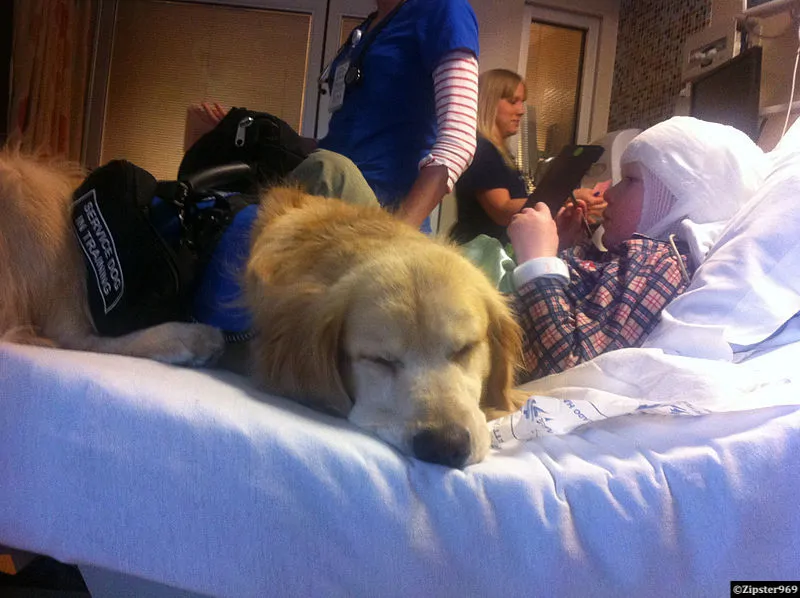 From pediatrics to geriatrics, therapy dogs have long been welcome in many hospitals as part of animal-assisted interventions (AAI)
. But their presence with patients in intensive care units is unprecedented. An American medical team set out to determine whether these patients could also benefit from a similar program, adapting the protocol currently in place at Johns Hopkins Hospital in Baltimore, Maryland, to safely incorporate therapy dogs.
According to the multidisciplinary team, animal-assisted therapy is an excellent example of a non-pharmacological intervention that can help people suffering from a serious illness or who have undergone surgery to become active and take charge of their own recovery, as early as possible—even before they leave their hospital beds. In this context, the dog serves as a tool for this renewed motivation. Sometimes, simply having a dog sit on a patient’s lap is enough to boost their morale and reduce pain.
All dogs involved in animal-assisted therapy protocols at Johns Hopkins are trained and registered through the Pet Partners program. To receive visits, patients must be awake and alert enough to interact calmly with a dog, not be at high risk for infection, and express a desire for the visit.
In 2017, ten patients hospitalized in intensive care received a 20- to 30-minute visit from a therapy dog. In some cases, these animal-assisted therapy visits were combined with the presence of a physical therapist or occupational therapist, integrating physical rehabilitation with the dog’s interaction to help patients achieve specific functional goals more quickly.
In an editorial published in the journal *Critical Care*,
American clinicians share the findings from their own experiences, drawing on those from previously published studies. Thus, to improve the physical and psychological well-being of patients in intensive care, they recommend reducing medication use and placing greater emphasis on non-pharmacological interventions, such as animal-assisted therapy, music therapy, relaxation, and so on.
Patients in intensive care are often hooked up to a wide range of machines that “dehumanize” them and demoralize them. Those who are under sedation and bedridden, in addition to experiencing muscle weakness, are at risk for conditions such as confusion, anxiety, post-traumatic stress, and so on. Studies show that up to 80% of intensive care patients experience delirium or inattention, disorientation, confusion, or even hallucinations during their stay. Evidence shows that the risk of developing these conditions decreases among patients who are more active and receive fewer medications.
The Johns Hopkins team plans to publish a more detailed assessment of the impact of therapy dog visits on intensive care patients. In the meantime, they are encouraging other hospitals to consider and try this therapy, setting clear goals and partnering with a certified program such as Pet Partners
or Assistance Dogs International
. “Animal-assisted therapy is one effective tool among many for treating the mind as well as the body.”
From pediatrics to geriatrics, therapy dogs have long been welcome in many hospitals as part of animal-assisted interventions (AAI)
. But their presence with patients in intensive care units is unprecedented. An American medical team set out to determine whether these patients could also benefit from a similar program, adapting the protocol currently in place at Johns Hopkins Hospital in Baltimore, Maryland, to safely incorporate therapy dogs.
According to the multidisciplinary team, animal-assisted therapy is an excellent example of a non-pharmacological intervention that can help people suffering from a serious illness or who have undergone surgery to become active and take charge of their own recovery, as early as possible—even before they leave their hospital beds. In this context, the dog serves as a tool for this renewed motivation. Sometimes, simply having a dog sit on a patient’s lap is enough to boost their morale and reduce pain.
All dogs involved in animal-assisted therapy protocols at Johns Hopkins are trained and registered through the Pet Partners program. To receive visits, patients must be awake and alert enough to interact calmly with a dog, not be at high risk for infection, and express a desire for the visit.
In 2017, ten patients hospitalized in intensive care received a 20- to 30-minute visit from a therapy dog. In some cases, these animal-assisted therapy visits were combined with the presence of a physical therapist or occupational therapist, integrating physical rehabilitation with the dog’s interaction to help patients achieve specific functional goals more quickly.
In an editorial published in the journal *Critical Care*,
American clinicians share the findings from their own experiences, drawing on those from previously published studies. Thus, to improve the physical and psychological well-being of patients in intensive care, they recommend reducing medication use and placing greater emphasis on non-pharmacological interventions, such as animal-assisted therapy, music therapy, relaxation, and so on.
Patients in intensive care are often hooked up to a wide range of machines that “dehumanize” them and demoralize them. Those who are under sedation and bedridden, in addition to experiencing muscle weakness, are at risk for conditions such as confusion, anxiety, post-traumatic stress, and so on. Studies show that up to 80% of intensive care patients experience delirium or inattention, disorientation, confusion, or even hallucinations during their stay. Evidence shows that the risk of developing these conditions decreases among patients who are more active and receive fewer medications.
The Johns Hopkins team plans to publish a more detailed assessment of the impact of therapy dog visits on intensive care patients. In the meantime, they are encouraging other hospitals to consider and try this therapy, setting clear goals and partnering with a certified program such as Pet Partners
or Assistance Dogs International
. “Animal-assisted therapy is one effective tool among many for treating the mind as well as the body.”
Read next
Research & Diagnostics
10/09/2026
WHO sets new diagnostic targets for Echinococcus granulosus in humans, dogs and sheep
Research & Diagnostics
10/09/2026
Nipah virus in wastewater: promising for early warning?
Research & Diagnostics
10/01/2026
Commentaires
No comments yet.
Sign in to comment