

Back to articles
Research & Diagnostics
Antimicrobial resistance
Bee
Beehive
Beekeeping
Insect
Mange
Paenibacillus larvae
Queen
Vaccine
American foulbrood: Toward a Vaccine to Protect Bees
V
Vetitude
12/22/2022
3 min read
0 comments
Share:
An efficacy study shows that bees born to queens vaccinated against American foulbrood are more resistant than those from hives whose queens are not vaccinated. This vaccination is estimated to reduce the risk of bee larvae becoming infected with the bacteria by 30 to 50 percent. This is the first randomized trial of a vaccine designed for insects and marks a turning point in the management of bee diseases.
According to estimates, half of the world’s honeybee colonies are infected with the bacteria Paenibacillus larvae, the vector of American foulbrood. Vaccinating queens would reduce the risk of mortality from this disease. A new orally administered vaccine could provide transgenerational immunity, thereby increasing the resistance of bees exposed to the bacteria’s spores. The vaccine simply needs to be mixed into the food provided to the new queen before she is introduced into the hive. The vaccine is then concentrated in the bee’s fat body, the storage organ in insects. The vaccine content then binds to proteins involved in nutrient supply to the embryos, which pass it on to the eggs.
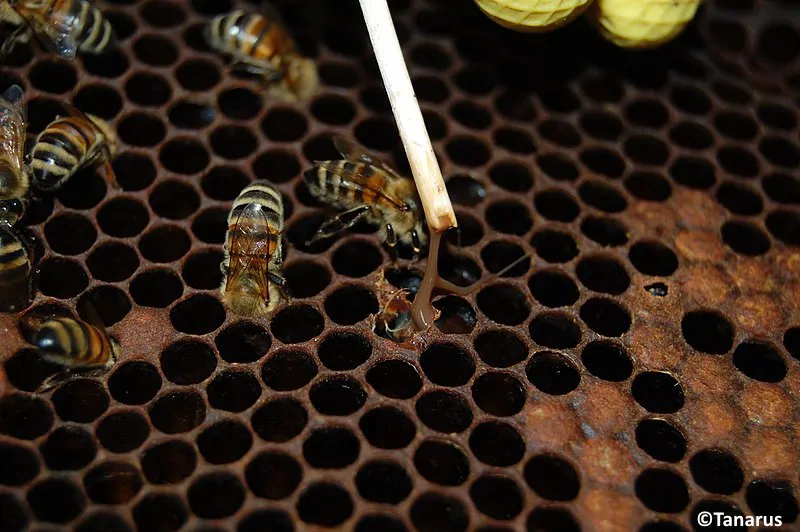
The Current Fight Against American Foulbrood
Today, to eradicate this notifiable disease, beekeepers have no choice but to burn the apiary, the honey, the tools, and everything that has come into contact with the infected hives as soon as the first clinical signs appear. Quarantine measures can supplement this arsenal. However, all of this affects honey production and colony resilience. The prophylactic administration of antibiotics is no longer permitted in much of the world due to its ineffectiveness and the risk of antimicrobial resistance. In this context, the new inactivated vaccine could provide a sustainable, non-chemical therapeutic solution to prevent American foulbrood and reduce colony losses by conferring protection to the next generation of larvae. However, large-scale efficacy trials will be necessary to determine the overall effects of oral vaccination of bees on bee colony health. Even now, however, the innate immune response in insects appears sufficient to significantly reduce the number of virulent spores and the bees’ susceptibility to infection.A Highly Contagious Bacterial Disease
Bee brood becomes infected with spores of the bacteria Paenibacillus larvae within the first three days after hatching. Infectious spores are carried and spread throughout the hive by worker bees, and then outside by forager bees. The spread continues through honey theft by bees from other apiaries, which take advantage of the weakened state of affected colonies. Learn more: What is American foulbrood? ANSES’s response: Recognizing and containing American foulbroodRead next
Research & Diagnostics
10/09/2026
WHO sets new diagnostic targets for Echinococcus granulosus in humans, dogs and sheep
Research & Diagnostics
10/09/2026
Nipah virus in wastewater: promising for early warning?
Research & Diagnostics
10/01/2026
Commentaires
No comments yet.
Sign in to comment