

Back to articles
Research & Diagnostics
AMV
Animal Care
CFC
Dehorning
Federal Certificate of Competency
Herd Medicine
Livestock
Rural Medicine
Rural veterinarian
SVS
Swiss veterinarian
Swiss Veterinary Assistant
Swiss Veterinary Society
Veterinarian
Veterinary assistant
Veterinary clinic
Veterinary medicine
Veterinary Medicine Assistant
Veterinary practice
A new career path is opening up for Swiss veterinary assistants: caring for Livestock
V
Vetitude
06/14/2016
2 min read
0 comments
Share:
The Swiss Veterinary Society (SVS) wants to expand the scope of practice for veterinary medical assistants (VMAs) to allow them to provide certain types of care for farm animals. Currently limited to pets, VMA’s could thus be trained to perform various procedures in rural practice starting in 2019. On June 9, 2016, the SVS Delegates’ Assembly approved the principle of a new training program dedicated to livestock. A detailed list of tasks that may be delegated to them has yet to be established.
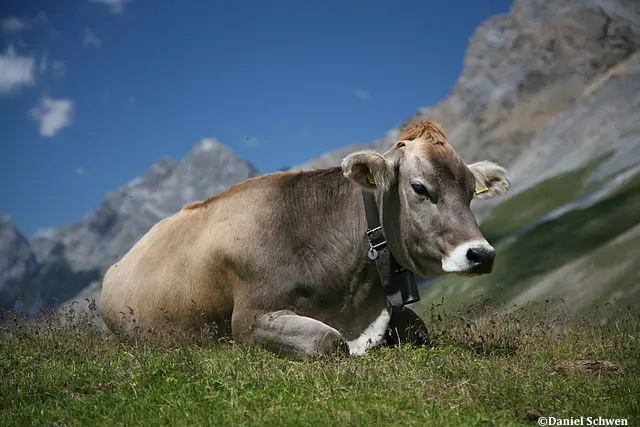 Wound care, hoof care, dehorning calves, and administrative support in the context of veterinary medicine are just a few of the procedures that Swiss veterinary assistants will be able to perform in the near future. While the AMV training program is currently limited to small animals, a “Livestock” track is expected to be introduced in less than three years.
The new modules will be integrated into the current veterinary assistant (AMV) training program, which leads to the Federal Certificate of Competence (CFC), since many basic requirements are common to both small and large animals. In addition, approximately 40% of assistants work in mixed-practice veterinary practices. Previously limited to administrative tasks in rural practices, they will soon be able—through the new apprenticeship—to expand their roles to include the care of Livestock and even administer certain treatments. The new scope of practice for veterinary assistants—which is yet to be defined through guidelines—aims to relieve rural veterinarians of certain tasks and distribute the workload more efficiently.
Of course, they will exercise their new competencies under the direct supervision and responsibility of their employer veterinarians. For veterinary assistants who are already trained and working in the pets sector, a catch-up program covering the additional modules is being considered. A pathway enabling agronomists to access the training program is also planned. The curriculum for the new program will be developed under the auspices of the Organization for the World of Work (Ortra), in collaboration with the Federal Institute for Vocational Education and Training (IFFP). Following a consultation process, this will be the subject of an amendment to the ordinance.
Wound care, hoof care, dehorning calves, and administrative support in the context of veterinary medicine are just a few of the procedures that Swiss veterinary assistants will be able to perform in the near future. While the AMV training program is currently limited to small animals, a “Livestock” track is expected to be introduced in less than three years.
The new modules will be integrated into the current veterinary assistant (AMV) training program, which leads to the Federal Certificate of Competence (CFC), since many basic requirements are common to both small and large animals. In addition, approximately 40% of assistants work in mixed-practice veterinary practices. Previously limited to administrative tasks in rural practices, they will soon be able—through the new apprenticeship—to expand their roles to include the care of Livestock and even administer certain treatments. The new scope of practice for veterinary assistants—which is yet to be defined through guidelines—aims to relieve rural veterinarians of certain tasks and distribute the workload more efficiently.
Of course, they will exercise their new competencies under the direct supervision and responsibility of their employer veterinarians. For veterinary assistants who are already trained and working in the pets sector, a catch-up program covering the additional modules is being considered. A pathway enabling agronomists to access the training program is also planned. The curriculum for the new program will be developed under the auspices of the Organization for the World of Work (Ortra), in collaboration with the Federal Institute for Vocational Education and Training (IFFP). Following a consultation process, this will be the subject of an amendment to the ordinance.
Read next
Research & Diagnostics
10/09/2026
WHO sets new diagnostic targets for Echinococcus granulosus in humans, dogs and sheep
Research & Diagnostics
10/09/2026
Nipah virus in wastewater: promising for early warning?
Research & Diagnostics
10/01/2026
Commentaires
No comments yet.
Sign in to comment