

Back to articles
Outbreaks & Epidemiology
Brucellosis
FAO
Foot-and-mouth disease
Peste des petits ruminants
Veterinary services
WOAH
Peste des petits ruminants: WOAH and FAO Launch the First Phase of Their Eradication Plan
V
Vetitude
10/28/2016
3 min read
0 comments
Share:
Present in 76 countries, peste des petits ruminants (SRP) kills thousands of sheep and goats every year around the world. The World Organisation for Animal Health (WOAH) and the FAO have developed a 15-year global strategy for the control and eradication of the disease, launched in April 2015. The first phase of this plan (2017–2021), modeled after the 2011 rinderpest eradication campaign, will target high-risk countries.
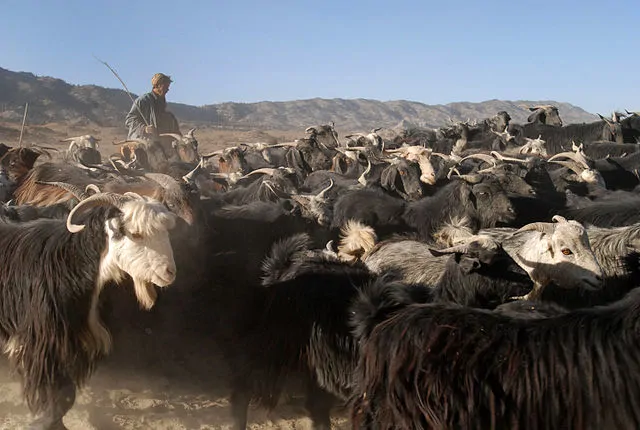 In unvaccinated herds, peste des petits ruminants—a highly contagious viral disease—has been spreading for about two decades in some of the world’s poorest regions, primarily in Africa, the Middle East, and Asia. The virus can kill up to 90% of infected goats and sheep within a few days. The global control and eradication program developed by the WOAH and the FAO involves the gradual implementation of several measures, including the vaccination of some 800,000 sheep and goats, leading up to the final eradication phase scheduled for 2030. The program’s risk assessment phase (consultations, counting, and mapping of herds and risk areas) has been completed. On October 28, the two organizations therefore launched the risk control and risk management phase, estimated at $996.4 million (908 million euros).
This new phase of the international strategy, broken down into nine regional roadmaps, is expected to last five years, through 2021. The first part will focus on countries where cases of peste des petits ruminants have already been reported, as well as those where the spread of the disease has not yet been assessed. This involves, in particular, conducting an awareness campaign among farmers and livestock breeders to help them better prevent and control the disease, as well as strengthening the capacity of national veterinary services and health surveillance systems, followed by the implementation of targeted systematic vaccination. Ultimately, the goal is to protect 80% of the total livestock population—that is, all animals over three months of age. The vaccination campaign will also help control other livestock diseases, such as brucellosis and foot-and-mouth disease.
Thus, beyond the goal of eradicating the peste des petits ruminants, the plan aims to strengthen the quality of veterinary services,
improve food safety, and reduce poverty. It proposes production models better suited to the affected countries and provides support to livestock farmers so they can make the most of their herds’ potential. In addition to the economic damage, sick animals pose an additional risk to food safety and the nutritional status of the approximately 300 million poor households that depend on sheep and goat husbandry in the affected regions.
With the support of their joint secretariat, based in Rome, FAO and WOAH will coordinate global efforts led by governments, regional organizations, research institutions, financial partners, and livestock farmers. This is the second time the two organizations have joined forces in this way to combat an animal disease. They drew inspiration from the strategy that led, in 2011, to the global eradication of rinderpest, a similar disease that affected cattle, buffalo, and wildlife.
A conference to bring together investors will be held in early 2017 to secure financial support for this plan over the next five years.
* http://www.oie.int/fileadmin/Home/eng/Media_Center/docs/pdf/PortailPPR/EN_GEP_PPR_Finalweb.pdf
In unvaccinated herds, peste des petits ruminants—a highly contagious viral disease—has been spreading for about two decades in some of the world’s poorest regions, primarily in Africa, the Middle East, and Asia. The virus can kill up to 90% of infected goats and sheep within a few days. The global control and eradication program developed by the WOAH and the FAO involves the gradual implementation of several measures, including the vaccination of some 800,000 sheep and goats, leading up to the final eradication phase scheduled for 2030. The program’s risk assessment phase (consultations, counting, and mapping of herds and risk areas) has been completed. On October 28, the two organizations therefore launched the risk control and risk management phase, estimated at $996.4 million (908 million euros).
This new phase of the international strategy, broken down into nine regional roadmaps, is expected to last five years, through 2021. The first part will focus on countries where cases of peste des petits ruminants have already been reported, as well as those where the spread of the disease has not yet been assessed. This involves, in particular, conducting an awareness campaign among farmers and livestock breeders to help them better prevent and control the disease, as well as strengthening the capacity of national veterinary services and health surveillance systems, followed by the implementation of targeted systematic vaccination. Ultimately, the goal is to protect 80% of the total livestock population—that is, all animals over three months of age. The vaccination campaign will also help control other livestock diseases, such as brucellosis and foot-and-mouth disease.
Thus, beyond the goal of eradicating the peste des petits ruminants, the plan aims to strengthen the quality of veterinary services,
improve food safety, and reduce poverty. It proposes production models better suited to the affected countries and provides support to livestock farmers so they can make the most of their herds’ potential. In addition to the economic damage, sick animals pose an additional risk to food safety and the nutritional status of the approximately 300 million poor households that depend on sheep and goat husbandry in the affected regions.
With the support of their joint secretariat, based in Rome, FAO and WOAH will coordinate global efforts led by governments, regional organizations, research institutions, financial partners, and livestock farmers. This is the second time the two organizations have joined forces in this way to combat an animal disease. They drew inspiration from the strategy that led, in 2011, to the global eradication of rinderpest, a similar disease that affected cattle, buffalo, and wildlife.
A conference to bring together investors will be held in early 2017 to secure financial support for this plan over the next five years.
* http://www.oie.int/fileadmin/Home/eng/Media_Center/docs/pdf/PortailPPR/EN_GEP_PPR_Finalweb.pdf
Read next
Outbreaks & Epidemiology
10/07/2026
H5N1 should now be treated as a permanent systemic risk, not a succession of outbreaks
Outbreaks & Epidemiology
10/07/2026
African swine fever progresses faster in wild boar than in domestic pigs
Outbreaks & Epidemiology
10/05/2026
Commentaires
No comments yet.
Sign in to comment