

Share:
While the COVID-19 virus (SARS-CoV-2 coronavirus) continues to circulate and claim lives around the world, its origin remains unknown. Each scientific community puts forward its own hypothesis. Some suggest the possibility that the virus escaped from a laboratory.
Another hypothesis, based on recent studies related to the Chinese market in Wuhan and others conducted in Cambodia, Laos, Japan, China, and Thailand, is that the virus evolved from an ancestral virus found in bats—particularly those of the Rhinolophus family—in domestic or wild animals, and then jumped from those animals to humans. In fact, during these various studies, several viruses with genetic sequences very similar to SARS-CoV-2 were isolated from these bats.
The authors thank the Cambodian Ministries of Health, Agriculture and Livestock, and Environment, as well as all project partners: the Pasteur Institute of Cambodia (IPC), the Wildlife Conservation Society (WCS), Flora and Fauna International (FFI), the French National Research Institute for Development (IRD), the University of Hong Kong (HKU), the GREASE Network, International Development Enterprise (iDE), the World Wildlife Fund (WWF), the Elephant Livelihood Initiative Environment (E.L.I.E), BirdLife International, Jahoo, and World Hope International. Véronique Chevalier , veterinary epidemiologist, CIRAD ; François Roger , Regional Director for Southeast Asia, veterinarian and epidemiologist, CIRAD ; and Julia Guillebaud , research engineer, Institut Pasteur This article is republished from The Conversation under a Creative Commons license. Read the original article.
A Missing Link
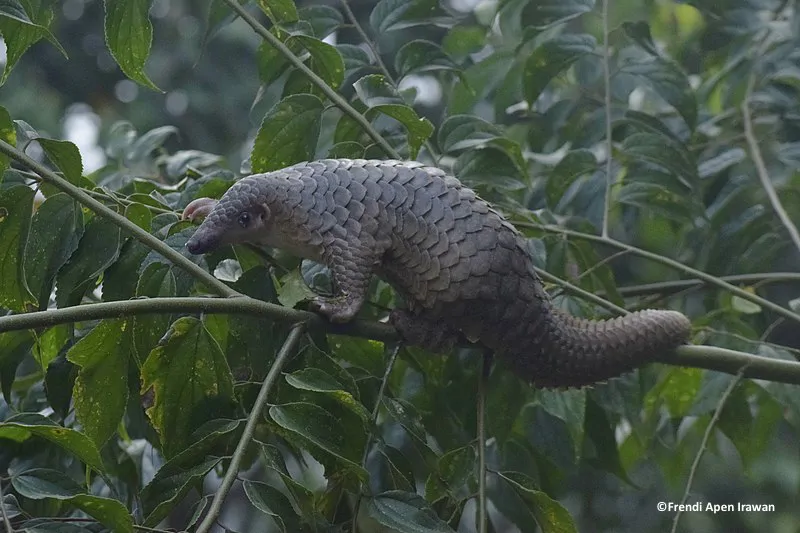
While it is now established that certain bat species naturally harbor these coronaviruses, the identity of the domestic or wild animal—or animals—that may have served as intermediaries between the bats and humans—the “missing links”—remains a mystery. The pangolin, initially suspected, now appears more as a “collateral victim” than as one of these so-called missing links. Indeed, a sequence of the coronavirus genome detected in pangolins was closely related to that of SARS-CoV-2, but the rest of the genome was genetically too distant from it. Furthermore, the pangolins from which viruses genetically similar to SARS-CoV-2 were isolated had, in most cases, been confiscated from live animal markets—at the end of the commercial supply chain—and had therefore been in prolonged contact with other animal species. It is highly likely that they became infected along this supply chain and not in their natural environment. Mink farms have also been suspected as a source in China. Finally, pangolins and horseshoe bats do not share the same habitats, making it highly unlikely that contact occurred between the two species during which the virus could have been transmitted from a bat to a pangolin. Civets and/or raccoon dogs, on the other hand, could serve as an intermediate reservoir for SARS-CoV-1. Rodents and primates can also carry pathogenic agents with zoonotic potential, such as hantaviruses—which can cause hemorrhagic fever with severe renal syndrome—or filoviruses, including the Ebola virus. The latter is transmitted to humans by wild animals, notably fruit bats, porcupines, and primates such as chimpanzees or gorillas, and then spreads within the human population primarily through direct contact with the blood, secretions, and other bodily fluids of infected individuals. The average case fatality rate is approximately 50%. In 2013, the first cases of Ebola virus disease (EVD) were detected in West Africa. This outbreak resulted in more than 10,000 deaths, mainly in Guinea, Liberia, and Sierra Leone.Bush meat consumption: a risky practice
The risks of transmission from animals to humans—a phenomenon known as “spillover”—whether during hunting, handling animals, or meat consumption, are therefore real and potentially devastating. The ZooCov project explored the characterization and quantification of this risk in Cambodia through a “One Health” approach for nearly two years, beginning at the start of the pandemic, to determine whether—and if so, how—pathogens such as coronaviruses could be transmitted from wild animals, hunted and consumed, to humans. Indeed, in Southeast Asia, the trade in wild animals and the meat consumption of bushmeat are common practices. Often opportunistic, this consumption supplements a protein-poor diet in certain communities. It can also be regular and targeted. In Cambodia, of 107 families interviewed during the ZooCov study, 77% reported having consumed bush meat in the previous month. The use of bush meat for medicinal purposes is also widespread. In Vietnam, an analysis of reports on seizures of pangolins and pangolin products carried out between 2016 and 2020 by Vietnamese authorities recorded 1,342 live pangolins (6,330 kg), 759 dead pangolins or carcasses (3,305 kg), and 43,902 kg of scales. However, this consumption also has a cultural and social dimension that is still poorly understood. For affluent social classes, often in large cities, this consumption may be driven by a need for social recognition, beliefs that those who eat this meat acquire the physical or physiological properties of the animal consumed, or a desire to distance themselves from the consumption of industrial meat that is harmful to health. The raising of wildlife to meet this demand and/or for fur production is also widespread. In Cambodia, in the provinces of Stung Treng and Mondulkiri, where protected forest areas remain, more than 900 people living on the outskirts of these forests were interviewed in an effort to analyze the structures and operations of the illegal bushmeat meat sector. Statistical analyses are underway to identify those most at risk of coming into contact with such pathogenic organisms. It is already known that those exposed are primarily young men from the middle class. Certain communities are also more at risk than others. Sociological surveys have also provided a better understanding of the current context—the legal framework, the profiles of those involved in this trade, their barriers and motivations related to the trade in and consumption of wild animals, and how this context has evolved throughout various health crises (avian influenza, Ebola, SARS-CoV-1…).Which populations may be at risk?
These successive crises appear to have had little impact on the practices of these communities. Beyond regular consumption, one-quarter of the families interviewed still reported hunting or trapping, and 11% stated that they sell bush meat and/or wild animals. Furthermore, at the same study sites, more than 2,000 samples from wild animals involved in trafficking or consumed for subsistence—bats, rodents, turtles, monkeys, birds, wild pigs, etc.—were analyzed. Some of the samples tested positive for coronaviruses, among other pathogens, and are currently being analyzed at the Pasteur Institute of Cambodia (IPC) to sequence the genome and learn more about its origin, evolution, and zoonotic potential. Finally, blood samples were collected from more than 900 people surveyed in the same area to determine whether they had been exposed to one or more coronaviruses. The analyses are still ongoing, but we already know that these individuals had not, at the time of the survey, been exposed to SARS-CoV-2. The COVID-19 crisis has clearly demonstrated that: it is essential to implement early detection of these outbreaks in order to implement measures as quickly as possible to prevent the spread of pathogenic agents. And while many questions remain regarding the mechanisms of emergence, the same logically applies to the surveillance systems that need to be put in place to monitor them. The results of the ZooCov project will be used to develop an early detection system for zoonotic virus spillover events, notably by strengthening the existing wildlife health surveillance system in Cambodia, which was established by the Wildlife Conservation Society (WCS). Other major research and development projects will contribute to our understanding of these emergence phenomena, as well as to their prevention and early detection.The authors thank the Cambodian Ministries of Health, Agriculture and Livestock, and Environment, as well as all project partners: the Pasteur Institute of Cambodia (IPC), the Wildlife Conservation Society (WCS), Flora and Fauna International (FFI), the French National Research Institute for Development (IRD), the University of Hong Kong (HKU), the GREASE Network, International Development Enterprise (iDE), the World Wildlife Fund (WWF), the Elephant Livelihood Initiative Environment (E.L.I.E), BirdLife International, Jahoo, and World Hope International. Véronique Chevalier , veterinary epidemiologist, CIRAD ; François Roger , Regional Director for Southeast Asia, veterinarian and epidemiologist, CIRAD ; and Julia Guillebaud , research engineer, Institut Pasteur This article is republished from The Conversation under a Creative Commons license. Read the original article.
Read next
Outbreaks & Epidemiology
10/07/2026
H5N1 should now be treated as a permanent systemic risk, not a succession of outbreaks
Outbreaks & Epidemiology
10/07/2026
African swine fever progresses faster in wild boar than in domestic pigs
Outbreaks & Epidemiology
10/05/2026
Commentaires
No comments yet.
Sign in to comment