

Back to articles
Lumpy Skin Disease: FAO Recommends Mass Vaccination of Cattle
V
Vetitude
10/06/2017
3 min read
0 comments
Share:
First detected in Turkey in late 2013, lumpy skin disease continues to spread throughout Europe and beyond, with a sharp increase in incidence despite the control measures implemented in the nine affected countries. In the European Union, this highly contagious vector-borne viral disease has already spread to Greece and Bulgaria. For the time being, France remains free of the disease, but the risk of its introduction—even though it is considered very low by ANSES—nevertheless exists. The FAO, for its part, is advocating for a large-scale vaccination campaign.
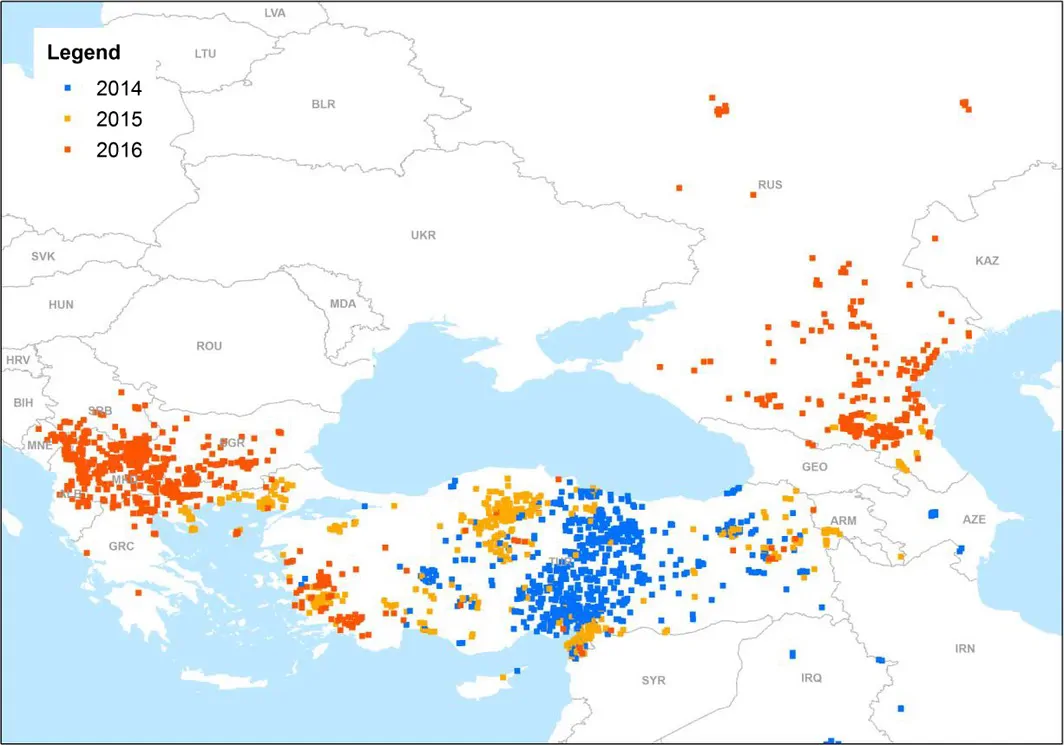 The spread of the poxvirus causing lumpy skin disease continues, primarily affecting cattle and buffalo in Eastern Europe and the Balkans. In a press release, the FAO calls for mass vaccination of livestock in this region to contain the epizootic, as well as in neighboring countries at risk that have remained free of the disease so far (Romania, Croatia, Hungary, Ukraine, Bosnia and Herzegovina).
This is because the disease has reemerged in Albania, Greece, and Macedonia in recent months, despite the large-scale vaccination campaign implemented in Southeast Europe. The disease has not been completely contained and is likely to continue spreading if nothing is done to control it, warns the United Nations agency.
To prevent, control, and eradicate lumpy skin disease, the FAO urges the governments of affected countries to carry out national vaccination campaigns, particularly as the vector season approaches—which generally begins in the spring and during which viral activity is high, peaking in the summer. Furthermore, preventive vaccination coverage in Croatia, Bosnia and Herzegovina, and northern Serbia, for example, would help create a buffer zone to halt the spread of the disease to neighboring countries, such as Hungary and Romania, which remain free of the disease to date.
Vaccination is presented as an essential measure to prevent the disease and reduce the need for herd culling. According to the FAO, the stamping out of animals on affected farms should be only a last resort, due to the significant economic losses for the affected livestock farmers. If culling proves necessary, the organization recommends limiting this measure to cases clinically confirmed by virological analysis conducted by an approved laboratory. The animals must then be culled and disposed of appropriately as quickly as possible.
The spread of the poxvirus causing lumpy skin disease continues, primarily affecting cattle and buffalo in Eastern Europe and the Balkans. In a press release, the FAO calls for mass vaccination of livestock in this region to contain the epizootic, as well as in neighboring countries at risk that have remained free of the disease so far (Romania, Croatia, Hungary, Ukraine, Bosnia and Herzegovina).
This is because the disease has reemerged in Albania, Greece, and Macedonia in recent months, despite the large-scale vaccination campaign implemented in Southeast Europe. The disease has not been completely contained and is likely to continue spreading if nothing is done to control it, warns the United Nations agency.
To prevent, control, and eradicate lumpy skin disease, the FAO urges the governments of affected countries to carry out national vaccination campaigns, particularly as the vector season approaches—which generally begins in the spring and during which viral activity is high, peaking in the summer. Furthermore, preventive vaccination coverage in Croatia, Bosnia and Herzegovina, and northern Serbia, for example, would help create a buffer zone to halt the spread of the disease to neighboring countries, such as Hungary and Romania, which remain free of the disease to date.
Vaccination is presented as an essential measure to prevent the disease and reduce the need for herd culling. According to the FAO, the stamping out of animals on affected farms should be only a last resort, due to the significant economic losses for the affected livestock farmers. If culling proves necessary, the organization recommends limiting this measure to cases clinically confirmed by virological analysis conducted by an approved laboratory. The animals must then be culled and disposed of appropriately as quickly as possible.
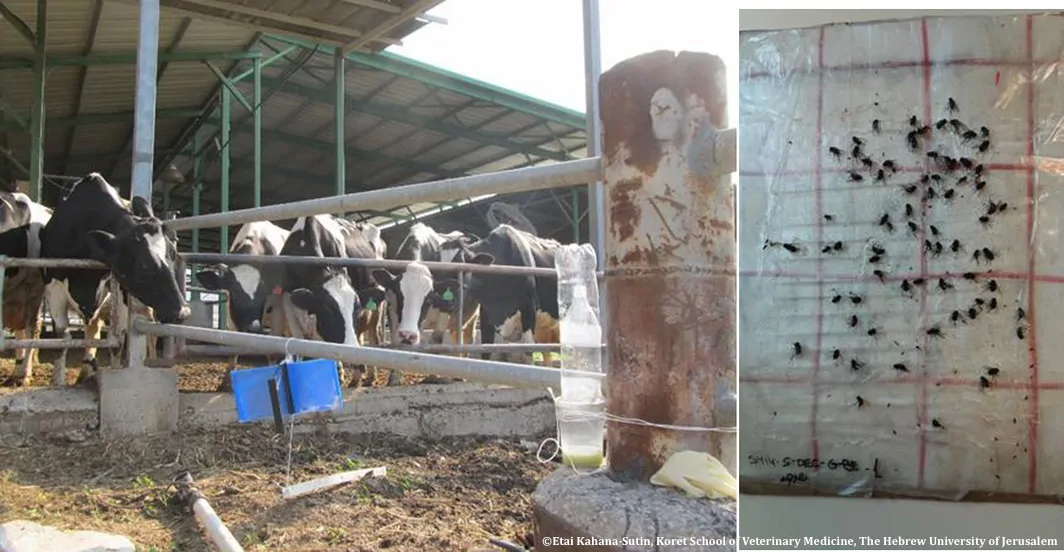 Despite the progress made in combating lumpy skin disease, some uncertainties remain. First, it remains to be determined whether transmission from one animal to another via infected milk is possible, and whether infected animals that show no clinical signs can transmit the virus. It is also necessary to improve the coordination of control efforts as well as surveillance at the regional level.
In light of the increasing number of outbreaks, the question of the risk of introducing the infection into France was raised with the French Agency for Food, Environmental and Occupational Health & Safety (ANSES), which also weighed in on the vaccination strategy to be adopted if necessary. In its report revised last June, the agency estimates that the probability of a first outbreak occurring in France is generally low, or even zero, depending on the vector in question. However, the risk is assessed only for a one-year period and is based on data from January 2017; it is therefore likely to change depending on the epidemiological situation. In the event of an emergency, ANSES estimates that between 600,000 and 800,000 doses of vaccine (or antigens) would be needed to carry out a nationwide vaccination campaign.
https://youtu.be/MIPAKL35FuI
Despite the progress made in combating lumpy skin disease, some uncertainties remain. First, it remains to be determined whether transmission from one animal to another via infected milk is possible, and whether infected animals that show no clinical signs can transmit the virus. It is also necessary to improve the coordination of control efforts as well as surveillance at the regional level.
In light of the increasing number of outbreaks, the question of the risk of introducing the infection into France was raised with the French Agency for Food, Environmental and Occupational Health & Safety (ANSES), which also weighed in on the vaccination strategy to be adopted if necessary. In its report revised last June, the agency estimates that the probability of a first outbreak occurring in France is generally low, or even zero, depending on the vector in question. However, the risk is assessed only for a one-year period and is based on data from January 2017; it is therefore likely to change depending on the epidemiological situation. In the event of an emergency, ANSES estimates that between 600,000 and 800,000 doses of vaccine (or antigens) would be needed to carry out a nationwide vaccination campaign.
https://youtu.be/MIPAKL35FuI
Read next
Outbreaks & Epidemiology
10/07/2026
H5N1 should now be treated as a permanent systemic risk, not a succession of outbreaks
Outbreaks & Epidemiology
10/07/2026
African swine fever progresses faster in wild boar than in domestic pigs
Outbreaks & Epidemiology
10/05/2026
Commentaires
No comments yet.
Sign in to comment