

Back to articles
Outbreaks & Epidemiology
Actinobacillosis
Actinomycosis
ANSES
Cutaneous leukosis
Dermatophilosis
Dermatophytosis
DGAL
DNCB
EFSA
Lumpy skin disease
Nocardiosis
Poxvirus
Sigal
Slaughter
Veterinarian
Lumpy Skin Disease: Cattle Under Close Surveillance in Europe
V
Vetitude
11/18/2016
4 min read
0 comments
Share:
Georgia reported two outbreaks of contagious bovine lumpy skin disease (BLD) on November 8, 2016, near the Russian border. All neighboring countries (Russia, Azerbaijan, Armenia, and Turkey) have already reported the presence of the disease on their territory. Thus, the spread of the bovine poxvirus continues in Europe and beyond, with a sharp increase in incidence (957 outbreaks reported as of September 26, 2016) despite the control measures implemented, particularly in the affected countries. In Europe, this highly contagious enzootic viral disease has already affected Greece, Bulgaria, Macedonia, Serbia, Kosovo, Albania, and Montenegro. In France, no cases have been reported so far, but the utmost vigilance is required.
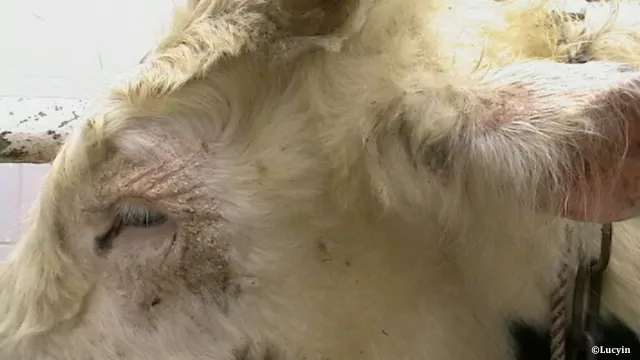 Under surveillance for two years now, the European epizootic of lumpy skin disease initially spread “like wildfire from outbreaks in western Turkey and Greece,”
before reaching the Balkans, where it is advancing in “short, sporadic bursts,”
covering an average of 7.5 km each week since May 2015.
In response to the increasing number of outbreaks in southeastern Europe, the Direction générale de l'alimentation (DGAL) published a technical instruction* on November 9 to clarify the procedures for monitoring and managing any clinically suspected cases of the disease on French territory. It reiterates that this is a category 1 health hazard that is notifiable and subject to an emergency public health response plan.
Under surveillance for two years now, the European epizootic of lumpy skin disease initially spread “like wildfire from outbreaks in western Turkey and Greece,”
before reaching the Balkans, where it is advancing in “short, sporadic bursts,”
covering an average of 7.5 km each week since May 2015.
In response to the increasing number of outbreaks in southeastern Europe, the Direction générale de l'alimentation (DGAL) published a technical instruction* on November 9 to clarify the procedures for monitoring and managing any clinically suspected cases of the disease on French territory. It reiterates that this is a category 1 health hazard that is notifiable and subject to an emergency public health response plan.
- A veterinarian’s report of a potential case within a herd must meet three clinical criteria:
- the presence of at least one cow exhibiting at least two hard, rounded, painless nodules with a diameter of 0.5 to 5 cm (sometimes identifiable only by palpation);
- the observation of at least one of the key clinical signs (hyperthermia, lymphadenopathy, anorexia, epiphora, nasal discharge, ptyalism, subcutaneous edema) in at least one bovine (either the one with nodules or another);
- the absence of a definite identification of another cause during the differential diagnosis (notably cutaneous leukosis, cutaneous actinobacillosis, actinomycosis, nocardiosis, dermatophytosis, dermatophilosis).
Read next
Outbreaks & Epidemiology
10/07/2026
H5N1 should now be treated as a permanent systemic risk, not a succession of outbreaks
Outbreaks & Epidemiology
10/07/2026
African swine fever progresses faster in wild boar than in domestic pigs
Outbreaks & Epidemiology
10/05/2026
Commentaires
No comments yet.
Sign in to comment