

Back to articles
Outbreaks & Epidemiology
Agricultural Research Service
Avian influenza
Avian virus
CDC
Centers for Disease Control and Prevention
H5N1
H5N2
H5N8
HPAI
USDA
Influenza A H5: An unprecedented epizootic has been decimating the U.S. poultry population for five months
V
Vetitude
05/11/2015
4 min read
0 comments
Share:
The United States is facing the largest epizootic of highly pathogenic avian influenza ever recorded on its territory. Since the first case was detected in a wild bird on December 19, 2014, some 30 million turkeys and chickens have been infected. The states hardest hit are Iowa and Minnesota. A new vaccine, targeting the H5 subtype, is currently being developed.
Since December 2014, the H5 highly pathogenic avian influenza (HPAI) epizootic has continued to spread across the Atlantic, with no signs of slowing down. Three subtypes (H5N8, H5N1, and H5N2) are circulating and have been detected in 16 different U.S. states and two Canadian provinces.
 In five months, the USDA has confirmed more than 140 detections along the Pacific, Central, and Mississippi flyways. The disease has primarily affected poultry farms, but has also affected captive wild birds and migratory birds. At this time, the CDC
considers the risk of human infection by the H5 subtype to be low. No human cases have been detected in North America.
Admittedly, the H5N1 influenza virus circulating in the United States is genetically distinct from the one that has infected 650 people in Asia and the Middle East since 2003. However, the risk of genetic reassortment and mutation is not zero in the face of a persistent epizootic. The spread of the infection among birds does indeed increase the likelihood of the emergence of a new influenza virus that could potentially be transmitted from person to person.
However, backed by a biosecurity program and an effective surveillance system to identify outbreaks, the CDC hopes to successfully halt the spread of the virus over the summer, aided by climate change.
In the meantime, poultry farmers and anyone who works in contact with poultry are required to strictly adhere to current precautionary measures. Similarly, the public is advised to keep their distance from all birds, whether domestic or wild, especially if they show signs of illness. Most human infections with avian influenza viruses have occurred after close and prolonged contact with infected birds or their secretions, the CDC notes.
In addition to closely monitoring the circulation of avian viruses and tracking their mutations, researchers at the Agricultural Research Service are working to develop a vaccine to protect poultry against all strains of H5 HPAI circulating in the United States. It would be more effective than currently available vaccines, which do not provide as much antigenic similarity.
In five months, the USDA has confirmed more than 140 detections along the Pacific, Central, and Mississippi flyways. The disease has primarily affected poultry farms, but has also affected captive wild birds and migratory birds. At this time, the CDC
considers the risk of human infection by the H5 subtype to be low. No human cases have been detected in North America.
Admittedly, the H5N1 influenza virus circulating in the United States is genetically distinct from the one that has infected 650 people in Asia and the Middle East since 2003. However, the risk of genetic reassortment and mutation is not zero in the face of a persistent epizootic. The spread of the infection among birds does indeed increase the likelihood of the emergence of a new influenza virus that could potentially be transmitted from person to person.
However, backed by a biosecurity program and an effective surveillance system to identify outbreaks, the CDC hopes to successfully halt the spread of the virus over the summer, aided by climate change.
In the meantime, poultry farmers and anyone who works in contact with poultry are required to strictly adhere to current precautionary measures. Similarly, the public is advised to keep their distance from all birds, whether domestic or wild, especially if they show signs of illness. Most human infections with avian influenza viruses have occurred after close and prolonged contact with infected birds or their secretions, the CDC notes.
In addition to closely monitoring the circulation of avian viruses and tracking their mutations, researchers at the Agricultural Research Service are working to develop a vaccine to protect poultry against all strains of H5 HPAI circulating in the United States. It would be more effective than currently available vaccines, which do not provide as much antigenic similarity.
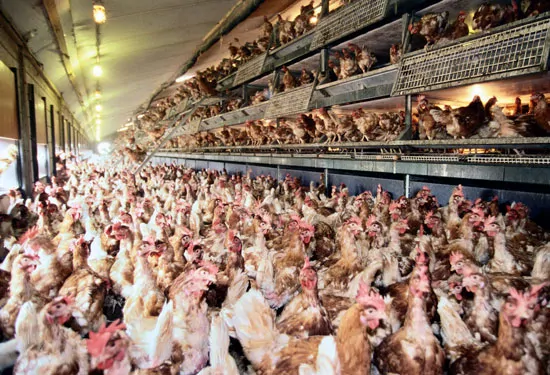 Large U.S. poultry producers tend not to vaccinate their flocks in the absence of confirmed disease, so as not to alarm their business partners,
who might interpret vaccination as an admission that a virus is present. As a result, vaccines are primarily used on smaller farms when a virus is detected or has been detected, to help them return to normal production.
Five industry organizations in the poultry sector (the U.S. Poultry & Egg Association, the National Chicken Council, National Turkey Federation, United Egg Producers,
and USA Poultry & Egg Export Council
) issued a joint statement in March aimed at reassuring consumers that all birds from affected flocks had been removed from the food chain. The USDA, for its part, emphasized that poultry, poultry products, and wild birds are safe to eat if properly prepared and cooked to a temperature of 165 °F (74 °C).
Large U.S. poultry producers tend not to vaccinate their flocks in the absence of confirmed disease, so as not to alarm their business partners,
who might interpret vaccination as an admission that a virus is present. As a result, vaccines are primarily used on smaller farms when a virus is detected or has been detected, to help them return to normal production.
Five industry organizations in the poultry sector (the U.S. Poultry & Egg Association, the National Chicken Council, National Turkey Federation, United Egg Producers,
and USA Poultry & Egg Export Council
) issued a joint statement in March aimed at reassuring consumers that all birds from affected flocks had been removed from the food chain. The USDA, for its part, emphasized that poultry, poultry products, and wild birds are safe to eat if properly prepared and cooked to a temperature of 165 °F (74 °C).
Circulation of Highly Pathogenic Avian Influenza (HPAI) Viruses
> The H5N8 HPAI viruses detected in the United States are similar to those that infected duck farms in China in 2009–2010. In 2014, similar H5N8 viruses were isolated from wild birds and poultry in Korea and Japan. In November 2014, they were confirmed in poultry and wild birds in the United Kingdom, the Netherlands, Germany, and Italy. No human cases have been associated with these viruses. > The H5N2 HPAI viruses circulating in the United States are similar to those first detected in December 2014 in poultry farms in the province of British Columbia (Canada). These are reassortant viruses that combine genes from Eurasian H5 viruses and North American N2 viruses. No human cases have been associated with these two lineages. > The H5N1 HPAI virus isolated in the United States is a reassortant virus containing genes from Asian H5 HPAI viruses and North American low pathogenic viruses.Read next
Outbreaks & Epidemiology
10/07/2026
H5N1 should now be treated as a permanent systemic risk, not a succession of outbreaks
Outbreaks & Epidemiology
10/07/2026
African swine fever progresses faster in wild boar than in domestic pigs
Outbreaks & Epidemiology
10/05/2026
Commentaires
No comments yet.
Sign in to comment