

Back to articles
H5N8 avian influenza: The virus is circulating in 12 European countries, including France
V
Vetitude
11/30/2016
4 min read
0 comments
Share:
Outbreaks of highly pathogenic avian influenza (HPAI) of the H5N8 subtype are on the rise in Europe, both among wild bird populations and on poultry farms. France has just confirmed the discovery of its first cases on its territory, in the Pas-de-Calais region, in 25 wild ducks. The migration period of certain bird species plays a major role in the spread of the influenza virus, making it more necessary than ever to strengthen surveillance and management measures. To date, no cases linked to the H5N8 serotype have been reported in humans.
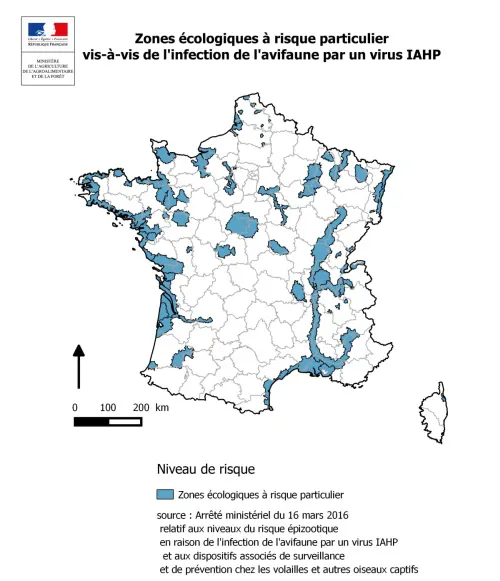 The first French case of H5N8 HPAI was confirmed on November 26, following a die-off observed among a group of 75 wild ducks kept on a private body of water in the town of Marck (Pas-de-Calais) and used for waterfowl hunting. For the time being, this discovery does not affect France’s international status regarding avian influenza, as these decoy ducks are not considered poultry according to the definition in the WOAH Terrestrial Code. Unless a new case is detected in a domestic bird farm by December 3, France should even regain its “HPAI-free” status, which it lost following the outbreak of highly pathogenic avian influenza (serotypes H5N1, H5N2, and H5N9) that affected farms in the southwest during the winter of 2015.
As soon as the case was confirmed, all decoy ducks at the Marck site were culled, as were 35 decoy ducks from Boulogne-sur-Mer—4 km away—that had been on the same body of water as the infected group. Two enhanced surveillance zones have been established in the municipalities neighboring the outbreak site: veterinarians are verifying strict compliance with the containment and biosecurity measures on farms—as defined by official orders*—
which are intended to prevent any contact with the avifauna. In ecological risk areas at high risk of epizootic disease, such as the Pas-de-Calais region, mandatory confinement or the installation of nets applies (unless an exemption is granted), and the movement of decoys is prohibited.
During peak migration periods, the Ministry of Agriculture also emphasizes the importance of reporting any deaths of wild birds within the country.
Indeed, the migration of ducks, geese, and swans is currently at its peak.
The first French case of H5N8 HPAI was confirmed on November 26, following a die-off observed among a group of 75 wild ducks kept on a private body of water in the town of Marck (Pas-de-Calais) and used for waterfowl hunting. For the time being, this discovery does not affect France’s international status regarding avian influenza, as these decoy ducks are not considered poultry according to the definition in the WOAH Terrestrial Code. Unless a new case is detected in a domestic bird farm by December 3, France should even regain its “HPAI-free” status, which it lost following the outbreak of highly pathogenic avian influenza (serotypes H5N1, H5N2, and H5N9) that affected farms in the southwest during the winter of 2015.
As soon as the case was confirmed, all decoy ducks at the Marck site were culled, as were 35 decoy ducks from Boulogne-sur-Mer—4 km away—that had been on the same body of water as the infected group. Two enhanced surveillance zones have been established in the municipalities neighboring the outbreak site: veterinarians are verifying strict compliance with the containment and biosecurity measures on farms—as defined by official orders*—
which are intended to prevent any contact with the avifauna. In ecological risk areas at high risk of epizootic disease, such as the Pas-de-Calais region, mandatory confinement or the installation of nets applies (unless an exemption is granted), and the movement of decoys is prohibited.
During peak migration periods, the Ministry of Agriculture also emphasizes the importance of reporting any deaths of wild birds within the country.
Indeed, the migration of ducks, geese, and swans is currently at its peak.
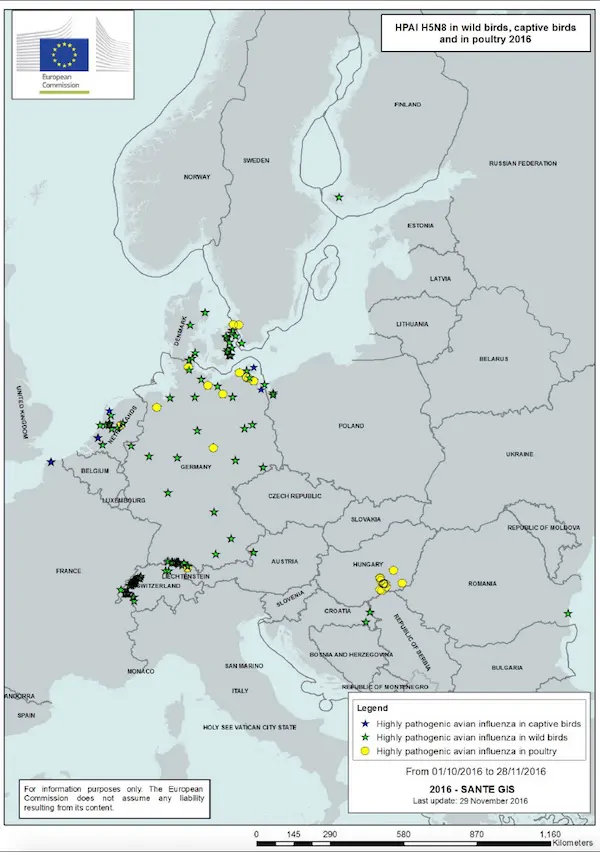 Following France’s example, several countries facing the spread of the virus have implemented lockdown measures for poultry farms, either nationwide or in specific regions. As of November 28, 11 European countries had reported 127 cases or outbreaks in wild birds: 62 in Switzerland, 23 in Germany, 18 in Denmark, 12 in the Netherlands, 3 each in Poland and Austria, 2 in Croatia, and 1 each in France, Finland, Hungary, and Sweden. In 60% of cases, the birds found dead were ducks.
As for poultry farms, 7 European countries have confirmed 38 cases or outbreaks in domestic and captive birds: 16 in Hungary, 15 in Germany, 2 each in Austria and Russia, and 1 each in Denmark, the Netherlands, and Sweden. In addition, an outbreak was reported in Israel on the border with Jordan on November 13 at a farm with 45,000 chickens.
The European Commission and the FAO
are calling on their member states to remain vigilant and reduce the risk of new outbreaks, in particular by taking measures such as increasing biosecurity levels on poultry farms and in backyard flocks.
* > Order of February 8, 2016, regarding biosecurity measures applicable to poultry farms and other captive bird facilities for the prevention ofavian influenza
> Order of March 16, 2016, concerning epizootic risk levels due to theinfection of avifauna by a highly pathogenic avian influenza virus and the associated surveillance and prevention measures for poultry and other captive birds
> Order of November 16, 2016, amending theDecree of March 16, 2016
> Decree of November 16, 2016 defining the geographic areas in which the transport oruse of decoys for waterfowl hunting is permitted
> Order of November 16, 2016, classifying the risk level for highly pathogenic avian influenza
Following France’s example, several countries facing the spread of the virus have implemented lockdown measures for poultry farms, either nationwide or in specific regions. As of November 28, 11 European countries had reported 127 cases or outbreaks in wild birds: 62 in Switzerland, 23 in Germany, 18 in Denmark, 12 in the Netherlands, 3 each in Poland and Austria, 2 in Croatia, and 1 each in France, Finland, Hungary, and Sweden. In 60% of cases, the birds found dead were ducks.
As for poultry farms, 7 European countries have confirmed 38 cases or outbreaks in domestic and captive birds: 16 in Hungary, 15 in Germany, 2 each in Austria and Russia, and 1 each in Denmark, the Netherlands, and Sweden. In addition, an outbreak was reported in Israel on the border with Jordan on November 13 at a farm with 45,000 chickens.
The European Commission and the FAO
are calling on their member states to remain vigilant and reduce the risk of new outbreaks, in particular by taking measures such as increasing biosecurity levels on poultry farms and in backyard flocks.
* > Order of February 8, 2016, regarding biosecurity measures applicable to poultry farms and other captive bird facilities for the prevention ofavian influenza
> Order of March 16, 2016, concerning epizootic risk levels due to theinfection of avifauna by a highly pathogenic avian influenza virus and the associated surveillance and prevention measures for poultry and other captive birds
> Order of November 16, 2016, amending theDecree of March 16, 2016
> Decree of November 16, 2016 defining the geographic areas in which the transport oruse of decoys for waterfowl hunting is permitted
> Order of November 16, 2016, classifying the risk level for highly pathogenic avian influenza
Read next
Outbreaks & Epidemiology
10/07/2026
H5N1 should now be treated as a permanent systemic risk, not a succession of outbreaks
Outbreaks & Epidemiology
10/07/2026
African swine fever progresses faster in wild boar than in domestic pigs
Outbreaks & Epidemiology
10/05/2026
Commentaires
No comments yet.
Sign in to comment