

Back to articles
COVID-19 Screening: Sniffer Dogs Achieve Excellent Results in Real-World Settings
V
Vetitude
11/17/2022
2 min read
0 comments
Share:
What politician or event organizer hasn’t dreamed of being able to test groups of people in real time? Scientists are publishing their findings on efforts to detect the COVID-19 virus in crowded settings—specifically, at concerts.
Since the start of the COVID-19 pandemic, numerous studies have demonstrated the value of using dogs to detect infected individuals in the general population, building on their already proven ability to detect certain cancers.
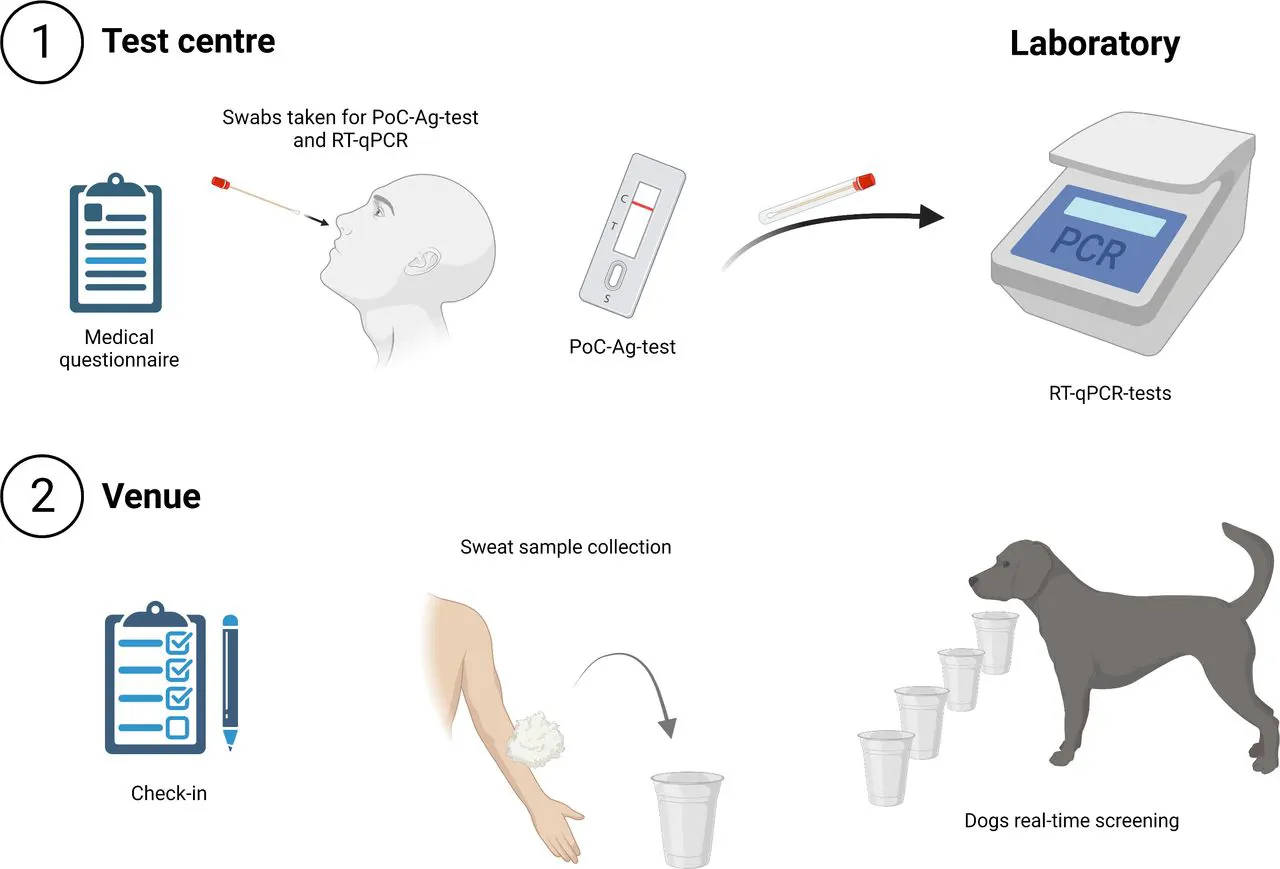
A team from the University of Veterinary Medicine Hannover tested dogs’ ability to detect the presence of the SARS-CoV-2 coronavirus in everyday situations. The selected dogs were given the opportunity to work at four concerts organized for the experiment in late 2021. They sniffed the participants at the entrance. In total, 2,802 people were assessed by eight dogs, without direct contact with the animals.
At the same time, study participants were tested using an antigen test and an RT-PCR test. Vaccination status, age, gender, and medical history were taken into account. Most of them were vaccinated, with different vaccines and vaccination schedules. Several suffered from chronic conditions and were being treated with medication. But this did not affect the dogs’ sense of smell or their performance!
The result? Detection of the COVID-19 coronavirus achieved a diagnostic specificity of 99.93% (detection of negative samples) and a sensitivity of 81.58% (detection of positive samples), for an overall accuracy rate of 99.68%.
This study clearly demonstrates the value of dogs in infection control. The published results show high diagnostic accuracy in a real-world, crowded setting, with no influence from vaccination status, prior SARS-CoV-2 infection, or chronic disease.
Read next
Outbreaks & Epidemiology
10/07/2026
H5N1 should now be treated as a permanent systemic risk, not a succession of outbreaks
Outbreaks & Epidemiology
10/07/2026
African swine fever progresses faster in wild boar than in domestic pigs
Outbreaks & Epidemiology
10/05/2026
Commentaires
No comments yet.
Sign in to comment