

Back to articles
Outbreaks & Epidemiology
Bats
Betacoronavirus
Chiroptera
Coronavirus
COVID-19
Pandemic
Pangolin
Rhinolophidae
SARS-CoV-2
Vespertilionidae
Zoonosis
COVID-19: One Year Later, What Do We Know About the Virus’s Origin?
MR
Mia Rozenbaum
01/27/2021
10 min read
0 comments
Share:
One year after the onset of the COVID-19 pandemic, theories about the origin of the SARS-CoV-2 virus continue to abound. Researchers have still not identified the intermediate host responsible for transmitting the virus to humans, which fuels theories about a lab leak. China’s silence adds to the mystery. What do we really know about the origin of this coronavirus?
As thirteen experts commissioned by the World Health Organization (WHO) have just set foot on Chinese soil to try to identify the true origin of the deadliest global pandemic of the century, theories continue to abound. More than twelve months after the emergence of the novel coronavirus, no one has yet been able to determine exactly where it came from.
A bat virus
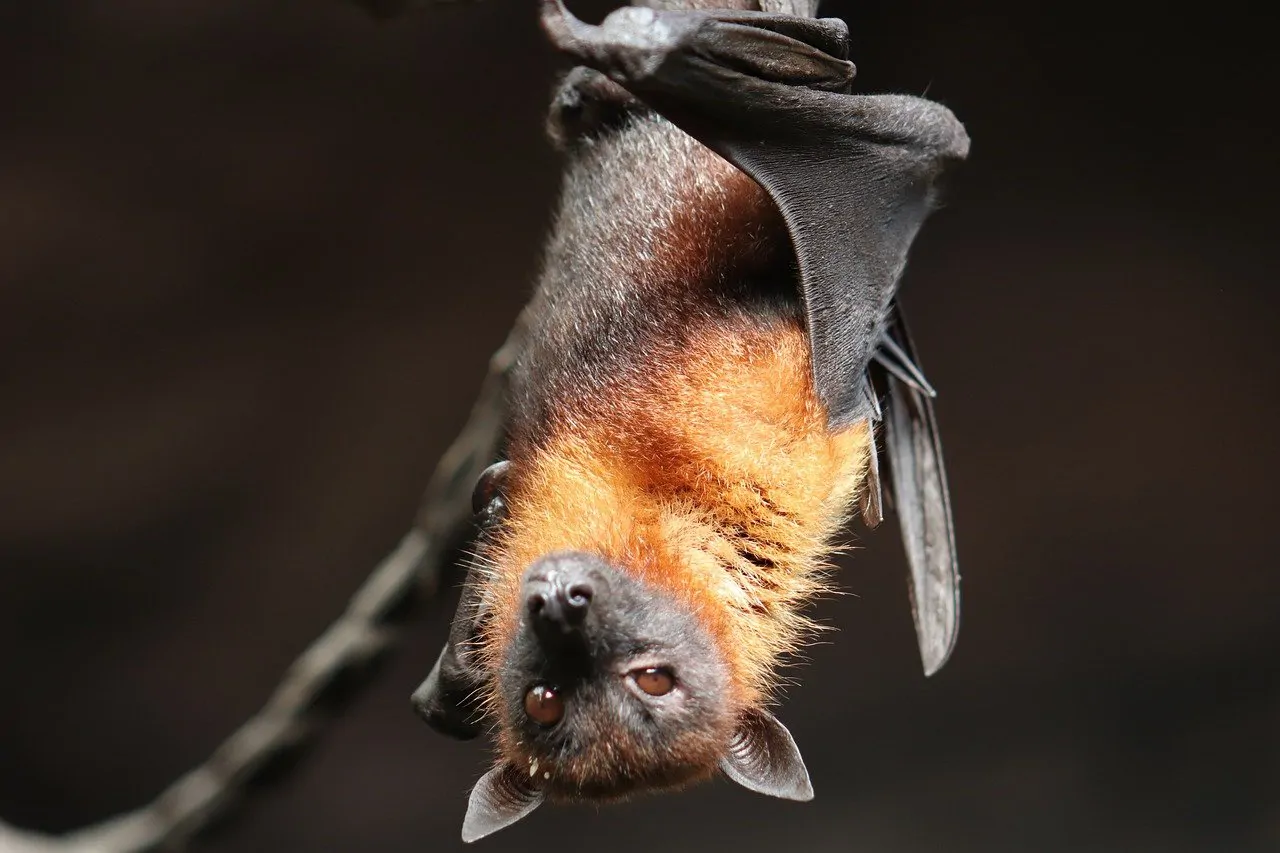
However, an animal origin is no longer being ruled out. Coronaviruses constitute a large family of zoonotic viruses that can infect humans—as the current pandemic reminds us—but also animals. The phylogenetic tree linking this viral family is very broad, and from one end to the other, the viruses are more or less similar. But it is bat coronaviruses that have drawn attention. Bats are natural hosts for many coronaviruses. These viruses are primarily found in two major families of chiropterans—the Vespertilionidae and the Rhinolophidae—which together account for 46% of the bat coronaviruses identified worldwide. It is therefore only natural that researchers have focused on their role in the current pandemic. And it was in a horseshoe bat that researchers in Wuhan discovered the closest known relative of the novel coronavirus to date. The “RaTG13” coronavirus is 96% identical to SARS-CoV-2. However, too many genetic elements still differ for it to be considered a proximal virus—that is, one directly linked to the pandemic coronavirus. Many questions remain about the direct origin of the pandemic virus. Bats have been singled out, pangolins accused, and mink infected, but the “missing link” that could definitively explain how this animal virus crossed the species barrier to infect humans is still missing. Several details are still missing, and some clues remain inaccessible, locked away behind closed doors. China remains reluctant to share information about the origin of the pandemic that could incriminate it.A coronavirus from China?
The Chinese government has continually rewritten the medical history of the pandemic. At first, the virus was said to have escaped from the Wuhan market where wild animal meat is sold. Now, they claim that its emergence could have occurred anywhere in the world—or even in multiple locations simultaneously. But it is not so much the different versions of the story that trouble scientists as the desire to conceal the data and evidence needed to trace the source of the viral outbreak. Initially, to determine how the novel coronavirus emerged, it would have been necessary to sequence samples taken from animals that had been in contact with Patient Zero. In addition to the fact that Patient Zero could not be identified, the Wuhan market was thoroughly cleaned out—presumably for decontamination purposes—but without giving researchers time to investigate more closely. These “missteps” reportedly multiplied, notably with restricted access since September to certain crucial databases. In fact, since the SARS crisis in 2002–2003, several Chinese research teams have collected numerous new coronaviruses from bat populations within their territory. The goal was to better understand these viruses—potential threats—harbored by bats. Thousands of animals were studied, numerous viruses were sequenced, and a vast amount of data was generated. But for the past few months, access to this wealth of information has been restricted, even though the genetic sequences it contains could help shed light on the origin of the current virus. Phylogenetic studies, which examine the genealogy of viruses and possible recombinations of isolated sequences, could very well hold the key. And that’s not all. Some scientists report obstacles—or even severe censorship—regarding scientific publications on the coronavirus’s origin. Since February 2019, all research and scientific publications related to the virus’s origin have been subject to approval at the highest levels before they can be released. While Chinese studies on infection, contagiousness, persistence, and immunity to the virus abound, those concerning the origins of the epidemic—and only those—are trickling out.From Censorship to Conspiracy Theories
Unfortunately, this lack of transparency—partly due to the Chinese government—has helped fuel other hypotheses about the virus’s origin, particularly the theory of a laboratory accident. This is especially true since the very researchers studying bat coronaviruses to prevent a zoonotic catastrophe have found themselves at the center of attention. In fact, among all the samples collected by the Wuhan team is one genome that has become world-famous: the infamous “RaTG13.” According to some sources, Chinese researchers brought this beta-coronavirus back from their field studies and “cultured it in their laboratory to make it even more virulent.” Initially dismissed as a conspiracy theory, this idea has taken root in people’s minds, and the barriers that have been erected have only fueled suspicions, even among scientists. However, the work carried out by the research center in Wuhan is well known and is nothing out of the ordinary. Teams go out to collect samples from animals, and when they are fortunate enough to recover a live virus, it is isolated so that it can be studied in the laboratory. The goal is, in particular, to determine in which animals these viruses can replicate, in order to assess the zoonotic risk. Indeed, we must be able to understand the mechanisms underlying the origin of an epidemic in order to hope to prevent them in the future. But the viruses collected are not always alive and infectious; they are used solely for sequencing. This was notably the case for the infamous RaTG13. In general, most laboratories do not work with whole viruses, nor do they handle live viruses. Instead, they primarily attempt to reconstruct the virus’s genome using computational methods. They simply extract a sequence from the virus under study. In the case of SARS-CoV-2, this most often involves its spike protein—the one that allows it to attach to the cells of the hosts it infects. While some suggest that genetic manipulation could alter a virus’s genetic code to increase its contagiousness, this practice has been banned in the United States since 2017 due to the associated risks. And there is no evidence that the Chinese laboratories in question had the capability to create a virus such as SARS-CoV-2. For most scientists, therefore, COVID-19 remains the result of viral transmission from animals to humans. This prevailing hypothesis is far from far-fetched—quite the contrary. The history of interactions between humans and animals is rife with viruses that jump from one to the other. This is a classic and common mechanism of viral emergence. But since the animal in question has not yet been identified for SARS-CoV-2, doubt persists.A Missing “Intermediate Host”
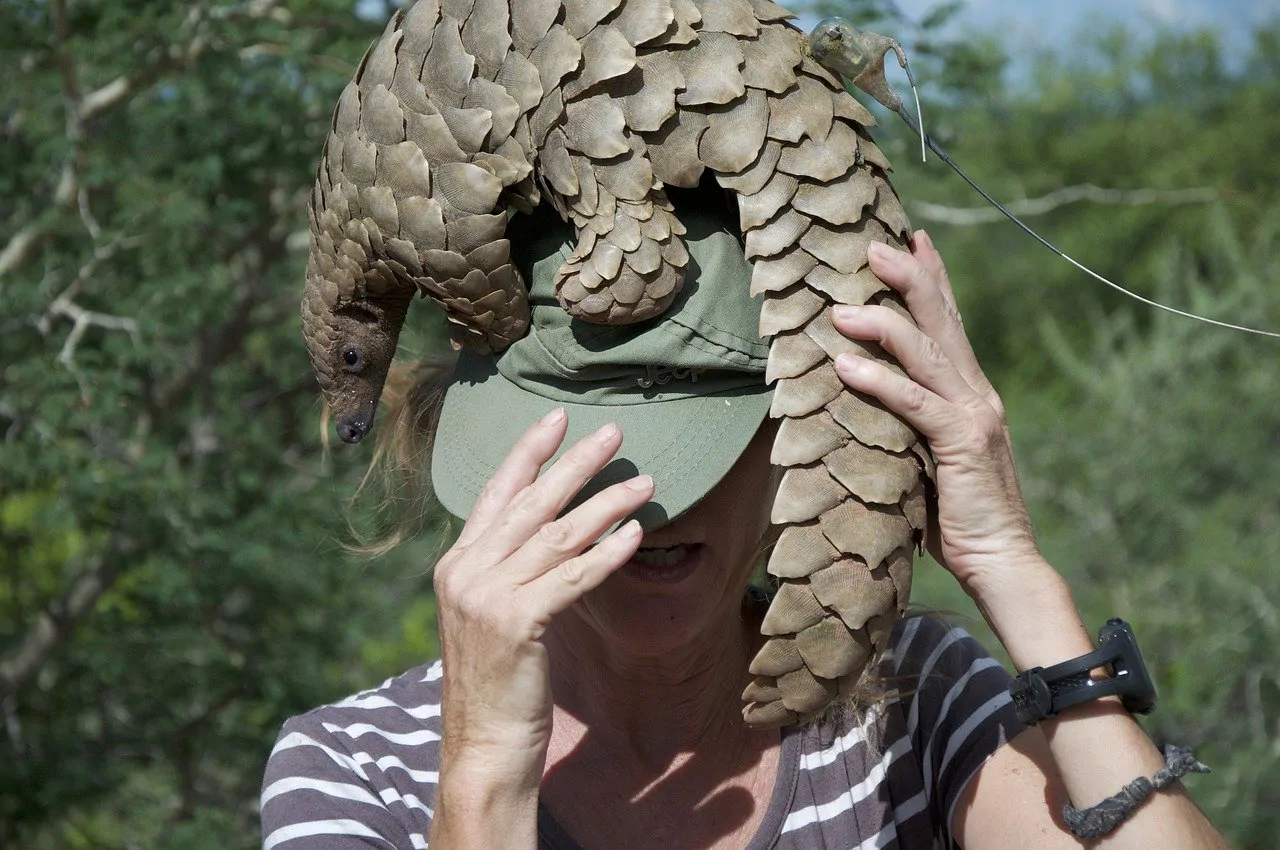
While scientists know that SARS-CoV-2 originated in a bat—likely the species Rhinolophus affinis, since its closest relative, RaTG13, was discovered in that species—they suspect that humans were probably not infected directly. In fact, this relative—however close it may be—is not a “proximal virus.” Its genetic difference from SARS-CoV-2 is still too great. A link in the chain is missing: the famous “intermediate host.” After considering several hypotheses, scientists have settled on the pangolin. In fact, 40% of a group of pangolins seized by customs tested positive for a virus very closely related to SARS-CoV-2. The spike protein of the two viruses was 97.4% similar. In other words, the pangolin virus was logically capable of infecting a human cell almost as effectively as SARS-CoV-2. But this suspect is far from a perfect match. In fact, the virus’s entire genome is too different, overall, to be a direct relative of SARS-CoV-2. It would have required a kind of chimeric virus, born from a recombination between the bat’s RaTG13 and the pangolin’s coronavirus. But this mutant virus has never been discovered, and the theory involving the small scaly animal has now been ruled out. But if it isn’t the pangolin, what other animal could be the missing link? Unfortunately, doubt still lingers. Perhaps this animal doesn’t even exist, and the virus jumped directly from bats to humans. Biologically, there is no argument against this. From an evolutionary standpoint, bats are no more distantly related to humans than pangolins or civets. It is therefore no more reasonable to think that the virus could have jumped more easily from a civet or a pangolin to humans than from a bat to humans. By observing bat populations, researchers have even noted that Rhinolophus sinicus, which carry the closest relative of SARS-CoV-2, have an ACE2 receptor that varies greatly from one individual to another, with some resembling human receptors slightly more than others. This variability is also found on the coronavirus side, with significant variation in spike proteins among viral particles. “This study suggests several things: first, that a SARS-CoV-type virus, capable of directly infecting humans, may be present in bats,” notes Jean-François Julien, an ecologist working at the Natural History Museum. But above all, we won’t be able to predict this by sequencing a single ACE2 gene found in a single individual, since we won’t have been able to observe, in a single bat, the full range of ACE2 receptors within its species. “It’s therefore possible that the virus we’re looking for is hiding in bat populations. But to track it down, we’d have to be incredibly lucky to stumble upon exactly the right one. It’s a bit like finding a needle in a haystack.” Bats would not be a surprising culprit in the eyes of researchers, since they are the source of many zoonotic diseases, including rabies and Ebola virus disease. Peter Daszak, in particular, has led research concluding that, every year, an extremely large number of bat viruses infect humans, resulting in several million cases of infection. But most go unnoticed, causing only mildly contagious and non-fatal illnesses. It is therefore possible that betacoronaviruses have already infected humans in the past, and that the virus has adapted to this new host.More Questions Than Answers
As you can see, there are still many questions and few answers. But if the thirteen experts in China manage to complete their work, they may be able to put an end to this mystery: where does this mysterious coronavirus come from, one that has already infected more than 88 million people worldwide? For now, however, the studies are fueling a multitude of hypotheses rather than answering questions or pointing to a single origin for SARS-CoV-2. Everyone agrees that the WHO mission in China is the key to making progress on this issue. Scientifically, it should bring us as close as possible to the origin of one of the deadliest epidemics of recent decades. But beyond pure science, this mission is important for establishing or reestablishing a channel of communication with China, which could upend all assumptions about the pandemic and fuel numerous theories that are not always based on science. We know that many other viruses, including coronaviruses, have the potential to cross the species barrier and infect humans. We must at all costs prevent not only a recurrence of this type of pandemic, but also ensure that the response from global authorities is not as disjointed as it was this time. To achieve this, we must rely on unity, transparency, and a common global policy. And the first step toward achieving this begins now.Read next
Outbreaks & Epidemiology
10/07/2026
H5N1 should now be treated as a permanent systemic risk, not a succession of outbreaks
Outbreaks & Epidemiology
10/07/2026
African swine fever progresses faster in wild boar than in domestic pigs
Outbreaks & Epidemiology
10/05/2026
Commentaires
No comments yet.
Sign in to comment