

Back to articles
Outbreaks & Epidemiology
COVID-19
Dolphin
Marine mammal
Porpoise
SARS-CoV-2
Seal
Sewers
SnotBot
Wastewater
Whale
COVID-19: Marine Animals Threatened by Wastewater
MR
Mia Rozenbaum
11/17/2020
3 min read
0 comments
Share:
After a study revealed that certain marine animals—particularly whales and seals—are more susceptible to SARS-CoV-2, researchers are concerned about cross-contamination from wastewater and sewers. The transmission of the virus into the marine environment could have serious consequences for animals, most of which are already endangered.
At least 15 species of marine mammals are believed to be susceptible to SARS-CoV-2. This is the conclusion of a new genomics study that examined the issue
. By analyzing the key amino acids of the ACE2 receptor—to which the virus binds and through which it enters cells—in each species, the researchers found striking similarities between those in humans and several marine mammals, including dolphins, belugas, seals, and sea otters.
The team therefore predicts that the majority of Cetacea
species (whales, dolphins, and porpoises) —18 out of 21—are as susceptible to the virus as humans or more so, while eight out of nine species of Pinnepedia
(seals) are also expected to be highly susceptible to SARS-CoV-2. Social marine species are particularly at risk due to the close proximity of individuals.
The findings are alarming—and not just because more than half of the species deemed vulnerable to SARS-CoV-2 are already endangered worldwide.
In fact, SARS-CoV-2 can be shed in feces and survive for up to 25 days in water. Wastewater could therefore serve as a way to spread this coronavirus
. In Spain, Italy, and France, untreated wastewater is teeming with the virus and can serve as an early warning indicator to predict waves of infection.
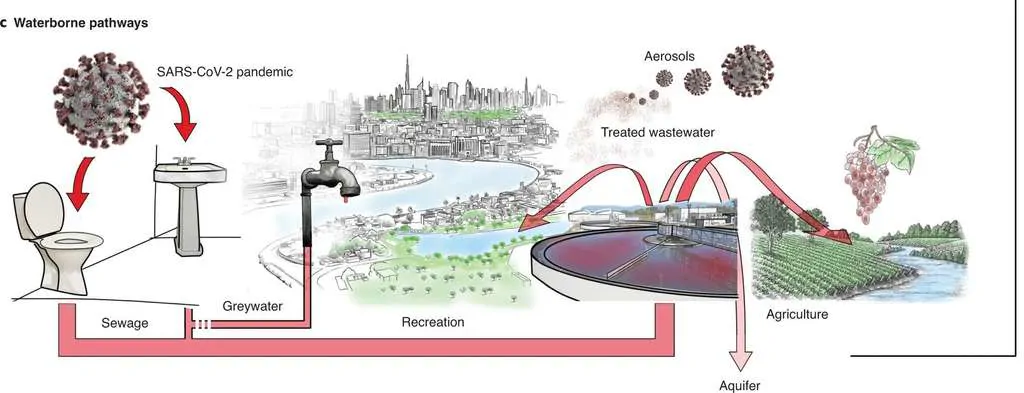 In and of itself, the presence of the virus in sewers does not pose a problem, unless contaminated wastewater comes into contact with natural water sources. This is particularly the case in some developing countries,
where there are already disparities in public health and the wastewater treatment infrastructure needed to manage the COVID-19 crisis. For example, in June 2020, SARS-CoV-2 was detected in river water in Ecuador, where untreated wastewater is discharged directly into natural water bodies.
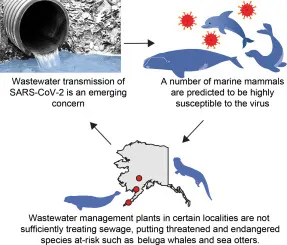
Many jurisdictions have at least primary wastewater treatment, but sewer systems can experience spillover, releasing their biological and chemical contents into the environment. And even wastewater treated through primary processes is not risk-free, as SARS-CoV-2 RNA has been detected in it. Since it can be discharged from settling ponds, it poses an additional risk, particularly in Alaska, where beluga whales could become infected by sewage flowing into local waterways.
This study therefore highlights potentially significant environmental and infectious health concerns regarding untreated wastewater.
So far, no cases of SARS-CoV-2 have been documented in marine mammals, but this would not be the first time. Dolphins and belugas have previously been infected with related coronaviruses, which have caused everything from mild illnesses to potentially fatal liver and lung damage.
The authors emphasize the importance of monitoring susceptible animals using innovative technologies such as the SnotBot—which uses drones to collect mucus samples from whale blowholes—and also propose vaccination campaigns. At the same time, wastewater treatment systems should be evaluated to ensure they can curb the transmission of the virus into natural water systems—not only for this threat, but also for the next one. Proactive measures are needed to protect at-risk marine mammals both during and after the pandemic.
In and of itself, the presence of the virus in sewers does not pose a problem, unless contaminated wastewater comes into contact with natural water sources. This is particularly the case in some developing countries,
where there are already disparities in public health and the wastewater treatment infrastructure needed to manage the COVID-19 crisis. For example, in June 2020, SARS-CoV-2 was detected in river water in Ecuador, where untreated wastewater is discharged directly into natural water bodies.
Many jurisdictions have at least primary wastewater treatment, but sewer systems can experience spillover, releasing their biological and chemical contents into the environment. And even wastewater treated through primary processes is not risk-free, as SARS-CoV-2 RNA has been detected in it. Since it can be discharged from settling ponds, it poses an additional risk, particularly in Alaska, where beluga whales could become infected by sewage flowing into local waterways.
This study therefore highlights potentially significant environmental and infectious health concerns regarding untreated wastewater.
So far, no cases of SARS-CoV-2 have been documented in marine mammals, but this would not be the first time. Dolphins and belugas have previously been infected with related coronaviruses, which have caused everything from mild illnesses to potentially fatal liver and lung damage.
The authors emphasize the importance of monitoring susceptible animals using innovative technologies such as the SnotBot—which uses drones to collect mucus samples from whale blowholes—and also propose vaccination campaigns. At the same time, wastewater treatment systems should be evaluated to ensure they can curb the transmission of the virus into natural water systems—not only for this threat, but also for the next one. Proactive measures are needed to protect at-risk marine mammals both during and after the pandemic.
Read next
Outbreaks & Epidemiology
10/07/2026
H5N1 should now be treated as a permanent systemic risk, not a succession of outbreaks
Outbreaks & Epidemiology
10/07/2026
African swine fever progresses faster in wild boar than in domestic pigs
Outbreaks & Epidemiology
10/05/2026
Commentaires
No comments yet.
Sign in to comment