

Back to articles
Outbreaks & Epidemiology
Chat
Coronavirus
COVID-19
Diagnosis
Dog
Epidemic
Pandemic
SARS
SARS-CoV-2
Test
COVID-19: Are Cats and Dogs Affected by the Second Wave?
MR
Mia Rozenbaum
09/17/2020
6 min read
0 comments
Share:
This is nothing new: COVID-19 cases among humans have been steadily rising in France for several weeks now. While measures against the virus remain strict, questions are being raised about the impact of this second wave of the pandemic on our four-legged companions and the risks they face.
And scientists are the first to acknowledge this. We still don’t know, for example, how often cats and dogs are infected with the virus, what their symptoms are, or to what extent they are likely to transmit the virus to other animals—including us. However, veterinarians are working tirelessly and are able to offer some insights. Their research has revealed a few key findings.
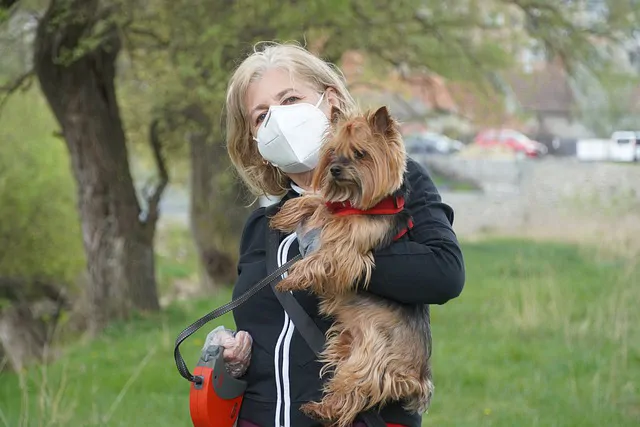 First, while it is not impossible for the virus to be transmitted to humans by their pets, the reverse is much more likely.
Since the start of the pandemic, federal health agencies and veterinary experts have agreed that, based on current knowledge, pets do not pose a significant risk to human health.
A few studies have shown that cats can transmit SARS-CoV-2
to other cats, but all were conducted in laboratories using high viral loads, and many remain at the preprint stage without peer review. On the other hand, several reports describe outbreaks in which one animal tested positive while others that had been in contact with it did not.
First, while it is not impossible for the virus to be transmitted to humans by their pets, the reverse is much more likely.
Since the start of the pandemic, federal health agencies and veterinary experts have agreed that, based on current knowledge, pets do not pose a significant risk to human health.
A few studies have shown that cats can transmit SARS-CoV-2
to other cats, but all were conducted in laboratories using high viral loads, and many remain at the preprint stage without peer review. On the other hand, several reports describe outbreaks in which one animal tested positive while others that had been in contact with it did not.
 And genetic data on viral strains collected from the first two known dogs infected with SARS-CoV-2 show that they likely contracted COVID-19 from their owners. Even the tigers and lions infected at the Bronx Zoo in New York in April appear to have contracted the virus from humans.
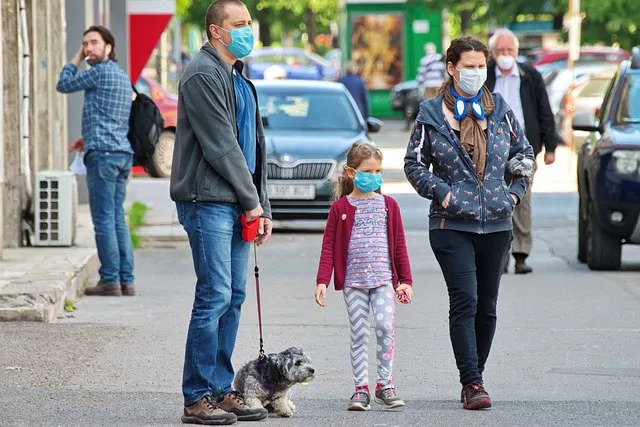
It is therefore up to animal owners to take precautions when in contact with an animal. Wearing a mask, washing hands regularly, and social distancing also apply to animals; otherwise, you put both your pet and yourself at risk.
And genetic data on viral strains collected from the first two known dogs infected with SARS-CoV-2 show that they likely contracted COVID-19 from their owners. Even the tigers and lions infected at the Bronx Zoo in New York in April appear to have contracted the virus from humans.
It is therefore up to animal owners to take precautions when in contact with an animal. Wearing a mask, washing hands regularly, and social distancing also apply to animals; otherwise, you put both your pet and yourself at risk.
 The U.S. Department of Agriculture (USDA) even advises against their use. And for good reason: many experts are concerned about the impact of a positive test result on animal welfare, especially as long as intraspecies transmission has not been established.
Indeed, even if your pet tests positive, what will you do with that information? For now, there is no treatment available for the animal. The information causes more anxiety than it provides solutions. And in the hands of an uninformed person, this information could spark unwarranted fear and a mass abandonment of pets, as was already the case at the start of the pandemic.
The U.S. Department of Agriculture (USDA) even advises against their use. And for good reason: many experts are concerned about the impact of a positive test result on animal welfare, especially as long as intraspecies transmission has not been established.
Indeed, even if your pet tests positive, what will you do with that information? For now, there is no treatment available for the animal. The information causes more anxiety than it provides solutions. And in the hands of an uninformed person, this information could spark unwarranted fear and a mass abandonment of pets, as was already the case at the start of the pandemic.
Pets do not pose a significant risk to humans
All evidence therefore suggests that transmission within pet populations is unlikely.However, controlled studies are still needed to definitively support these findings. Testing has been limited. Most of the animals that were tested were so because they lived with humans who had already tested positive. Despite this, so far, nothing scientists have observed has contradicted these findings. On the contrary, all evidence suggests that cats and dogs are very unlikely to transmit SARS-CoV-2 to humans. “ “The risk of contracting the disease is much greater when going to the grocery store than when spending time with your own pet,” says Scott Weese , a veterinarian at the Ontario Veterinary College at the University of Guelph and a specialist in emerging diseases. Therefore, we should be more concerned about the people around us than about animals.
Humans pose a greater risk to animals than the other way around
The reality is that pets are much more likely to contract the virus from humans than the other way around. “Almost all animals that tested positive had been in contact with infected humans,” says Jane Sykes, chief veterinarian at the University of California, Davis, and founder of the International Society for Companion Animal Infectious Diseases.Symptoms of COVID-19 in pets are likely mild
The exact number of dogs and cats infected with SARS-CoV-2 is unknown. Testing of animals remains rare. However, a serological study estimates that 3 to 4% of cats and dogs in Italy were exposed to the virus at the height of the pandemic there—a rate comparable to that in humans. These are high figures, yet they have not been associated with an increase in symptoms among animals. A company that provides health insurance to more than half a million dogs and cats in North America and Australia reports that it has seen no increase in claims related to respiratory illness —or any other type of health-related claim—since the start of the pandemic. These findings have been supported by several studies showing that cats, at least, are unlikely to exhibit symptoms . The disease appears to be much less virulent in them than in humans. Unfortunately, concrete and reliable evidence is still lacking. However, this does not preclude the possibility that pets could be silent, asymptomatic, or mildly symptomatic vectors of the virus.Testing your pet does not necessarily provide answers
Several tests for pets are now available on the market. However, authorities warn against the routine use of these tests on cats and dogs.There are still more questions than answers
The general consensus, therefore, is to remain calm for now. It’s important not to overreact to information that, statistically speaking and based on current findings, poses no real danger to humans. However, there is a noticeable lack of solid, standardized information. While researchers are beginning to better understand the virus in humans—and are just starting to grasp the role of animals in the pandemic—the still-fragmented information needs to be pieced together and confirmed. In fact, most of the published findings are still preliminary, and many preprints are still incomplete and undergoing peer review. Most lack rigorous testing, appropriate sampling, or sufficient data. This does not necessarily invalidate them, but we must rely on more robust studies before making definitive statements. Comprehensive epidemiological studies would help eliminate certain biases in previous studies and provide a more accurate picture of the disease’s risk factors. While such studies are currently underway in both domestic and wild animals, we will still have to wait to obtain all the answers needed to ensure the safety and health of pet populations—and, by extension, that of their owners.Read next
Outbreaks & Epidemiology
10/07/2026
H5N1 should now be treated as a permanent systemic risk, not a succession of outbreaks
Outbreaks & Epidemiology
10/07/2026
African swine fever progresses faster in wild boar than in domestic pigs
Outbreaks & Epidemiology
10/05/2026
Commentaires
No comments yet.
Sign in to comment