

Back to articles
Outbreaks & Epidemiology
Avian influenza
Biosecurity
Dog
H5N1
H5N2
H5N8
H7N9
Influenza A
Veterinary services
Wild birds
WOAH
World Organisation for Animal Health
Avian Influenza: The Global Spread of the Influenza Virus Is a Cause for Concern for the WOAH
V
Vetitude
05/19/2015
4 min read
0 comments
Share:
The World Organisation for Animal Health (WOAH) recommends strengthening biosecurity measures on poultry farms to halt the global spread of avian influenza. Since the beginning of last year, the number of detected outbreaks has continued to rise and now affects more than 35 countries across all regions of the globe.
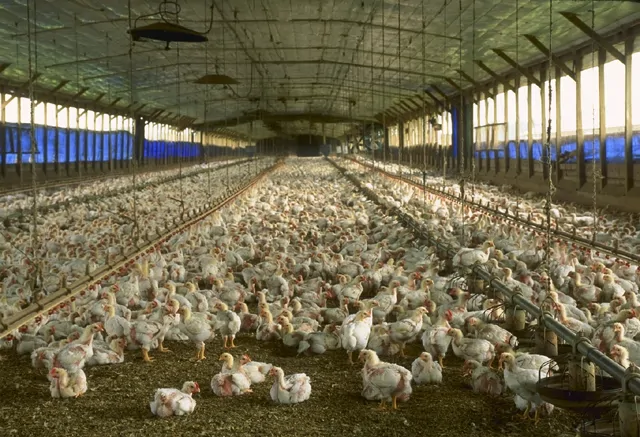 The proliferation of outbreaks involving multiple strains of the influenza virus has led to the death or sanitary slaughter of tens of millions of poultry worldwide since early 2014. According to WOAH, this situation requires better implementation of the standards adopted by its 180 member countries regarding surveillance, early detection of cases, rapid response to outbreaks, and disease prevention and control. This involves, in particular, biosecurity measures on poultry farms and in trade, as well as, where appropriate, the vaccination of poultry.
The WOAH considers the recommended biosecurity measures to be of the utmost importance in preventing the spread of the disease. While the role of wild birds as reservoirs and vectors of the influenza virus is significant, other transmission factors—particularly between poultry farms—can take over in the absence of appropriate precautions
.
Thus, in light of the recent increase in outbreaks of avian influenza in North America, Africa, and Europe, as well as their persistence in Asia, the veterinary services of WOAH member countries are urged to implement all preventive measures recommended for poultry farms, adapted to the local situation.
The proliferation of outbreaks involving multiple strains of the influenza virus has led to the death or sanitary slaughter of tens of millions of poultry worldwide since early 2014. According to WOAH, this situation requires better implementation of the standards adopted by its 180 member countries regarding surveillance, early detection of cases, rapid response to outbreaks, and disease prevention and control. This involves, in particular, biosecurity measures on poultry farms and in trade, as well as, where appropriate, the vaccination of poultry.
The WOAH considers the recommended biosecurity measures to be of the utmost importance in preventing the spread of the disease. While the role of wild birds as reservoirs and vectors of the influenza virus is significant, other transmission factors—particularly between poultry farms—can take over in the absence of appropriate precautions
.
Thus, in light of the recent increase in outbreaks of avian influenza in North America, Africa, and Europe, as well as their persistence in Asia, the veterinary services of WOAH member countries are urged to implement all preventive measures recommended for poultry farms, adapted to the local situation.
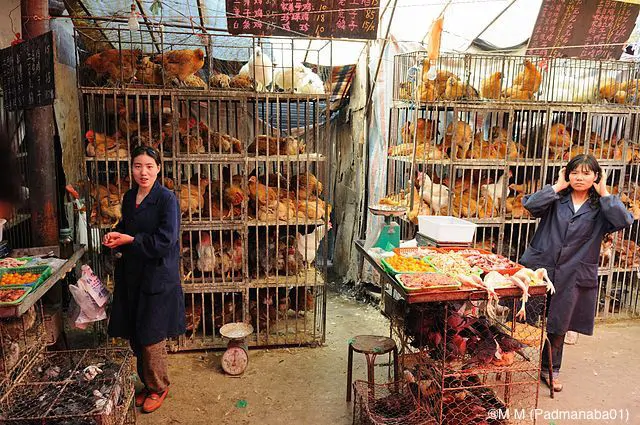 For example, the low pathogenic H7N9 strain, which emerged in early 2013 in China, proved capable—for the first time—of infecting humans, causing about 100 human cases within a few months. Most of the patients quickly developed severe pneumonia, which was often fatal. Temporary measures to close live poultry markets helped slow this transmission from animals to humans, though they did not stop it entirely.
Given a mortality rate of over 30%, having an effective vaccine remains the best way to prevent an epidemic. In a recent U.S. study*, researchers used parainfluenza virus 5—commonly isolated in dogs—as a vector for a new vaccine against influenza A H7N9. The vaccine developed protected mice and guinea pigs against infection with the H7N9 virus and appears to be a promising candidate for future human vaccination trials.
In 2014, a new highly pathogenic avian strain, H5N8, was identified in South Korea and China, quickly spreading to Japan. The virus then spread—likely through wild bird migration—to India, Europe, Canada, and the United States. These countries, which have been severely affected, are also currently facing an H5N2 avian influenza epizootic, which has killed more than 30 million poultry within a few months. No human cases linked to these two strains have been reported so far.
In recent months, numerous outbreaks of influenza A H5N1 have also been detected in many West African countries. The H5N1 virus continues to affect Egypt on an endemic basis, while new cases have emerged in Israel and Palestine.
* Zhuo Li et al.: Efficacy of a parainfluenza virus 5 (PIV5)-based H7N9 vaccine in mice and guinea pigs: antibody titer toward HA was not a good indicator of protection, 2015, PLoS ONE, http://journals.plos.org/plosone/article?id=10.1371/journal.pone.0120355.
For example, the low pathogenic H7N9 strain, which emerged in early 2013 in China, proved capable—for the first time—of infecting humans, causing about 100 human cases within a few months. Most of the patients quickly developed severe pneumonia, which was often fatal. Temporary measures to close live poultry markets helped slow this transmission from animals to humans, though they did not stop it entirely.
Given a mortality rate of over 30%, having an effective vaccine remains the best way to prevent an epidemic. In a recent U.S. study*, researchers used parainfluenza virus 5—commonly isolated in dogs—as a vector for a new vaccine against influenza A H7N9. The vaccine developed protected mice and guinea pigs against infection with the H7N9 virus and appears to be a promising candidate for future human vaccination trials.
In 2014, a new highly pathogenic avian strain, H5N8, was identified in South Korea and China, quickly spreading to Japan. The virus then spread—likely through wild bird migration—to India, Europe, Canada, and the United States. These countries, which have been severely affected, are also currently facing an H5N2 avian influenza epizootic, which has killed more than 30 million poultry within a few months. No human cases linked to these two strains have been reported so far.
In recent months, numerous outbreaks of influenza A H5N1 have also been detected in many West African countries. The H5N1 virus continues to affect Egypt on an endemic basis, while new cases have emerged in Israel and Palestine.
* Zhuo Li et al.: Efficacy of a parainfluenza virus 5 (PIV5)-based H7N9 vaccine in mice and guinea pigs: antibody titer toward HA was not a good indicator of protection, 2015, PLoS ONE, http://journals.plos.org/plosone/article?id=10.1371/journal.pone.0120355.
A Short-Lived Lull
Ten years ago, the global H5N1 avian influenza epizootic had already resulted in the deaths of tens of millions of poultry. Several hundred human cases were also reported, more than half of which were fatal. This epidemic, which primarily affected animals, had at the time raised fears that the influenza strain might mutate into a form highly capable of human-to-human transmission, which could have led to a global spread of the disease among humans. Fortunately, the viral strain remained stable, and the feared pandemic ultimately did not occur. Building on this experience and the implementation of dedicated WOAH standards, veterinary services in many countries have learned to manage outbreaks of avian influenza and contain them quickly. However, this apparent lull came to an end with the outbreaks that have occurred in recent years.Read next
Outbreaks & Epidemiology
10/07/2026
H5N1 should now be treated as a permanent systemic risk, not a succession of outbreaks
Outbreaks & Epidemiology
10/07/2026
African swine fever progresses faster in wild boar than in domestic pigs
Outbreaks & Epidemiology
10/05/2026
Commentaires
No comments yet.
Sign in to comment