

Back to articles
Outbreaks & Epidemiology
Avian influenza
Birds
Duck
H10N7
H12N5
H3N8
H4N5
H5N1
H5N8
H6N2
Highly pathogenic avian influenza
HPAI
Influenza A
Low pathogenic influenza A
Mallard
Avian influenza: Infected birds subsequently become immune to the disease
V
Vetitude
07/05/2017
3 min read
0 comments
Share:
In birds, an initial infection with influenza A provides strong protection against subsequent infections with other subtypes of the influenza virus—whether
homologous or heterologous—much like a natural vaccination. Until now, researchers believed that birds infected with one subtype of influenza A could not develop enhanced immunity against other subtypes. However, in a recent Swedish study, mallard ducks infected with a low pathogenic influenza virus acquired significant immunity and resistance against other variants of the same virus. Ultimately, it appears that these birds develop antibodies capable of protecting them during future exposures to the virus. The level of this immune resistance therefore depends in part on the viruses involved and their genetic similarity.
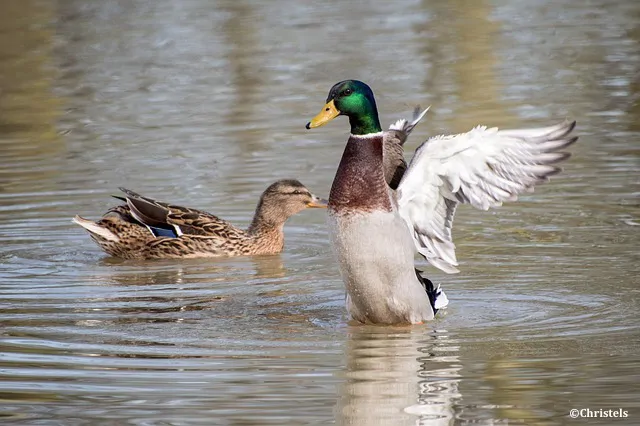 Influenza A viruses infect many hosts, including birds and mammals; however, while few subtypes circulate among humans, they are much more diverse and coexist within wild bird populations, particularly waterfowl. Waterfowl, particularly the mallard (Anas platyrhynchos), are often carriers of the low pathogenic influenza A virus. However, according to the authors, mallards infected with a low pathogenic virus develop immunity against variants of the same virus
.
In the study conducted by Lund University, mallards (Anas platyrhynchos
) were experimentally infected with various influenza viruses, including the low pathogenic H3N8 subtype, and divided into six groups. Five weeks after this initial infection, each group was reinfected with a heterologous (H4N5, H10N7, H6N2, H12N5) or homologous (H3N8) viral subtype. In addition, two of the pre-infected groups were challenged with a virus homologous to H3N8 (weeks 11 and 15 post-infection) to assess the duration of protection. The results show that the mallards were still resistant to reinfection after 15 weeks. A significant reduction in viral load was also observed in all pre-infected groups compared to the controls. The study thus demonstrates that, following an infection, mallards become partially immunized and resistant to subsequent influenza infections to which they are exposed. Their degree of resistance depends on both the viruses involved and their genetic similarity.
Therefore, to protect birds from future infections, it is important to know which infections they have previously contracted. Infected birds could then be partially protected against highly pathogenic avian influenza strains
, such as H5N1 or H5N8, which are most commonly responsible for avian influenza pandemics. Just over a decade ago, the H5N1 virus spread worldwide from infected chickens in Southeast Asia, decimating domestic poultry and wild bird populations. Human cases, some of which were fatal, were also reported.
It is difficult to explain why there are more influenza subtypes in birds than in humans and other mammals. One possible explanation is the one put forward in the study: different viruses compete with one another as birds develop immunity and the duration of infection shortens.
The virus can then evolve and undergo mutations. It remains to be understood how different viruses and subtypes of the same virus interact, for example when an individual is infected multiple times. Further studies will be needed to eventually develop more effective vaccines.
Influenza A viruses infect many hosts, including birds and mammals; however, while few subtypes circulate among humans, they are much more diverse and coexist within wild bird populations, particularly waterfowl. Waterfowl, particularly the mallard (Anas platyrhynchos), are often carriers of the low pathogenic influenza A virus. However, according to the authors, mallards infected with a low pathogenic virus develop immunity against variants of the same virus
.
In the study conducted by Lund University, mallards (Anas platyrhynchos
) were experimentally infected with various influenza viruses, including the low pathogenic H3N8 subtype, and divided into six groups. Five weeks after this initial infection, each group was reinfected with a heterologous (H4N5, H10N7, H6N2, H12N5) or homologous (H3N8) viral subtype. In addition, two of the pre-infected groups were challenged with a virus homologous to H3N8 (weeks 11 and 15 post-infection) to assess the duration of protection. The results show that the mallards were still resistant to reinfection after 15 weeks. A significant reduction in viral load was also observed in all pre-infected groups compared to the controls. The study thus demonstrates that, following an infection, mallards become partially immunized and resistant to subsequent influenza infections to which they are exposed. Their degree of resistance depends on both the viruses involved and their genetic similarity.
Therefore, to protect birds from future infections, it is important to know which infections they have previously contracted. Infected birds could then be partially protected against highly pathogenic avian influenza strains
, such as H5N1 or H5N8, which are most commonly responsible for avian influenza pandemics. Just over a decade ago, the H5N1 virus spread worldwide from infected chickens in Southeast Asia, decimating domestic poultry and wild bird populations. Human cases, some of which were fatal, were also reported.
It is difficult to explain why there are more influenza subtypes in birds than in humans and other mammals. One possible explanation is the one put forward in the study: different viruses compete with one another as birds develop immunity and the duration of infection shortens.
The virus can then evolve and undergo mutations. It remains to be understood how different viruses and subtypes of the same virus interact, for example when an individual is infected multiple times. Further studies will be needed to eventually develop more effective vaccines.
Read next
Outbreaks & Epidemiology
10/07/2026
H5N1 should now be treated as a permanent systemic risk, not a succession of outbreaks
Outbreaks & Epidemiology
10/07/2026
African swine fever progresses faster in wild boar than in domestic pigs
Outbreaks & Epidemiology
10/05/2026
Commentaires
No comments yet.
Sign in to comment