

Back to articles
Outbreaks & Epidemiology
Anthrax
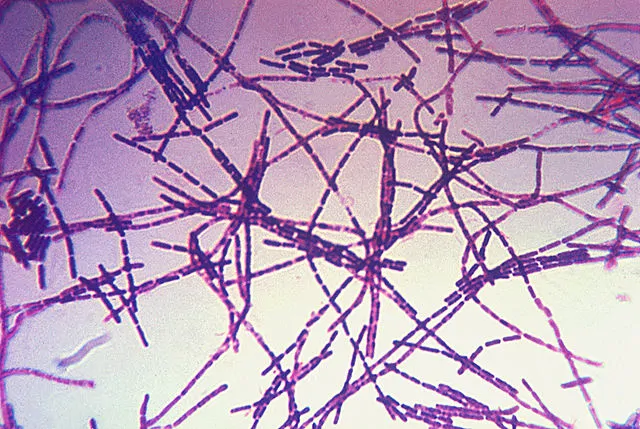
Anthrax bacillus
Bacillus anthracis
Contaminated meat
Iamalo-Nenetsia
Reindeer
Salekhard
Vaccination
Anthrax: Siberian reindeer affected by the resurgence of the anthrax bacillus
V
Vetitude
08/02/2016
3 min read
0 comments
Share:
After lying dormant for 75 years, anthrax has resurfaced in Russia’s Far North. The bacteria Bacillus anthracis has already claimed one victim, a 12-year-old child, while eight other people have been infected and dozens hospitalized. Some 2,400 infected reindeer have died in about ten days. To stem the outbreak, the population has been placed under quarantine, and domestic reindeer herds are being vaccinated as a matter of urgency. In this region of Western Siberia, populated mainly by nomadic herders, the last outbreak of anthrax dates back to 1941.
 Initially, Russian health authorities attributed this anthrax outbreak in Siberia to global warming, which is causing the soil to thaw in Arctic regions*
. An unusually hot summer, with temperatures exceeding 35° instead of the 17° seen in previous years, caused the permafrost to thaw in the Yamalo-Nenets Autonomous Okrug, exposing the buried carcass of a reindeer infected with anthrax. The spores,
which can survive for several decades in the soil, are believed to have been reactivated by the heat wave before being ingested by the numerous herds grazing on the Yamal Peninsula. Several thousand Nenets and Khanty people raise a herd of approximately 500,000 domestic reindeer there.
Today, investigators are focusing their search for the source of the anthrax outbreak on an old traditional local cemetery
, where bodies rest in wooden coffins placed on mounds rather than being buried deeply. As temperatures rose, the bacteria spores became infectious again and were then carried by the wind. The affected region had been considered free of anthrax since 1968, with no cases reported since 1941, either among humans or animals.
Between July 24 and 31, 1,500 infected reindeer died, and that number has nearly doubled in recent days. The infection, which is acute and fatal, quickly spread to humans—accidental hosts—in this sparsely populated reindeer-herding region. Following the death of a child from the intestinal form of the disease—contracted after eating infected meat—72 people, including 41 children, were hospitalized in the city of Salekhard to limit the risk of spread among the population. At least eight additional cases have already been confirmed, including three in children. A vaccination campaign targeting 4,500 reindeer has also been launched, with the goal of immunizing 41,000 within about two weeks.
Furthermore, the entire Yamalo-Nenets region has been placed under quarantine, and its governor has declared a state of emergency, dispatching military rescue teams specialized in biological warfare to the area to combat the anthrax outbreak. On the ground, a site dedicated to the incineration of dead animal carcasses has been designated, and a base camp and a laboratory will be built nearby. While the chosen disposal method is the most effective, it is not without risk in an area prone to wildfires.
* See also: http://www.ncbi.nlm.nih.gov/pubmed/22114567
Initially, Russian health authorities attributed this anthrax outbreak in Siberia to global warming, which is causing the soil to thaw in Arctic regions*
. An unusually hot summer, with temperatures exceeding 35° instead of the 17° seen in previous years, caused the permafrost to thaw in the Yamalo-Nenets Autonomous Okrug, exposing the buried carcass of a reindeer infected with anthrax. The spores,
which can survive for several decades in the soil, are believed to have been reactivated by the heat wave before being ingested by the numerous herds grazing on the Yamal Peninsula. Several thousand Nenets and Khanty people raise a herd of approximately 500,000 domestic reindeer there.
Today, investigators are focusing their search for the source of the anthrax outbreak on an old traditional local cemetery
, where bodies rest in wooden coffins placed on mounds rather than being buried deeply. As temperatures rose, the bacteria spores became infectious again and were then carried by the wind. The affected region had been considered free of anthrax since 1968, with no cases reported since 1941, either among humans or animals.
Between July 24 and 31, 1,500 infected reindeer died, and that number has nearly doubled in recent days. The infection, which is acute and fatal, quickly spread to humans—accidental hosts—in this sparsely populated reindeer-herding region. Following the death of a child from the intestinal form of the disease—contracted after eating infected meat—72 people, including 41 children, were hospitalized in the city of Salekhard to limit the risk of spread among the population. At least eight additional cases have already been confirmed, including three in children. A vaccination campaign targeting 4,500 reindeer has also been launched, with the goal of immunizing 41,000 within about two weeks.
Furthermore, the entire Yamalo-Nenets region has been placed under quarantine, and its governor has declared a state of emergency, dispatching military rescue teams specialized in biological warfare to the area to combat the anthrax outbreak. On the ground, a site dedicated to the incineration of dead animal carcasses has been designated, and a base camp and a laboratory will be built nearby. While the chosen disposal method is the most effective, it is not without risk in an area prone to wildfires.
* See also: http://www.ncbi.nlm.nih.gov/pubmed/22114567
Read next
Outbreaks & Epidemiology
10/07/2026
H5N1 should now be treated as a permanent systemic risk, not a succession of outbreaks
Outbreaks & Epidemiology
10/07/2026
African swine fever progresses faster in wild boar than in domestic pigs
Outbreaks & Epidemiology
10/05/2026
Commentaires
No comments yet.
Sign in to comment