

Share:
A new strain of the rabbit hemorrhagic disease virus is spreading throughout the southwestern United States. This deadly disease is wreaking havoc on populations of both common and endangered lagomorphs.
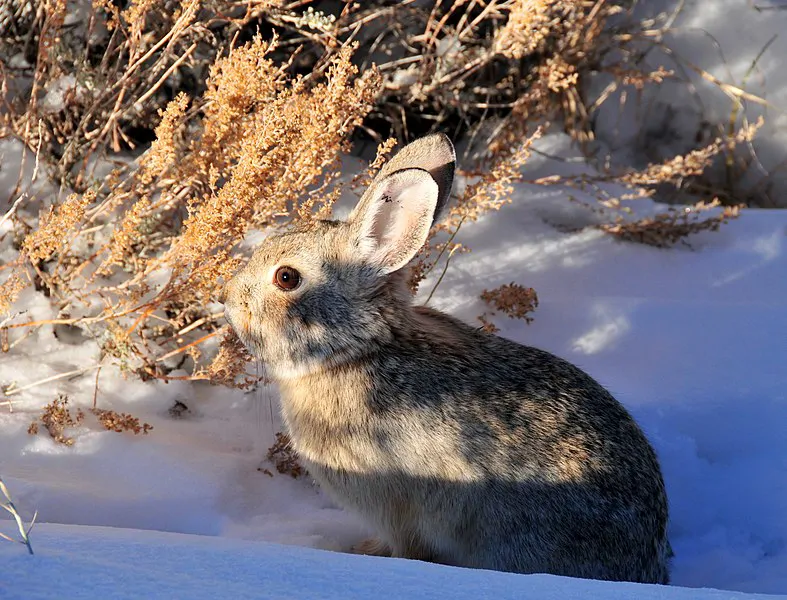 The rabbit hemorrhagic disease virus first appeared in the 1980s, devastating domestic rabbit populations in China and Europe, and later in Australia. Just as populations were beginning to recover, a new strain—Rabbit Hemorrhagic Disease Virus 2 (RHDV2, also known as L. europaeus / GI.2), emerged in France in 2010, once again threatening both domestic and wild populations.
The new strain, which is less lethal in adult rabbits, also affects young rabbits and wild species, unlike its predecessor. All North American lagomorph species—which include rabbits, hares, and their distant relatives known as pikas—may be susceptible. This characteristic could be explained by the fact that the virus is more prone to recombination.
The rabbit hemorrhagic disease virus first appeared in the 1980s, devastating domestic rabbit populations in China and Europe, and later in Australia. Just as populations were beginning to recover, a new strain—Rabbit Hemorrhagic Disease Virus 2 (RHDV2, also known as L. europaeus / GI.2), emerged in France in 2010, once again threatening both domestic and wild populations.
The new strain, which is less lethal in adult rabbits, also affects young rabbits and wild species, unlike its predecessor. All North American lagomorph species—which include rabbits, hares, and their distant relatives known as pikas—may be susceptible. This characteristic could be explained by the fact that the virus is more prone to recombination.
Both types of RHDV are extremely infectious. They persist in the environment, surviving in dead animals for at least 3 months, and can be spread through the feces of predators and insects.First detected in North America in 2018, the virus has been spreading across the region ever since. Unfortunately, control measures are not always effective. Commercial vaccines for domestic rabbits, available in Europe, cannot be used on wild animals because they must be injected. And the stress caused by capturing and handling the animals is often fatal. Laboratories are working on an oral vaccine, but studies are still ongoing and costly. Initial results are expected by the end of 2021, but it would take another two to three years to get the vaccine approved. In the meantime, it will be necessary to prevent the transmission of the virus within populations as much as possible in order to best protect ecosystems. Biologists fear that the virus could have a particularly negative impact on certain species that are already struggling, as well as on predators. Indeed, after the Iberian population of lagomorphs was reduced by 60 to 70 percent, two predators of rabbits also saw their populations decline: the Spanish imperial eagle by 45 percent and the Iberian lynx by 65 percent. In the meantime, studying the strains—and their virulence—could help biologists anticipate the impact on wild populations.
Read next
Outbreaks & Epidemiology
10/07/2026
H5N1 should now be treated as a permanent systemic risk, not a succession of outbreaks
Outbreaks & Epidemiology
10/07/2026
African swine fever progresses faster in wild boar than in domestic pigs
Outbreaks & Epidemiology
10/05/2026
Commentaires
No comments yet.
Sign in to comment