

Back to articles
One Health & Zoonoses
Bacterial infection
Lagomorph
Murin
Myxoma
Myxomatosis
Rabbit
Skin abscess
Xenograft
Using the rabbit myxomatosis virus to ensure the safety of human bone marrow transplants
V
Vetitude
06/08/2015
2 min read
0 comments
Share:
Although the myxoma virus is often fatal to rabbits, it has little effect on humans when they are exposed to it. However, using a xenograft model, researchers have discovered that this virus prevents graft-versus-host disease while simultaneously attacking cancer cells. This dual capability is expected to expand treatment options for patients who cannot find fully compatible donors.
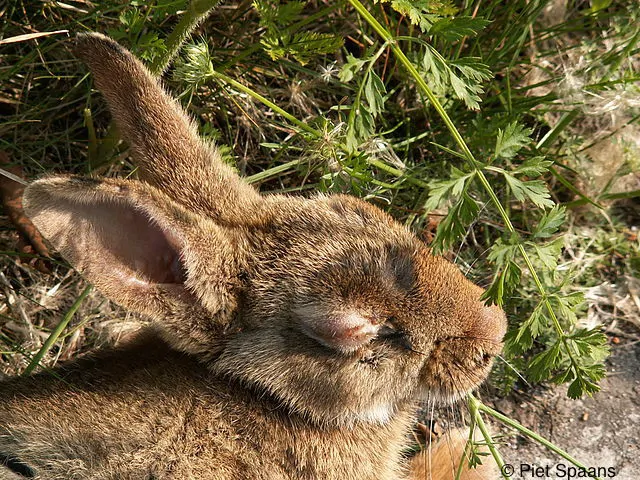 The myxoma virus, which affects lagomorphs, could thus help make allogeneic hematopoietic stem cell transplants safer in humans. These transplants are performed to treat certain malignant blood disorders, such as leukemia or multiple myeloma, but the risk of graft-versus-host disease is a major obstacle to wider application of this procedure. Ideally, strategies to improve these bone marrow allografts should involve eliminating the T cells that lead to rejection, while sparing those that enable the graft’s anticancer response.
In their study*, the scientists found that the myxoma virus kills cancer cells in the laboratory and prevents graft-versus-host disease, one of the most feared complications associated with bone marrow transplants. The newly transplanted white blood cells attack the recipient’s body, causing shortness of breath, abdominal pain, and, in severe cases, death.
Myxomatosis, a virus that circulates among European and Australian rabbits, causes skin abscesses and bacterial infections that often lead to the animals’ death within about ten days. In contrast, in humans, infection with the myxoma virus remains benign. Researchers tested the virus on human cells in the laboratory, attaching it to T cells before using them in a bone marrow transplant. Once transplanted, the virus not only blocks the graft-versus-host reaction but also attacks and kills any present cancer cells.
This process will primarily benefit people at high risk of graft rejection, particularly those who have difficulty finding compatible donors, such as the elderly. In fact, when a bone marrow donor is only a partial match for the recipient, the risk of graft-versus-host disease can reach 80 percent.
Following the success of the laboratory trial on human cells, the team will now test the effectiveness of its discovery in a mouse model before proceeding to a full clinical trial, likely not until next year. A clinically viable virus will need to be developed, and safety tests conducted. In the near future, the researchers hope that their effective process—which does not alter normal stem cells—will find broader application in treating other forms of cancer in humans.
* http://www.bloodjournal.org/content/early/2015/04/22/blood-2014-07-587329
The myxoma virus, which affects lagomorphs, could thus help make allogeneic hematopoietic stem cell transplants safer in humans. These transplants are performed to treat certain malignant blood disorders, such as leukemia or multiple myeloma, but the risk of graft-versus-host disease is a major obstacle to wider application of this procedure. Ideally, strategies to improve these bone marrow allografts should involve eliminating the T cells that lead to rejection, while sparing those that enable the graft’s anticancer response.
In their study*, the scientists found that the myxoma virus kills cancer cells in the laboratory and prevents graft-versus-host disease, one of the most feared complications associated with bone marrow transplants. The newly transplanted white blood cells attack the recipient’s body, causing shortness of breath, abdominal pain, and, in severe cases, death.
Myxomatosis, a virus that circulates among European and Australian rabbits, causes skin abscesses and bacterial infections that often lead to the animals’ death within about ten days. In contrast, in humans, infection with the myxoma virus remains benign. Researchers tested the virus on human cells in the laboratory, attaching it to T cells before using them in a bone marrow transplant. Once transplanted, the virus not only blocks the graft-versus-host reaction but also attacks and kills any present cancer cells.
This process will primarily benefit people at high risk of graft rejection, particularly those who have difficulty finding compatible donors, such as the elderly. In fact, when a bone marrow donor is only a partial match for the recipient, the risk of graft-versus-host disease can reach 80 percent.
Following the success of the laboratory trial on human cells, the team will now test the effectiveness of its discovery in a mouse model before proceeding to a full clinical trial, likely not until next year. A clinically viable virus will need to be developed, and safety tests conducted. In the near future, the researchers hope that their effective process—which does not alter normal stem cells—will find broader application in treating other forms of cancer in humans.
* http://www.bloodjournal.org/content/early/2015/04/22/blood-2014-07-587329
Read next
One Health & Zoonoses
10/10/2026
More than half of New York City’s free-roaming cats carry intestinal parasites?
One Health & Zoonoses
10/09/2026
Giardia in cats: large North American study finds 6.3% prevalence and substantial zoonotic potential
One Health & Zoonoses
10/08/2026
Commentaires
No comments yet.
Sign in to comment