

Back to articles
One Health & Zoonoses
Blastomycosis
Coccidioidomycosis
Mouse
Mushroom
Mycobiome
Pneumocystosis
Rat
Reservoir
Rodent
Valley Fever
Zoonosis
Rodents remain reservoirs of potentially deadly diseases
BN
Bertrand Neveux
10/19/2022
2 min read
0 comments
Share:
Rats and mice are known worldwide and throughout history to be the source of deadly diseases for humans and even for other animal species. Viruses and bacteria are not the only pathogens to consider. Fungi that colonize the lung tissue of small mammals can also cause serious zoonotic diseases.
At a time when a major city like Paris refuses to regulate its rat population, a new study serves as a reminder of the danger that overpopulation of these rodents poses to human health. This time, the focus is on fungal pathogens. The results reveal that these small mammals may serve as a major reservoir for a wide range of commensal fungi in lung tissue.
Systematic genetic sequencing of fungal RNA, isolated from the lung tissues of 199 small mammals belonging to 39 species, revealed the presence, in 12% of cases, of fungi of the genus Coccidioides, which cause coccidioidomycosis, or Valley Fever, an endemic disease in the southwestern United States. This fungal disease is under surveillance because it is considered an emerging disease in the context of climate change and the global movement of people, animals, and goods. In total, 85% of the samples contained Blastomyces, fungi responsible for blastomycosis, a disease primarily found in the Americas but also present in Africa and the Middle East. They also infect our pets. Similarly, 83% of the samples contained Pneumocystis, the causative agents of pneumocystis pneumonia, which primarily affects immunocompromised patients.
While many of the identified fungi are part of the pulmonary mycobiome without causing any disruption to their host, the results of this study nonetheless highlight the risk of a potential change in the commensal relationship with the host animal, which could even lead to a pathogenic state. According to estimates, between 500,000 and 100,000 fungal spores are inhaled into the human lungs every day. This is reason enough to consider small rodents as potential reservoirs of emerging fungal pathogens capable of causing opportunistic infections.
[caption id="attachment_10491" align="aligncenter" width="535"]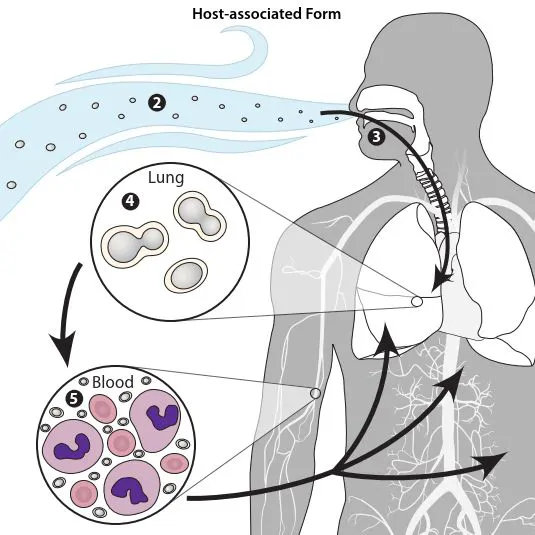 Infection cycle of the Blastomycosis fungus[/caption]
Read next
One Health & Zoonoses
10/10/2026
More than half of New York City’s free-roaming cats carry intestinal parasites?
One Health & Zoonoses
10/09/2026
Giardia in cats: large North American study finds 6.3% prevalence and substantial zoonotic potential
One Health & Zoonoses
10/08/2026
Commentaires
No comments yet.
Sign in to comment