

Back to articles
One Health & Zoonoses
Bernard Vallat
Buruli Ulcer
Chagas Disease
Cysticercosis
Dengue
Echinococcosis
FAO
Filariasis
Food and Agriculture Organization
Garc
Geohelminthiasis
Global Alliance for Rabies Control
Leishmaniasis
Leprosy
Onchocerciasis
One Health
Pian
Rabies
Rabies Vaccination
Schistosomiasis
Stray dogs
Tapeworm
Trachoma
Trematodosis
Trypanosomiasis
WHO
WOAH
World Health Organization
World Organisation for Animal Health
World Rabies Day
Zoonosis
Rabies: Global Elimination of the Disease Is Possible, Provided the Resources Are Up to the Challenge
V
Vetitude
09/28/2015
5 min read
0 comments
Share:
On this 9th World Rabies Day, four organizations involved in this global fight are calling on the international community to put an end to this deadly disease. Rabies is one of the seventeen neglected tropical diseases that affect 1.5 billion people worldwide, primarily among disadvantaged populations. But unlike many other zoonoses, tools exist to prevent the disease at its source in affected regions, primarily through large-scale vaccination campaigns targeting stray dogs.
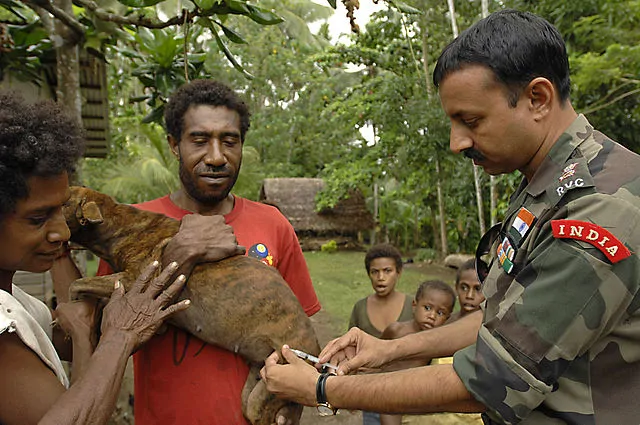 Eradicating rabies worldwide is achievable, according to the World Health Organization (WHO), the World Organisation for Animal Health (WOAH), the Food and Agriculture Organization
(FAO), and the Global Alliance for Rabies Control
(GARc). In a joint statement*, these organizations urge governments to make budgetary commitments and implement eradication programs in affected communities and countries to achieve this public health goal. They call on countries to invest in effective and sustainable control programs, such as mass dog vaccination, which have proven successful in pilot regions.
These vaccination campaigns can also be effectively supplemented by easy and rapid access to post-exposure treatment for people who have been bitten.
This is because rabies, once symptoms appear, is nearly 100% fatal in both animals and humans.
Every year, this highly lethal zoonosis continues to kill tens of thousands of people, most of them in poor rural communities. And nearly 40% of its victims are children under the age of fifteen.
However, post-exposure prophylaxis, while effective, is a costly approach, estimated at $1.7 billion per year. Ultimately, it appears that large-scale canine vaccination is the most cost-effective way to prevent the transmission of the disease to humans.
Eradicating rabies worldwide is achievable, according to the World Health Organization (WHO), the World Organisation for Animal Health (WOAH), the Food and Agriculture Organization
(FAO), and the Global Alliance for Rabies Control
(GARc). In a joint statement*, these organizations urge governments to make budgetary commitments and implement eradication programs in affected communities and countries to achieve this public health goal. They call on countries to invest in effective and sustainable control programs, such as mass dog vaccination, which have proven successful in pilot regions.
These vaccination campaigns can also be effectively supplemented by easy and rapid access to post-exposure treatment for people who have been bitten.
This is because rabies, once symptoms appear, is nearly 100% fatal in both animals and humans.
Every year, this highly lethal zoonosis continues to kill tens of thousands of people, most of them in poor rural communities. And nearly 40% of its victims are children under the age of fifteen.
However, post-exposure prophylaxis, while effective, is a costly approach, estimated at $1.7 billion per year. Ultimately, it appears that large-scale canine vaccination is the most cost-effective way to prevent the transmission of the disease to humans.
 Another key element of success is collaboration between the human health and animal health sectors through the “One
Health” approach, at the national, regional, and global levels. In this context, an international conference, organized by the WHO and the WOAH in collaboration with the FAO and with the support of the GARC, will be held on December 10 and 11, 2015, in Geneva. Under the theme “Global Elimination of Human Rabies Transmitted by Dogs: Act Now!
,”
the conference will bring together representatives from ministries of health and veterinary services, national rabies control coordinators, human health and veterinary health experts, nongovernmental organizations, and the private sector.
This event has four main objectives:
Another key element of success is collaboration between the human health and animal health sectors through the “One
Health” approach, at the national, regional, and global levels. In this context, an international conference, organized by the WHO and the WOAH in collaboration with the FAO and with the support of the GARC, will be held on December 10 and 11, 2015, in Geneva. Under the theme “Global Elimination of Human Rabies Transmitted by Dogs: Act Now!
,”
the conference will bring together representatives from ministries of health and veterinary services, national rabies control coordinators, human health and veterinary health experts, nongovernmental organizations, and the private sector.
This event has four main objectives:
Thus, “vaccinating just 70% of dogs in affected areas would be enough to eradicate canine rabies worldwide, and this solution would cost far less than post-exposure treatments,” notes Bernard Vallat, Director General of WOAH.To defeat human rabies transmitted by dogs, it is therefore “enough” to invest—by engaging local communities and strengthening on-the-ground initiatives—to carry out coordinated vaccination campaigns and expand the network by gradually including all countries where the disease is endemic. Investments are also needed to support and ensure the long-term sustainability of control programs at the national and regional levels (establishment of regional rabies vaccine banks in Asia, southern Africa, and the Philippines; pilot vaccination projects in the Philippines, South Africa, and Tanzania; vaccination campaigns in Bangladesh, etc.). The success of these programs, however, depends on the availability of effective and safe vaccines, practical support for their implementation, awareness-raising and the involvement of local communities through training, as well as the existence of surveillance, reporting, and data collection systems.
Ultimately, however, the required investments should be put into perspective: approximately 10% of the financial resources used to treat people who have been bitten would be sufficient for global veterinary services to eradicate the disease at its animal source, thereby effectively eliminating it in humans…
- to disseminate the results of the program to eliminate human rabies transmitted by dogs in different contexts and explore its expansion and sustainability in other areas of endemicity;
- to secure the support and investments needed to eliminate this zoonosis at the national, regional, and global levels;
- to promote collaboration based on the “One Health” approach between human health and animal health and other sectors;
- to prepare the future of the action program for the elimination of human rabies transmitted by dogs.
Neglected Tropical Diseases
> Rabies : a viral disease transmitted to humans through the bite of a rabid dog. > Dengue: an infection transmitted by mosquitoes. > Leishmaniasis : diseases transmitted by the bite of infected female sandflies. > Taeniasis and cysticercosis : infections caused by the presence of tapeworms in the intestines. > Dracunculiasis: an infection caused by a nematode that is transmitted by ingesting water contaminated by fleas carrying the parasite. > Echinococcosis : an infection caused by tapeworm larvae that is transmitted by ingesting eggs shed in the feces of dogs and wild animals. > Lymphatic filariasis : an infection transmitted by mosquitoes. > Onchocerciasis: an infection transmitted by the bite of infected black flies. > Schistosomiasis : an infection caused by trematodes through contact with infested water. > Geohelminthiases : infections caused by nematodes, transmitted through contact with soil contaminated by human feces. > Human African trypanosomiasis : a parasitic infection transmitted by the bite of the tsetse fly. > Trachoma : an infection caused by Chlamydia trachomatis . > Buruli ulcer : a necrotizing skin infection caused by the bacteria Mycobacterium ulcerans . > Yaws : a chronic bacterial infection that primarily affects the skin and bones. > Leprosy : an infectious disease that affects the skin, peripheral nerves, the mucous membranes of the upper respiratory tract, and the eyes. > Chagas disease : a condition transmitted to humans through contact with insect vectors. > Trematodoses: infections contracted through the consumption of fish, vegetables, or shellfish contaminated with parasite larvae.Read next
One Health & Zoonoses
10/10/2026
More than half of New York City’s free-roaming cats carry intestinal parasites?
One Health & Zoonoses
10/09/2026
Giardia in cats: large North American study finds 6.3% prevalence and substantial zoonotic potential
One Health & Zoonoses
10/08/2026
Commentaires
No comments yet.
Sign in to comment