

Back to articles
One Health & Zoonoses
Bats
Bite
Canid
Canis simensis
Carnivore
Dog
Domestic dog
Ethiopian wolf
Gorilla
Lycaon
Panda
Rabies
Rabies Vaccination
Rabies vaccine
Rabies virus
Raccoon
Red fox
Shepherd dog
Stray dogs
WOAH
Wolf
Rabies: An Oral Vaccine Candidate Successfully Tested in an Endangered Wild Canid
V
Vetitude
09/02/2016
4 min read
0 comments
Share:
Rabies continues to ravage the world, claiming between 60,000 and 70,000 lives each year, the majority of whom are children. Yet more than 95 percent of human rabies cases are caused by bites from infected dogs. The World Organisation for Animal Health (WOAH) regularly emphasizes that it is possible to control and eradicate this deadly viral disease by tackling it at its animal source through the vaccination of the majority of dogs. The first field trials of a vaccine candidate, called SAG2, have yielded promising results. Published in *Vaccine*, these trials were conducted on the Ethiopian wolf (Canis simensis), one of the world’s rarest canids and Africa’s most endangered carnivore.
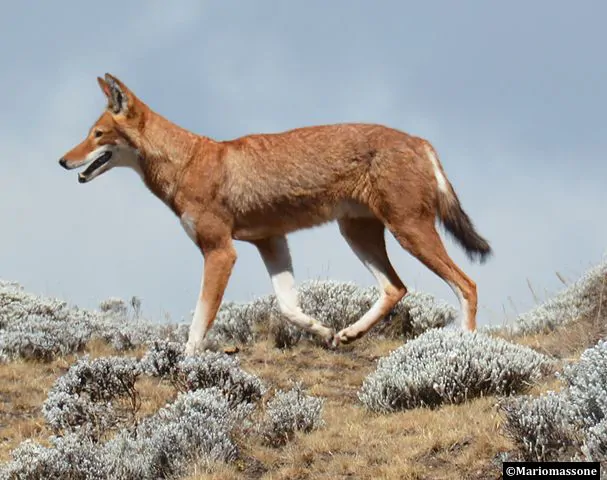 The rabies virus is primarily active in Asia and Africa. It is particularly widespread in the highlands of Ethiopia, where the disease constantly spreads between wild and domestic carnivores. These regions of the world are also those where canine rabies is least well controlled.
Oral vaccination of wild populations of red foxes and raccoons has already proven effective in combating rabies in Europe and North America. It has, in fact, significantly reduced the territory the disease had gained. But this is the first time that vaccine trials have been conducted on wild populations of an endangered carnivore species. The Ethiopian wolf, like the African wild dog, is threatened with extinction, primarily due to outbreaks of infectious diseases.
The study of the vaccine candidate was conducted by the University of Oxford, the Ethiopian Wildlife Conservation Authority,
and the Animal and Plant Health Agency
among wolves in Mount Balé National Park, Ethiopia. Several types of bait and methods of dispensing the SAG2 vaccine were tested within three packs. Of the 21 Ethiopian wolves captured after rabies vaccination, 14 tested positive for a biomarker indicating that the animals had successfully ingested the bait. In half of them, antibody titers in the blood were above the reference threshold, and 86% had levels considered sufficient to immunize them against the disease
. The wolves were closely monitored, and all but one of those vaccinated were still alive 14 months later—a survival period far longer than the average observed for this species.
The Ethiopian wolf population numbers fewer than 500 adults
, spread across half a dozen mountainous areas, and there are no captive populations. This makes them far rarer than the iconic giant pandas or mountain gorillas. They also face the dual pressure of increasing human presence and a growing number of sheepdogs and stray dogs in their territory. This proximity therefore requires swift action, both to save this species and for public health reasons.
Despite an investment of more than $30,000 per year to vaccinate thousands of domestic dogs against rabies, the virus has continued to decimate wolf populations in the Mount Balé region. Since 1990, there have been four successive rabies outbreaks, killing between 50 and 75 percent of the area’s wolf population. Furthermore, the wolf’s social lifestyle does not help limit the spread of the rabies virus.
In this epidemic context, the best solution to protect the Ethiopian wolf—and, more broadly, to control rabies among other endangered wild canids—is undoubtedly to intensify oral vaccination campaigns.
Preliminary results obtained using the tested vaccine—combined with a suitable bait and a dispensing method that has proven effective—are encouraging. Monitoring is now being carried out by trained teams in the field.
In Europe, the fight against rabies also continues. In certain regions of the European Union, the disease remains underreported, and the case fatality rate is close to 100 percent, both in humans and animals. As long as it is not completely eradicated, the risk persists. Rabies can still reach Europe through neighboring countries, where controls are less strict, or via
wild animals such as foxes or bats.
The next World Rabies Day will take place on September 28; this will be its 10th edition.
The rabies virus is primarily active in Asia and Africa. It is particularly widespread in the highlands of Ethiopia, where the disease constantly spreads between wild and domestic carnivores. These regions of the world are also those where canine rabies is least well controlled.
Oral vaccination of wild populations of red foxes and raccoons has already proven effective in combating rabies in Europe and North America. It has, in fact, significantly reduced the territory the disease had gained. But this is the first time that vaccine trials have been conducted on wild populations of an endangered carnivore species. The Ethiopian wolf, like the African wild dog, is threatened with extinction, primarily due to outbreaks of infectious diseases.
The study of the vaccine candidate was conducted by the University of Oxford, the Ethiopian Wildlife Conservation Authority,
and the Animal and Plant Health Agency
among wolves in Mount Balé National Park, Ethiopia. Several types of bait and methods of dispensing the SAG2 vaccine were tested within three packs. Of the 21 Ethiopian wolves captured after rabies vaccination, 14 tested positive for a biomarker indicating that the animals had successfully ingested the bait. In half of them, antibody titers in the blood were above the reference threshold, and 86% had levels considered sufficient to immunize them against the disease
. The wolves were closely monitored, and all but one of those vaccinated were still alive 14 months later—a survival period far longer than the average observed for this species.
The Ethiopian wolf population numbers fewer than 500 adults
, spread across half a dozen mountainous areas, and there are no captive populations. This makes them far rarer than the iconic giant pandas or mountain gorillas. They also face the dual pressure of increasing human presence and a growing number of sheepdogs and stray dogs in their territory. This proximity therefore requires swift action, both to save this species and for public health reasons.
Despite an investment of more than $30,000 per year to vaccinate thousands of domestic dogs against rabies, the virus has continued to decimate wolf populations in the Mount Balé region. Since 1990, there have been four successive rabies outbreaks, killing between 50 and 75 percent of the area’s wolf population. Furthermore, the wolf’s social lifestyle does not help limit the spread of the rabies virus.
In this epidemic context, the best solution to protect the Ethiopian wolf—and, more broadly, to control rabies among other endangered wild canids—is undoubtedly to intensify oral vaccination campaigns.
Preliminary results obtained using the tested vaccine—combined with a suitable bait and a dispensing method that has proven effective—are encouraging. Monitoring is now being carried out by trained teams in the field.
In Europe, the fight against rabies also continues. In certain regions of the European Union, the disease remains underreported, and the case fatality rate is close to 100 percent, both in humans and animals. As long as it is not completely eradicated, the risk persists. Rabies can still reach Europe through neighboring countries, where controls are less strict, or via
wild animals such as foxes or bats.
The next World Rabies Day will take place on September 28; this will be its 10th edition.
Read next
One Health & Zoonoses
10/10/2026
More than half of New York City’s free-roaming cats carry intestinal parasites?
One Health & Zoonoses
10/09/2026
Giardia in cats: large North American study finds 6.3% prevalence and substantial zoonotic potential
One Health & Zoonoses
10/08/2026
Commentaires
No comments yet.
Sign in to comment