

Back to articles
Lyme disease: The Siberian chipmunk may play a role in tick-borne infections
V
Vetitude
09/21/2017
3 min read
0 comments
Share:
Researchers at the Pasteur Institute have been studying tick infection in a rodent, the Siberian chipmunk, which is suspected of being a reservoir for the bacteria
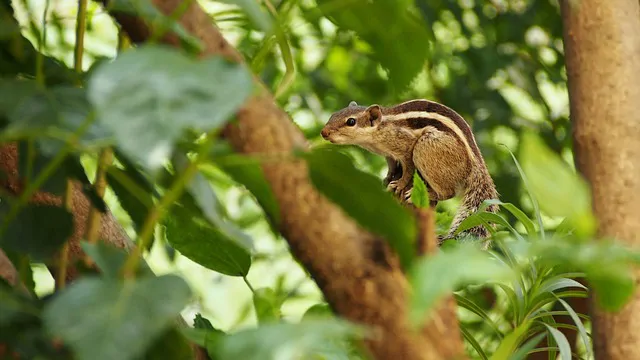
Borrelia burgdorferi, the cause of the disease. This pet, which was popular in the 1970s but was often abandoned by its owners, has since proliferated in certain forests in the Paris region, such as the forest of Sénart. The study confirmed that these rodents were indeed responsible for an increase in the infection rate among nymphs.
 Borreliosis, or Lyme disease, caused by the bacteria Borrelia burgdorferi,
is transmitted to humans through
the bite of a blood-feeding tick of the genus Ixodes ricinus
. This vector-borne zoonosis is widespread in the Northern Hemisphere. In France, approximately 30% of ticks are infected
. In addition to humans, who are merely accidental hosts, ticks parasitize small mammals, birds, and reptiles. The Siberian chipmunk (Tamias sibiricus
) is among the small mammals that serve as reservoirs for Borrelia
. Introduced to France 40 years ago, it has gradually colonized the Sénart Forest, which straddles the departments of Seine-et-Marne and Essonne, particularly in its western part.
Researchers at the Pasteur Institute assessed the evolution of tick infection by different species of Borrelia
bacteria. To do so, they investigated the eco-epidemiological factors of Lyme disease in three forests in the Île-de-France region (Sénart, Notre-Dame, and Rambouillet). The study was conducted over three years: 2008, 2009, and 2011. The objective was to determine the impact of the proliferation of chipmunks on the risk of Lyme disease transmission to humans. It also provides information on the spatiotemporal distribution and infection rates of ticks collected in peri-urban forests.
The Sénart Forest was studied in its entirety to observe any differences in tick infection rates between the western part (where chipmunks are abundant) and the eastern part (where the rodent is virtually absent) of this area. The density of nymphs was also measured, as their small size makes them difficult to spot, yet they are a key vector for the disease. However, the researchers found that where chipmunks are present, the infection rate among nymphs is higher. Thus, these rodents do indeed infect the nymphs.
The results of the study in the Sénart Forest were compared with those obtained for ticks collected in 2009 in the two other forests (Rambouillet and Notre-Dame), which have not been colonized by chipmunks. The study suggests that this species may play a role in the rate of Borrelia infection in ticks.
If the chipmunk population continues to grow, colonizing the eastern part of the forest where nymphs are abundant, this species will play an important role in the transmission of the pathogenic bacteria.
However, the density of infected nymphs varies from year to year. When temperatures drop, the absence of fruit on the forest trees affects the populations of animal reservoirs, which decline as a result. Nevertheless, the identified risk exists in any forest. Surveillance of the disease therefore continues, particularly at the national level, through
the Borrelia
Reference Center based in Strasbourg. In addition to estimating the incidence in humans, studying tick populations and their infection rates helps perform risk assessment for borreliosis transmission in a given region. This is the goal of the research conducted by the Pasteur Institute.
Borreliosis, or Lyme disease, caused by the bacteria Borrelia burgdorferi,
is transmitted to humans through
the bite of a blood-feeding tick of the genus Ixodes ricinus
. This vector-borne zoonosis is widespread in the Northern Hemisphere. In France, approximately 30% of ticks are infected
. In addition to humans, who are merely accidental hosts, ticks parasitize small mammals, birds, and reptiles. The Siberian chipmunk (Tamias sibiricus
) is among the small mammals that serve as reservoirs for Borrelia
. Introduced to France 40 years ago, it has gradually colonized the Sénart Forest, which straddles the departments of Seine-et-Marne and Essonne, particularly in its western part.
Researchers at the Pasteur Institute assessed the evolution of tick infection by different species of Borrelia
bacteria. To do so, they investigated the eco-epidemiological factors of Lyme disease in three forests in the Île-de-France region (Sénart, Notre-Dame, and Rambouillet). The study was conducted over three years: 2008, 2009, and 2011. The objective was to determine the impact of the proliferation of chipmunks on the risk of Lyme disease transmission to humans. It also provides information on the spatiotemporal distribution and infection rates of ticks collected in peri-urban forests.
The Sénart Forest was studied in its entirety to observe any differences in tick infection rates between the western part (where chipmunks are abundant) and the eastern part (where the rodent is virtually absent) of this area. The density of nymphs was also measured, as their small size makes them difficult to spot, yet they are a key vector for the disease. However, the researchers found that where chipmunks are present, the infection rate among nymphs is higher. Thus, these rodents do indeed infect the nymphs.
The results of the study in the Sénart Forest were compared with those obtained for ticks collected in 2009 in the two other forests (Rambouillet and Notre-Dame), which have not been colonized by chipmunks. The study suggests that this species may play a role in the rate of Borrelia infection in ticks.
If the chipmunk population continues to grow, colonizing the eastern part of the forest where nymphs are abundant, this species will play an important role in the transmission of the pathogenic bacteria.
However, the density of infected nymphs varies from year to year. When temperatures drop, the absence of fruit on the forest trees affects the populations of animal reservoirs, which decline as a result. Nevertheless, the identified risk exists in any forest. Surveillance of the disease therefore continues, particularly at the national level, through
the Borrelia
Reference Center based in Strasbourg. In addition to estimating the incidence in humans, studying tick populations and their infection rates helps perform risk assessment for borreliosis transmission in a given region. This is the goal of the research conducted by the Pasteur Institute.
Read next
One Health & Zoonoses
10/10/2026
More than half of New York City’s free-roaming cats carry intestinal parasites?
One Health & Zoonoses
10/09/2026
Giardia in cats: large North American study finds 6.3% prevalence and substantial zoonotic potential
One Health & Zoonoses
10/08/2026
Commentaires
No comments yet.
Sign in to comment