

Back to articles
One Health & Zoonoses
Antibiotic therapy
Antibiotics
BioMérieux
Birds
Borrelia burgdorferi
Borreliosis
Chat
Diasorin
Dog
Erythema
Ixodes ricinus
Lyme
Lyme disease
Pets
Rodent
Tick
Vaccine
Zoonosis
Lyme disease: a zoonosis with many unknowns
V
Vetitude
06/28/2016
5 min read
0 comments
Share:
Borreliosis is one of the underdiagnosed tick-borne diseases, especially in France. To raise awareness about this condition, which officially affects 27,000 people each year in France, some 250 patients are preparing to file a lawsuit against pharmaceutical companies, including BioMérieux and Diasorin, which market diagnostic tests deemed unreliable and implicated in a 2014 report by the High Council for Public Health. Exasperated by France’s failures in managing their illness, they have also decided to sue the government.
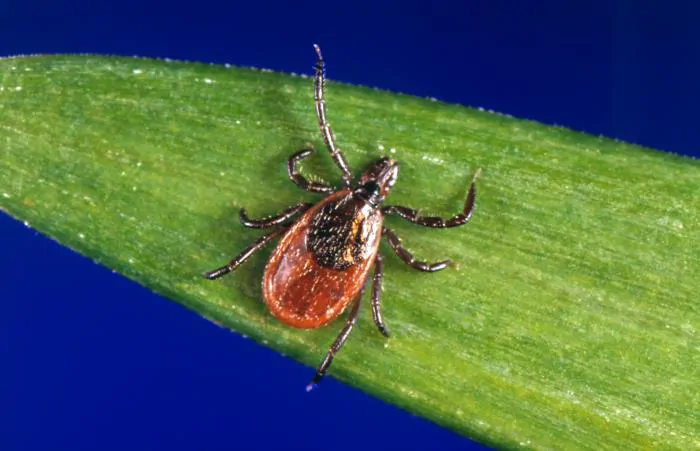 Lyme disease, caused by the bacteria Borrelia burgdorferi,
is transmitted to humans through
the bite of a blood-feeding hard tick (Ixodes ricinus)
. Approximately 30% of ticks in France are infected
. Spread via
this vector, the infection frequently eludes current diagnostic tests, which are considered to have low sensitivity and produce many false negatives. The limitations of these human serological tests are well known. As early as 2014, the High Council for Public Health (HCSP) had noted their low sensitivity in a review of the current state of knowledge on Lyme disease*. According to this report, based on the package inserts for reagents marketed in France, only 13 out of 33 screening tests (ELISA) and 9 out of 13 confirmatory tests (Western blot) met the recommendations. The HCSP emphasized that to advance our understanding of the origin of the chronic symptoms experienced by patients, it would be necessary to improve the sensitivity and specificity of biological diagnostics (including serological tests) for Lyme borreliosis by expanding the detection spectrum to include other Borrelia
species rarer than B. burgdorferi
, as well as co-infections (Bartonella
and Borrelia
, Anaplasma
and Borrelia
, etc.).
Thus, the lawsuit brings together patients suffering from disabling sequelae who believe they were not diagnosed correctly or early enough. It marks the culmination of a long and arduous campaign waged by numerous patient advocacy groups that, for several years, have been calling for Lyme disease to be officially recognized in France, with a standardized care pathway, to put an end to diagnostic uncertainty and improve serological screening tests. Surprisingly, this underdiagnosis is particularly prevalent in France, where only 27,000 cases are diagnosed annually, compared to ten times that number in Germany
.
Furthermore, the current standard tests and antibiotic treatments recommended by French health authorities lag far behind the latest advances and are no longer appropriate. These recommendations, which date back to the 2006 consensus conference, in fact advocate antibiotic therapy that falls far short—both in dosage and duration—of what is necessary to stop the infection and do not take recurrent relapses into account. As a result, many patients suffer from Lyme disease without knowing it, or without receiving adequate treatment.
Invited by the association Lyme sans frontière
on June 19, Professor
Luc Montagnier also denounced “the total ignorance of a large part of the medical and scientific community”
regarding this zoonosis. The 2008 Nobel Prize winner in Medicine believes that Lyme disease is severely underdiagnosed and undertreated in France due to a “deep ignorance of its chronic nature.”
He announced that his team has developed a new, “more reliable”
diagnostic test that detects the bacteria’s DNA in blood plasma by capturing electromagnetic waves emitted by the blood sample being analyzed.
More and more French people are turning to other countries, such as Germany, for treatment. In Europe, the average annual number of cases is estimated to be between 65,000 and 85,000. In the United States, approximately 30,000 cases are reported each year to the CDC
, which estimates the actual number of patients at 300,000. Canada, unlike France, passed a “law establishing a federal framework for Lyme disease” in late 2014.
It calls for, among other things, the development of new guidelines to improve the prevention, identification, treatment, and management of Lyme disease. Priority is given to developing reliable screening tests and training physicians so they can recognize the symptoms of the disease and provide their patients with the appropriate medical treatment, particularly antibiotics.
In addition to improving tests, redefining treatments, and identifying co-infections, the question of human-to-human transmission remains unresolved. Indeed, the possible transmission of the bacteria through sexual and mother-to-fetus routes is currently under study.
* http://social-sante.gouv.fr/IMG/pdf/hcspa20140328_borrelioselyme_1_.pdf
Lyme disease, caused by the bacteria Borrelia burgdorferi,
is transmitted to humans through
the bite of a blood-feeding hard tick (Ixodes ricinus)
. Approximately 30% of ticks in France are infected
. Spread via
this vector, the infection frequently eludes current diagnostic tests, which are considered to have low sensitivity and produce many false negatives. The limitations of these human serological tests are well known. As early as 2014, the High Council for Public Health (HCSP) had noted their low sensitivity in a review of the current state of knowledge on Lyme disease*. According to this report, based on the package inserts for reagents marketed in France, only 13 out of 33 screening tests (ELISA) and 9 out of 13 confirmatory tests (Western blot) met the recommendations. The HCSP emphasized that to advance our understanding of the origin of the chronic symptoms experienced by patients, it would be necessary to improve the sensitivity and specificity of biological diagnostics (including serological tests) for Lyme borreliosis by expanding the detection spectrum to include other Borrelia
species rarer than B. burgdorferi
, as well as co-infections (Bartonella
and Borrelia
, Anaplasma
and Borrelia
, etc.).
Thus, the lawsuit brings together patients suffering from disabling sequelae who believe they were not diagnosed correctly or early enough. It marks the culmination of a long and arduous campaign waged by numerous patient advocacy groups that, for several years, have been calling for Lyme disease to be officially recognized in France, with a standardized care pathway, to put an end to diagnostic uncertainty and improve serological screening tests. Surprisingly, this underdiagnosis is particularly prevalent in France, where only 27,000 cases are diagnosed annually, compared to ten times that number in Germany
.
Furthermore, the current standard tests and antibiotic treatments recommended by French health authorities lag far behind the latest advances and are no longer appropriate. These recommendations, which date back to the 2006 consensus conference, in fact advocate antibiotic therapy that falls far short—both in dosage and duration—of what is necessary to stop the infection and do not take recurrent relapses into account. As a result, many patients suffer from Lyme disease without knowing it, or without receiving adequate treatment.
Invited by the association Lyme sans frontière
on June 19, Professor
Luc Montagnier also denounced “the total ignorance of a large part of the medical and scientific community”
regarding this zoonosis. The 2008 Nobel Prize winner in Medicine believes that Lyme disease is severely underdiagnosed and undertreated in France due to a “deep ignorance of its chronic nature.”
He announced that his team has developed a new, “more reliable”
diagnostic test that detects the bacteria’s DNA in blood plasma by capturing electromagnetic waves emitted by the blood sample being analyzed.
More and more French people are turning to other countries, such as Germany, for treatment. In Europe, the average annual number of cases is estimated to be between 65,000 and 85,000. In the United States, approximately 30,000 cases are reported each year to the CDC
, which estimates the actual number of patients at 300,000. Canada, unlike France, passed a “law establishing a federal framework for Lyme disease” in late 2014.
It calls for, among other things, the development of new guidelines to improve the prevention, identification, treatment, and management of Lyme disease. Priority is given to developing reliable screening tests and training physicians so they can recognize the symptoms of the disease and provide their patients with the appropriate medical treatment, particularly antibiotics.
In addition to improving tests, redefining treatments, and identifying co-infections, the question of human-to-human transmission remains unresolved. Indeed, the possible transmission of the bacteria through sexual and mother-to-fetus routes is currently under study.
* http://social-sante.gouv.fr/IMG/pdf/hcspa20140328_borrelioselyme_1_.pdf
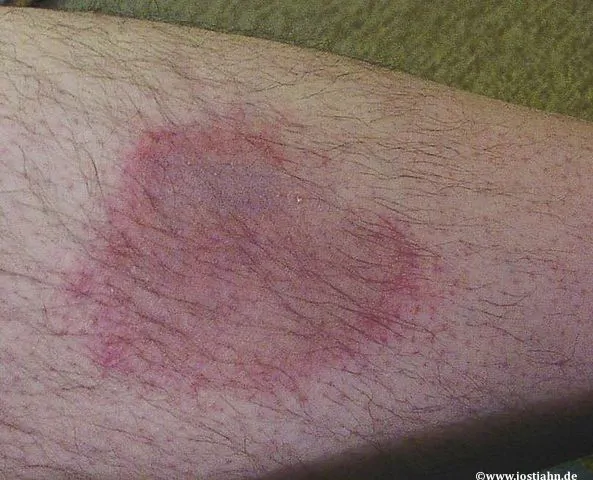 Borreliosis, or Lyme disease, is a non-contagious infectious disease caused by a bacteria of the genus Borrelia
transmitted through
the bite of an infected tick of the genus Ixodes
. The infection is often asymptomatic. The animal reservoir is extensive.
Many mammals (rodents, migratory birds, domestic animals) can remain carriers of Borrelia
for long periods without showing any clinical signs. Transmission to humans occurs exclusively through tick bites, especially between early spring and late fall.
The only symptom suggestive of the disease is a red, inflammatory rash that appears three to thirty days after infection around the bite site. However, this erythema migrans is absent in half of all cases and may disappear spontaneously within a few weeks. In a second phase, numerous nonspecific symptoms may occur, either alone or in combination, such as fever, fatigue, muscle pain, joint swelling, facial paralysis, cardiac or neurological disorders, etc. In a third phase, months to years after infection, joint, skin, neurological, muscular, or cardiac manifestations may appear.
The prognosis is favorable when the disease is diagnosed and treated early.
However, without treatment, the infection will spread and cause severe damage, worsening the prognosis. The available serological tests are not fully standardized and remain difficult to interpret.
In the absence of a vaccine, treatment relies on antibiotic therapy taken orally, which is all the more effective when prescribed early.
Borreliosis, or Lyme disease, is a non-contagious infectious disease caused by a bacteria of the genus Borrelia
transmitted through
the bite of an infected tick of the genus Ixodes
. The infection is often asymptomatic. The animal reservoir is extensive.
Many mammals (rodents, migratory birds, domestic animals) can remain carriers of Borrelia
for long periods without showing any clinical signs. Transmission to humans occurs exclusively through tick bites, especially between early spring and late fall.
The only symptom suggestive of the disease is a red, inflammatory rash that appears three to thirty days after infection around the bite site. However, this erythema migrans is absent in half of all cases and may disappear spontaneously within a few weeks. In a second phase, numerous nonspecific symptoms may occur, either alone or in combination, such as fever, fatigue, muscle pain, joint swelling, facial paralysis, cardiac or neurological disorders, etc. In a third phase, months to years after infection, joint, skin, neurological, muscular, or cardiac manifestations may appear.
The prognosis is favorable when the disease is diagnosed and treated early.
However, without treatment, the infection will spread and cause severe damage, worsening the prognosis. The available serological tests are not fully standardized and remain difficult to interpret.
In the absence of a vaccine, treatment relies on antibiotic therapy taken orally, which is all the more effective when prescribed early.
Lyme disease in Humans
Read next
One Health & Zoonoses
10/10/2026
More than half of New York City’s free-roaming cats carry intestinal parasites?
One Health & Zoonoses
10/09/2026
Giardia in cats: large North American study finds 6.3% prevalence and substantial zoonotic potential
One Health & Zoonoses
10/08/2026
Commentaires
No comments yet.
Sign in to comment