

Back to articles
Leptospirosis: Initial Evidence of an Aquatic Reservoir in Freshwater Fish
BN
Bertrand Neveux
09/16/2025
3 min read
0 comments
Share:
A team from Lincoln Memorial University (Tennessee) reports, for the first time, the detection of Leptospira DNA in the kidneys of freshwater fish, as well as circulating antibodies, suggesting a possible role for fish in the ecology of leptospirosis within Appalachian river ecosystems. The article highlights a blind spot in “One Health” surveillance: aquatic fauna, which has thus far been marginalized in transmission models.
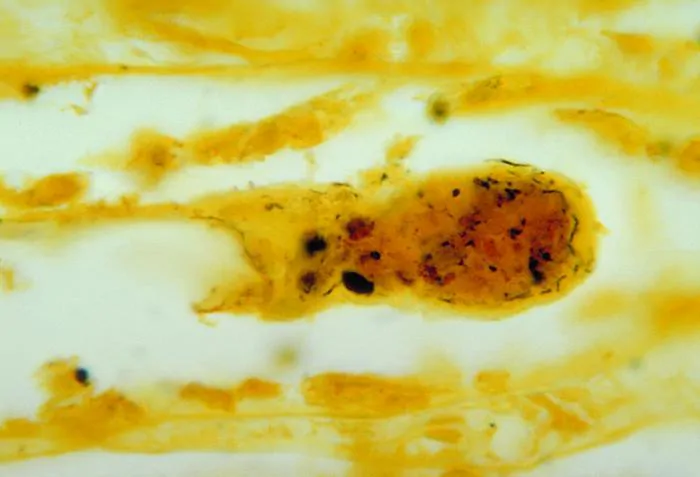
A zoonosis traditionally transmitted by mammals
Leptospirosis, a global zoonosis associated with spirochetes of the genus Leptospira, is typically transmitted by mammalian reservoirs that carry chronic kidney infections and shed viable bacteria in their urine. The authors note that they have previously identified, in the same region, insectivorous rodents as well as amphibians and reptiles as hosts of Leptospira, which raises the question of the aquatic continuum in the persistence of the pathogen in the environment.First Detection of Leptospira DNA in a Fish Kidney
At seven sites on the Powell River (eastern Tennessee), 238 fish belonging to 19 genera were collected. The kidneys were tested by qPCR targeting pathogenic Leptospira species. Blood samples were used for serological titration via a microagglutination test. The overall prevalence of positivity (DNA and/or antibodies) was 4.62%, including 1.26% positive by renal qPCR and 3.38% seropositive by agglutination. The detection of Leptospira DNA in fish kidneys suggests, at a minimum, non-incidental exposure. Coupled with the observed seropositivity, the hypothesis that fish play a role in the environmental persistence of leptospires now warrants targeted investigation (culture, typing, infectivity assays).The Role of Fish in the Epidemiological Cycle
The first hypothesis considers fish to be sentinels of the ecosystem: their seropositivity would reflect widespread circulation of leptospires in the aquatic environment contaminated by the urine of reservoir mammals. The second, more ambitious hypothesis posits an active role for certain fish species, involving renal colonization and, potentially, shedding into the external environment. To resolve this, it will be necessary to confirm the viability of the strains (culture), document the bacterial load, establish the phylogeny of the detected leptospires, and conduct experimental transmission studies.Limitations and Cautions
The results are based on a small number of positive samples and a single river. PCR confirms the presence of DNA but not the viability of the leptospires, and the agglutination test may cross-react with multiple serovars. Generalizing these findings to other watersheds, seasons, and species will require expanded sampling and multimodal approaches (culture, quantitative qPCR, metagenomics, histopathology). If the involvement of fish is confirmed, leptospirosis risk mapping should incorporate aquatic variables (fish density, hydrological connectivity, water quality), with implications for the management of water recreation, aquaculture, and water intakes. For practitioners, during periods of high water or water-based activities, the medical history should consider exposure to water and fish as contributing factors, even in regions with a known low mammalian reservoir. For veterinary services and environmental agencies, adding sentinel fish to leptospira surveillance in rivers could refine spatio-temporal early warning models. The next step is to isolate the detected leptospires, sequence them to link the profiles to strains circulating among local mammalian reservoirs, and to model the joint dynamics of terrestrial wildlife, aquatic wildlife, and humans in Appalachian aquatic ecosystems. The results will determine whether fish are reservoirs, transient hosts, or simply bioindicators of a contaminated environment.Read next
One Health & Zoonoses
10/10/2026
More than half of New York City’s free-roaming cats carry intestinal parasites?
One Health & Zoonoses
10/09/2026
Giardia in cats: large North American study finds 6.3% prevalence and substantial zoonotic potential
One Health & Zoonoses
10/08/2026
Commentaires
No comments yet.
Sign in to comment