

Back to articles
Comparative Oncology: Bridging the Gap Between Veterinarians and Physicians in Veterinary Medicine
MR
Mia Rozenbaum
06/01/2021
9 min read
0 comments
Share:
Science has repeatedly shown that cancers in pets and humans share similarities—whether in terms of appearance, genetics, or response to treatment. In this context, animal studies benefit both human and animal patients. It also provides an opportunity to share appropriate and innovative diagnostic and therapeutic methods.
Despite advances in human medicine, cancer has become the leading cause of death in developed countries. But we are not the only ones affected by this disease. As animals live longer—in part thanks to modern veterinary medicine and increased access to medical care—cancer has also become one of the leading causes of death in dogs and cats. As a result, one in five cats will develop cancer, as will one in two dogs after the age of 10.
Although the term “cancer” is used to describe more than a hundred related diseases, the similarities between animal and human neoplasms are striking. Numerous studies show that naturally occurring cancers in pets—particularly dogs—share many characteristics with those in human patients, such as histological type, genetic predispositions, molecular targets, biological behavior, and response to conventional therapies.
Pets: A New Model?
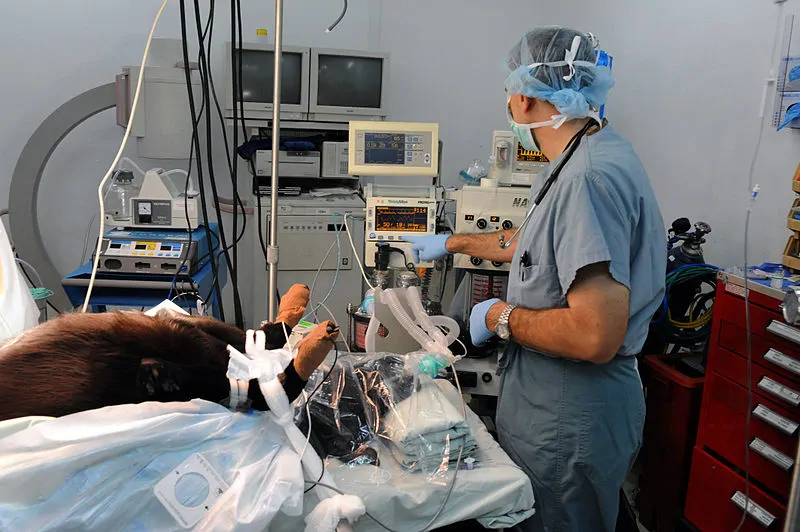
Given these striking similarities, the study of pets with cancer is likely to provide insights and perspectives distinct from those generated by the study of human cancers in vitro or in vivo through animal testing. However, data from pets have long been restricted to veterinary medicine alone. To combat cancer, scientists work with human and animal cells and laboratory animals before moving on to clinical trials in humans, “without going through an intermediate stage involving pets,” explains Patrick Mehlen, research director at the CNRS, co-director of the Clinical Sciences Division at the Léon Bérard Center, and deputy director of the Lyon Cancer Research Center. Yet, for human cancers, dogs are relevant models. “Mice are too small, age too quickly, and cancer develops too rapidly—in just fifteen days, instead of several years in humans. The similarities with cats and dogs are more compelling. Furthermore, pets live in the same environment as their owners and are exposed to the same volatile organic compounds and other substances,” emphasizes Rodney Page of the Flint Animal Cancer Center at the University of Colorado. Dogs naturally develop spontaneous cancers that often appear with age within a heterogeneous population. This reality is much closer to what is observed in human populations, especially since, at the molecular level, several types of tumors exhibit similar characteristics across both species. Similarly, certain basic characteristics of their immune systems tend to be closely aligned. Since cancer is, in part, a failure of immune surveillance, these similarities are significant and particularly crucial for the study of immunotherapies. In mouse models, however, tumors are often induced or transplanted, which requires suppressing their immune system. Tumor growth in mice thus follows a different trajectory, within a microenvironment that differs from that of spontaneous tumors. Since most laboratory mice are genetically closely related or similar, they also do not represent the actual diversity that can be observed in tumor development within a population. In practical terms, dogs’ size and lifespan are also closer to those of humans than are mice. It is therefore easier to assess the long-term effects of a drug or vaccine. Nor is it necessary to reinvent clinical tools—such as imaging or surgical devices used in human medicine—to conduct studies in dogs, and the scales of response to treatment are more or less equivalent. Researchers can also perform biopsies on canine tumors multiple times as treatment progresses, which is a valuable asset for long-term follow-up. Dogs therefore appear to be a more suitable model for study, but comparative medicine is not limited to dogs. A few studies also focus on cats. However, the approach is not as straightforward. Cats have a different metabolism and are also less willing to undergo regular procedures. Nevertheless, they can help provide additional insights, particularly regarding squamous cell carcinoma or mammary tumors, which share similarities with their human counterparts. These comparisons can also be extended to horses, which also develop spontaneous cancers that warrant further study.A Comparison That Benefits Both Humans and Animals
Not all cancers have spontaneous counterparts in animals and humans. However, researchers have so far identified at least seven types of tumors affecting dogs that share molecular characteristics with human cancers. A dozen clinical trials in humans involving cancer therapies have directly benefited from clinical data collected in dogs. The added value of studies in pets is increasingly recognized in the field of cancer research, particularly with regard to identifying cancer-associated genes, studying environmental risk factors, understanding tumor biology and progression, and, most importantly, the evaluation and development of new therapeutic approaches. These similarities offer several advantages. In human health, they make it possible to study many diseases more effectively, more quickly, and at a lower cost. Natural and spontaneous cancer models, used after studies in mice but before clinical trials in humans, could reduce the failure rate of these trials, refine the effectiveness of treatments, and accelerate the development of tests and the approval of therapies for the market. Cancers tend to progress naturally faster in dogs, which means that the results of clinical trials are also available more quickly than they are for humans. Furthermore, while human medicine is subject to strict regulations regarding clinical trials, veterinary medicine benefits from a less restrictive approval process, even though ethical standards are strict. But using animals to improve human care also benefits animals. Most treatments for canine cancers are human medications used without marketing authorisation by veterinary oncologists. “Currently, to treat cancerous tumors in animals, we simply use what has been proven effective in humans. In dogs, for example, chemotherapy is based on the protocols used for human patients. In practical terms, dogs receive virtually the same treatment as humans, with doses adjusted only according to their size... But this isn’t always effective, and animals benefit little or not at all from the new therapies tested by laboratories,” explains Patrick Mehlen. With the introduction of clinical trials in dogs, they would benefit from more tailored treatments, and the range of canine therapies would expand. This would provide an opportunity to share and adapt innovative therapies and diagnostic methods from human medicine to veterinary medicine. Both animal and human patients would benefit from a more diverse range of effective therapeutic solutions, available in a shorter timeframe. However, to test human treatments on cats or dogs, we would need to encourage better communication between veterinarians and physicians. While human medicine and veterinary medicine have long been viewed as two separate worlds, this concept should begin to change.An interspecies approach that has been sidelined for too long
To a certain extent, this comparative interspecies approach is nothing new. Veterinarians have always learned from their human medical counterparts. But it took several decades for this approach to become a well-defined strategy. Veterinarians began characterizing canine tumors in the 1960s and 1970s, observing significant similarities between dogs and humans. But it wasn’t until the 1980s and 1990s that three pioneering veterinary oncologists, Edward Gillette and Stephen Withrow of Colorado State University and Greg MacEwen of the University of Wisconsin, realized that studies in dogs could serve as a bridge between animal models and clinical practice. Gillette was the first to use radiation oncology in dogs, while Withrow developed a surgical technique to treat osteosarcomas while preserving the limbs—a technique that would later be adopted in pediatric oncology and adapted for children. MacEwen, for his part, studied an injectable immunostimulant to treat metastatic canine osteosarcoma. The positive results of this trial paved the way for studies on the drug’s efficacy against osteosarcoma in children, leading to its approval in the European Union in 2009. But although the value of comparative oncology is real, it has long remained in the shadows. Even today, the knowledge and resources derived from veterinary medicine remain underutilized, particularly because veterinarians and physicians do not share their data sufficiently. In France, “a major effort is being made by the National Cancer Institute (INCa) , which has been trying for several years to bring veterinarians and human oncologists closer together ,” says Patrick Mehlen. Until now, they had little contact, with the former falling under the Ministry of Agriculture and the latter under the Ministry of Health . To build bridges between them, we have established a master’s program in oncology in Lyon that now includes researchers from veterinary schools, who have remained isolated from the research conducted in human oncology departments, which are more closely tied to hospitals. ” To facilitate communication among scientists, medical professionals, and veterinarians, we need to rethink the way science is currently categorized. Maximizing the benefits of comparative medicine must, above all, involve a “single literature” approach, in order to break down barriers between species in how biomedical research is organized, collected, cited, and published. This paradigm would encourage the formation of new research communities and collaborations that will advance translational medicine. A future in which “One Literature” will replace the rigid, compartmentalized concepts of current veterinary and medical research, so that translational medicine can fully capitalize on the essential link between animal health and human health. But be careful: this does not necessarily mean mixing all tools and all information. It is important to encourage a cross-disciplinary view of the data, while remaining aware of its limitations. Animal models are never perfect, and the predictive value of the results must always be interpreted with caution. While the value of a translational approach is clear for certain cancers, not all naturally occurring human conditions necessarily have an equivalent in pets—such as coronary artery disease, strokes, or Parkinson’s disease. Similarly, the metabolism of certain drugs can differ significantly (for example, acetaminophen has toxicity for cats). Thus, clinical trials on natural diseases in pets have the potential to advance our understanding of human diseases, even though, at present, many veterinary clinical trials are not directly transferable to those conducted in humans and lack several important characteristics, such as sufficient statistical power, a randomized, double-blind methodology, or large control groups. However, this does not prevent data from veterinary medicine from being of crucial value to human medicine. One simply needs to know how to interpret it and be aware of potential biases.Read next
One Health & Zoonoses
10/10/2026
More than half of New York City’s free-roaming cats carry intestinal parasites?
One Health & Zoonoses
10/09/2026
Giardia in cats: large North American study finds 6.3% prevalence and substantial zoonotic potential
One Health & Zoonoses
10/08/2026
Commentaires
No comments yet.
Sign in to comment