

Back to articles
One Health & Zoonoses
CaniLeish
Canine Leishmaniasis
Canine population
Dog
Domperidone
EFSA
Endemic
Infected dog
Leishmania infantum
Leishmaniasis
Rabbit
Rat
Sandfly
Veterinarian
Virbac
Wild Mammals
Canine Leishmaniasis: EFSA Releases Its Report on the Characterization and Prevention of the Disease in Europe
V
Vetitude
05/04/2015
3 min read
0 comments
Share:
At the request of Brussels, the European Food Safety Authority (EFSA) assessed the incidence of canine leishmaniasis* in the European Union through a review of the literature and questionnaires sent to veterinarians, as well as the effectiveness of available preventive measures. The goal is to estimate the likelihood that the infection will spread to disease-free areas through the movement of infected dogs.
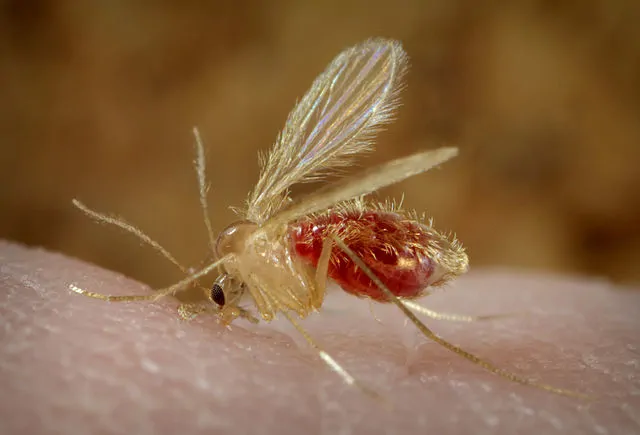
According to the field data collected, sandflies are spreading northward in Europe, and their density is increasing in certain newly colonized regions. This expansion of affected areas is notably linked to climate change, which is altering the distribution of the vectors.
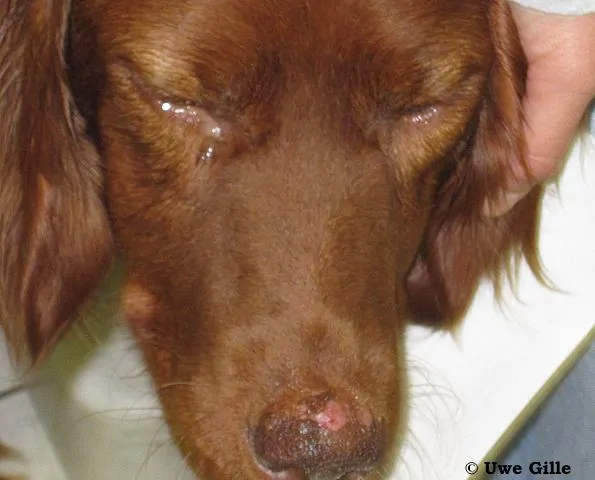 Endemic in countries or regions bordering the Mediterranean, canine leishmaniasis has a distribution that corresponds to that of sandfly populations. Approximately 10% of dogs in these endemic areas are seropositive for Leishmania infantum, with significant variations depending on the region.
All seropositive dogs, whether or not they show clinical signs of the disease, are potential sources of infection for vectors and can transmit the parasite. The role of wild mammals as reservoirs is not fully understood. Rats, rabbits, and hares, however, contribute to the circulation of L. infantum in certain regions of southern Europe.
In humans, the incidence of the disease in regions of endemicity is lower than that observed in the canine population. Most human cases remain asymptomatic. However, several factors increase the risk of developing the disease, such as young age, HIV infection, and other immunodeficiency conditions.
Endemic in countries or regions bordering the Mediterranean, canine leishmaniasis has a distribution that corresponds to that of sandfly populations. Approximately 10% of dogs in these endemic areas are seropositive for Leishmania infantum, with significant variations depending on the region.
All seropositive dogs, whether or not they show clinical signs of the disease, are potential sources of infection for vectors and can transmit the parasite. The role of wild mammals as reservoirs is not fully understood. Rats, rabbits, and hares, however, contribute to the circulation of L. infantum in certain regions of southern Europe.
In humans, the incidence of the disease in regions of endemicity is lower than that observed in the canine population. Most human cases remain asymptomatic. However, several factors increase the risk of developing the disease, such as young age, HIV infection, and other immunodeficiency conditions.
 A stochastic mathematical model assessed the average probability of the disease becoming established in a disease-free area with competent vectors following the introduction of an infected dog. Even in regions where sandflies have lower vector capacity than in areas of endemicity, this probability appears to be very high. However, long-term prevalence can vary greatly in a region where canine leishmaniasis has been introduced and established, depending on vector capacity.
Given the number of susceptible dogs and the high rates of host-vector contact, EFSA concludes that vectors represent the main barrier to the spread of canine leishmaniasis.
This underscores the need for knowledge regarding the vector competence of certain sandfly species and the distribution and density of potential vectors within the European Union.
* Scientific Opinion on Canine Leishmaniasis, EFSA Journal 2015, 13(4):4075.
A stochastic mathematical model assessed the average probability of the disease becoming established in a disease-free area with competent vectors following the introduction of an infected dog. Even in regions where sandflies have lower vector capacity than in areas of endemicity, this probability appears to be very high. However, long-term prevalence can vary greatly in a region where canine leishmaniasis has been introduced and established, depending on vector capacity.
Given the number of susceptible dogs and the high rates of host-vector contact, EFSA concludes that vectors represent the main barrier to the spread of canine leishmaniasis.
This underscores the need for knowledge regarding the vector competence of certain sandfly species and the distribution and density of potential vectors within the European Union.
* Scientific Opinion on Canine Leishmaniasis, EFSA Journal 2015, 13(4):4075.
Protective Measures Tested
The effectiveness of vaccines, topical insecticides, and prophylactic medications (domperidone) in preventing L. infantum infection was evaluated, as were the sensitivity of diagnostic tests and the efficacy of treatment. The objective was to determine whether it is possible to detect and treat infected dogs in order to reduce the risk of introducing the disease into disease-free areas. In this context, the most effective measure was the topical application of an insecticide. Vaccination had only a limited effect on the likelihood of the disease becoming established in a region with no endemicity. Currently, no vaccine provides complete protection against infection or disease. Thus, CaniLeish®, the only vaccine authorized in the European Union, provides only partial protection. Similarly, standard diagnostic tests cannot detect all infected or sick animals. Testing dogs before they are introduced into a non-endemic area is of limited value if this measure is implemented too early, as it takes several months to obtain a positive result after exposure to infected sandflies. Furthermore, there is currently no drug or treatment that has been shown to be 100% effective in eliminating the parasite.Modeled Potential for Spread
Read next
One Health & Zoonoses
10/10/2026
More than half of New York City’s free-roaming cats carry intestinal parasites?
One Health & Zoonoses
10/09/2026
Giardia in cats: large North American study finds 6.3% prevalence and substantial zoonotic potential
One Health & Zoonoses
10/08/2026
Commentaires
No comments yet.
Sign in to comment