

Back to articles
One Health & Zoonoses
Allopurinol
Aminosidine
Canine
Diagnosis
Dog
Domperidone
Enrofloxacin
Fipronil
Leishmania infantum
Leishmaniasis
Marbofloxacin
Meglumine antimoniate
Miltéfosine
Pentamidine
POC Tests
Stray dogs
Veterinary medicine
Zoonosis
Canine Leishmaniasis: Advances in Diagnosis and Management of the Disease in the Field
V
Vetitude
01/22/2018
4 min read
0 comments
Share:
A review of published studies on canine visceral leishmaniasis focuses on current serological and molecular diagnostic methods used in epidemiological research and veterinary medicine to diagnose infection with Leishmania infantum, including new rapid tests (POC tests) currently under development. The efficacy of various treatment protocols, in terms of clinical improvement and the dogs’ infectivity, is reviewed, and disease control measures are evaluated.
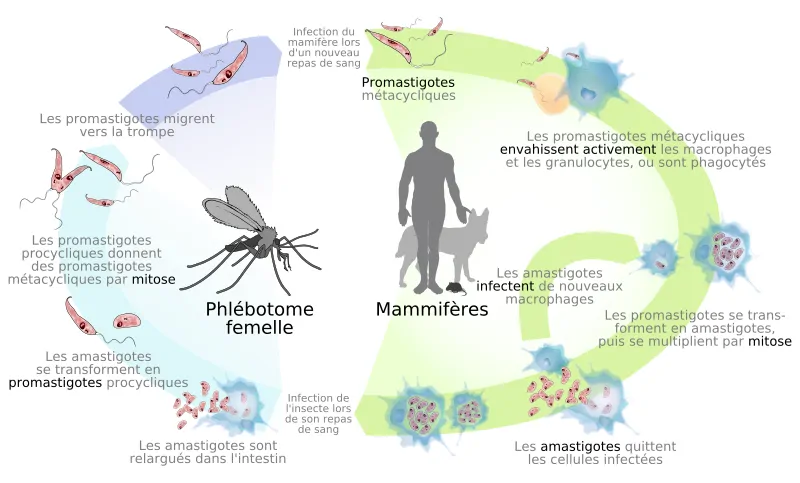
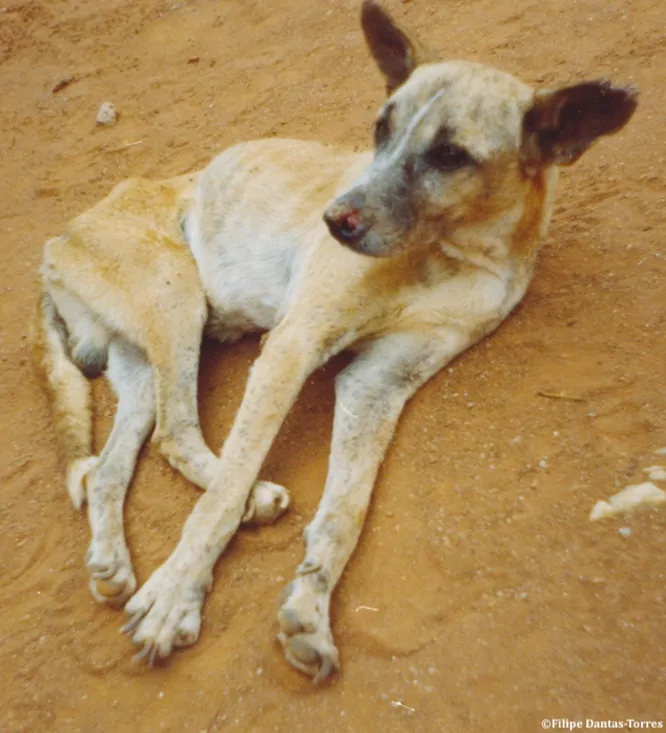 Dogs are the primary reservoir hosts for Leishmania infantum and therefore play a major role in the transmission cycle of leishmaniasis, which also affects humans. This review provides up-to-date information on current serological and molecular tools, diagnostic tests, and treatments used to prevent infection and disease progression.
The available point-of-care (POC) serological tests use validated recombinant antigens. Most can test plasma, serum, whole blood, or blood. While the specificity of current commercial kits is generally high (over 90%), their sensitivity can vary widely (30% to 90%), which is a concern for clinical and epidemiological applications. The challenge with these rapid tests is to improve their ability to distinguish between clinically healthy dogs, infected dogs, and vaccinated dogs.
In Europe, treatment for canine visceral leishmaniasis is almost exclusively limited to the use of meglumine antimoniate (a pentavalent antimony derivative). The recommended dosage (35 to 50 mg/kg subcutaneously twice daily for 4 to 6 weeks) demonstrates good clinical efficacy but does not eliminate the infection. Affected dogs respond better to combination therapy with allopurinol, showing good clinical recovery and improvement in hematological and biochemical abnormalities. Administration of allopurinol (10 mg/kg orally twice daily) for 6 to 12 months following antimony treatment leads to long-term clinical remission in treated dogs.
Other drugs, such as miltefosine (at a dose of 2 mg/kg orally once daily for 4 weeks) in combination with allopurinol, are effective in naturally infected dogs. Still others, studied in vivo or in vitro (such as aminocyclitol, pentamidine, enrofloxacin, and marbofloxacin), require controlled clinical trials. Some of these could be used as alternatives when first-line treatment fails or when renal function is impaired. A new therapeutic approach combines parasiticidal and parasitostatic drugs with immunomodulators to reduce the parasitic burden and establish an appropriate immune response. Nevertheless, most dogs remain infected and may relapse, becoming infectious to healthy dogs and other hosts, particularly humans. However, treating sick dogs in endemic areas reduces the degree of infectivity, thereby lowering the risks to humans and other dogs.
Xenodiagnosis is the best alternative method for determining a dog’s infectivity after treatment, but this method can only be used in specialized research centers. It is, however, a useful tool for assessing the infectious load in dogs treated with new drugs and/or new treatment regimens.
Dogs are the primary reservoir hosts for Leishmania infantum and therefore play a major role in the transmission cycle of leishmaniasis, which also affects humans. This review provides up-to-date information on current serological and molecular tools, diagnostic tests, and treatments used to prevent infection and disease progression.
The available point-of-care (POC) serological tests use validated recombinant antigens. Most can test plasma, serum, whole blood, or blood. While the specificity of current commercial kits is generally high (over 90%), their sensitivity can vary widely (30% to 90%), which is a concern for clinical and epidemiological applications. The challenge with these rapid tests is to improve their ability to distinguish between clinically healthy dogs, infected dogs, and vaccinated dogs.
In Europe, treatment for canine visceral leishmaniasis is almost exclusively limited to the use of meglumine antimoniate (a pentavalent antimony derivative). The recommended dosage (35 to 50 mg/kg subcutaneously twice daily for 4 to 6 weeks) demonstrates good clinical efficacy but does not eliminate the infection. Affected dogs respond better to combination therapy with allopurinol, showing good clinical recovery and improvement in hematological and biochemical abnormalities. Administration of allopurinol (10 mg/kg orally twice daily) for 6 to 12 months following antimony treatment leads to long-term clinical remission in treated dogs.
Other drugs, such as miltefosine (at a dose of 2 mg/kg orally once daily for 4 weeks) in combination with allopurinol, are effective in naturally infected dogs. Still others, studied in vivo or in vitro (such as aminocyclitol, pentamidine, enrofloxacin, and marbofloxacin), require controlled clinical trials. Some of these could be used as alternatives when first-line treatment fails or when renal function is impaired. A new therapeutic approach combines parasiticidal and parasitostatic drugs with immunomodulators to reduce the parasitic burden and establish an appropriate immune response. Nevertheless, most dogs remain infected and may relapse, becoming infectious to healthy dogs and other hosts, particularly humans. However, treating sick dogs in endemic areas reduces the degree of infectivity, thereby lowering the risks to humans and other dogs.
Xenodiagnosis is the best alternative method for determining a dog’s infectivity after treatment, but this method can only be used in specialized research centers. It is, however, a useful tool for assessing the infectious load in dogs treated with new drugs and/or new treatment regimens.
 To prevent and control canine visceral leishmaniasis, several strategies are used (insecticides, vaccination, or immunomodulation). Their effectiveness has been evaluated in recent systematic reviews and meta-analyses. Ultimately, repellents (deltamethrin, permethrin, flumethrin, fipronil) and prophylactic medications (domperidone) tend to reduce the proportion of dogs infected with L. infantum. Regarding vaccination, randomized clinical trials are needed to clearly establish the efficacy of vaccines. It also remains to be demonstrated that these strategies work at the population level. Some (collars or spot-on treatments) are particularly impractical in developing countries. Furthermore, in these countries, stray dogs are not targeted and can become reservoirs of infection. As with other zoonoses, management of the stray dog population should be part of any program to control canine visceral leishmaniasis.
The culling of infected dogs, recommended as a control strategy in many countries where the disease is endemic, showed low to moderate efficacy in a randomized trial in Brazil. The culling of dogs alone is not effective in areas of high prevalence and leads to social conflicts. In developed countries, infected dogs undergo various treatment protocols that improve their clinical condition but do not eliminate L. infantum infection.
Today, veterinarians and dog owners have several options available to reduce the risk of infection, particularly repellents, which remain the primary tools for prevention, as demonstrated by laboratory and field studies. However, there is an urgent need to validate point-of-care (POC) molecular tests that could be used in clinical and field settings, as well as to develop new vaccines capable of reducing the risk of disease development and the degree of infectivity in vaccinated dogs.
To prevent and control canine visceral leishmaniasis, several strategies are used (insecticides, vaccination, or immunomodulation). Their effectiveness has been evaluated in recent systematic reviews and meta-analyses. Ultimately, repellents (deltamethrin, permethrin, flumethrin, fipronil) and prophylactic medications (domperidone) tend to reduce the proportion of dogs infected with L. infantum. Regarding vaccination, randomized clinical trials are needed to clearly establish the efficacy of vaccines. It also remains to be demonstrated that these strategies work at the population level. Some (collars or spot-on treatments) are particularly impractical in developing countries. Furthermore, in these countries, stray dogs are not targeted and can become reservoirs of infection. As with other zoonoses, management of the stray dog population should be part of any program to control canine visceral leishmaniasis.
The culling of infected dogs, recommended as a control strategy in many countries where the disease is endemic, showed low to moderate efficacy in a randomized trial in Brazil. The culling of dogs alone is not effective in areas of high prevalence and leads to social conflicts. In developed countries, infected dogs undergo various treatment protocols that improve their clinical condition but do not eliminate L. infantum infection.
Today, veterinarians and dog owners have several options available to reduce the risk of infection, particularly repellents, which remain the primary tools for prevention, as demonstrated by laboratory and field studies. However, there is an urgent need to validate point-of-care (POC) molecular tests that could be used in clinical and field settings, as well as to develop new vaccines capable of reducing the risk of disease development and the degree of infectivity in vaccinated dogs.
Read next
One Health & Zoonoses
10/10/2026
More than half of New York City’s free-roaming cats carry intestinal parasites?
One Health & Zoonoses
10/09/2026
Giardia in cats: large North American study finds 6.3% prevalence and substantial zoonotic potential
One Health & Zoonoses
10/08/2026
Commentaires
No comments yet.
Sign in to comment